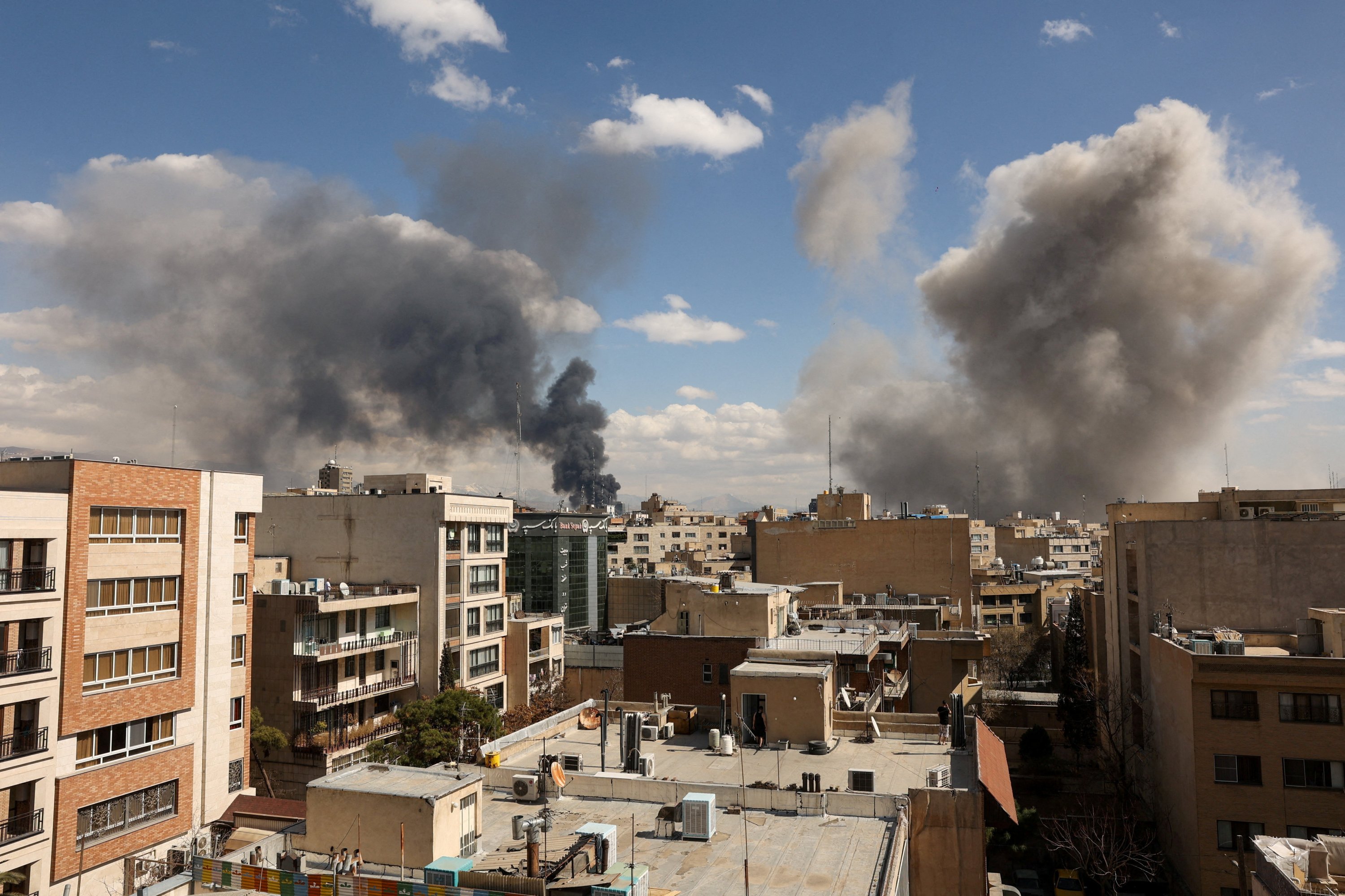
In spite of the intense diplomatic efforts of Iran to buy as much time as possible, on Feb. 28, 2026, Israel and the U.S. launched a preemptive air campaign against Tehran, killing much of the Iranian top command, including the longtime Supreme Leader Ayatollah Ali Khamenei.
Days before the war, according to a Reuters report dated Feb. 24, Iran was in the process of finalizing a deal with China behind the scenes. The deal in question was for the procurement of much-needed Chinese‑made CM‑302 supersonic anti-ship missiles. Reportedly, it was the same deal that accelerated following the 12-Day War. This comes as no surprise, as Iranians were hurrying to garner whatever defense capabilities they could muster before U.S. President Donald Trump made his final decision.
Tehran has always had very little to no room for maneuver in engaging in any kind of trade, especially when it comes to acquiring military hardware, as it struggles with the extremely harsh consequences of the international sanctions regime since the 1979 Islamic Revolution. Nearly five decades later, virtually all remaining essential military assets of Iran, especially the air force, are older than the Islamic Republic itself and have been in painfully degraded condition.
The close military partnership with Russia over the last decade did not bring in the much-needed advancements in the Iranian military, even after the United Nations arms embargo expired in October 2020. Furthermore, Russia has been too mired in its war with Ukraine since 2022 and has few high-tech defense products to spare to support Iran.
In addition, Iranian domestic defense capabilities, particularly missiles and launch systems, were left significantly diminished or damaged by Israeli and Americans following the 12-Day War.
All these developments led Iran to seek assistance from its other external partner, China, as it both has a booming defense industry and is not forced to dedicate most of its industrial output to a single war.
Iran has become a vital partner for China since 2021, when it signed a 25-year strategic agreement with China that envisioned the procurement of Chinese military hardware in exchange for a substantial discount in Iranian oil. Iranian oil, which supplies approximately 20% of Chinese demand, is acquired through proxies that bypass official customs, as the two countries share an ideological connection rooted in their opposition to the U.S.-led global order.
However, China's stakes in the conflict between the U.S.-Israel alliance and Iran over the Persian Gulf are significantly greater than they initially seem. Iran is essential to China not only it is one of the main oil suppliers, but also because it sits right in the middle of the world's foremost oil market. Any war to erupt over the shipping routes is a guaranteed crippling impact for the Chinese economy, as approximately half of China’s oil imports came from Persian Gulf countries.
These concerns would be confirmed hours after the initial U.S.-Israeli attack, as the Islamic Revolutionary Guard Corps (IRGC) announced the full blockade of the strait, effectively halting roughly one-quarter of the global energy supply. This is precisely why China is terrified of the prospects of a prolonged war in the Middle East, even more than the notion of a partner country being attacked. It is a scenario, where China unconditionally loses, regardless of who attacks or defends, and will cause the country to be more reliant on Russia for energy purchases.
Although Chinese President Xi Jinping cannot persuade Trump to turn away from this active war against Iran, he can still do his best to deter the U.S. from engaging in a prolonged conflict in the region, and the obvious solution to this would be to make Trump's objectives harder to accomplish.
Since the 12-Day War, China quietly ramped up its military support to Iran, particularly in the field of technology and intelligence, such as the much-needed YLC-8B radar systems and HQ-9B long-range SAM batteries (China’s equivalent to the S-300/S-400). But perhaps the most noteworthy aspect of China’s support came in the form of granting Iran access to the BeiDou-3 Navigation Satellite System (BDS) in early 2026.
Before 2026, particularly during the 12-Day War, Iran relied heavily on Western-controlled GPS for drone and ballistic missile targeting, a condition that later proved to be Iran’s Achilles' heel. While many Iranian missiles reached Israel, widespread GPS jamming by the U.S. and Israel drastically reduced the accuracy of the Iranian strike packages and enabled Israeli jets to fly over Iran almost unopposed. These events resulted in Iran formally deactivating GPS reception nationwide toward the end of the war, but by then, it was already too late.
Conversely, now by completely detaching itself from Western signals, Iran has largely healed one of its most significant weak spots. Access to BDS, combined with potential intelligence sharing through high-tech Chinese satellites, will cause Iran to be a bigger obstacle to the U.S. than it was during the last war, when it was in an indisputably disadvantaged position technology- and intel-wise. Even though the switch to BDS did not prevent the assassination of Khamenei, how successful it will be militarily is to be seen.
The final form of this Iran-China partnership might end up resembling something close to the post-Russian invasion partnership between the West and Ukraine, where substantial Western aid and intelligence support for Ukraine turned a hopeless defense scenario into a four-year-long stalemate and war of attrition.
This is not to say that China is preparing itself for a long-term war, as the Chinese primary objective in its support for Iran is adamantly clear: to deter Washington from pursuing a prolonged war with maximalist goals that will hurt China in the long term by bolstering Iran's position. Despite the Chinese authorities' ongoing denial of involvement, they are aware that Washington is watching and anticipates them taking notes.
However, the Chinese effort might already be too little too late. The U.S. and Israel have launched an all-out war with the explicit aim of regime change. While Iranians are doing their best to hold off the intense air campaign, it is unclear how much equipment they can still get from China when it does not even have full control of its airspace right now.
All in all, China does not want to see a prolonged war in the region and see Iran fall into the hands of the U.S. in a similar fashion to Venezuela, it might be coerced into modifying its long-held noninterventionist principles.