Following a campaign overshadowed by political violence, a tight presidential election on May 31 led Colombia into a runoff vote on June 21.
With neither the right-wing outsider Abelardo de la Espreilla nor the leftist veteran Ivan Cepeda securing the 50% necessary for the presidential post, the vote sent a clear message: Colombia is polarized between continuity and change.
A bellwether as well as somewhat of a laggard to regional socio-political fracturing, the presidential election represents one of the most consequential votes in the region, as it sits at the intersection of Colombia’s security crisis, its future positioning in a geopolitically competitive hemisphere and Latin America's political realignment.
The political center has been almost entirely displaced by polarized views of leftist President Gustavo Petro’s legacy and competing visions for Colombia’s future.
Unfolding against the backdrop of worsening insecurity, economic uncertainty, institutional polarization and mounting frustration over the limited implementation of Petro’s ambitious socio-economic and security agenda, the election has evolved into a referendum on the country’s direction, pitting conservatives and progressives against one another.
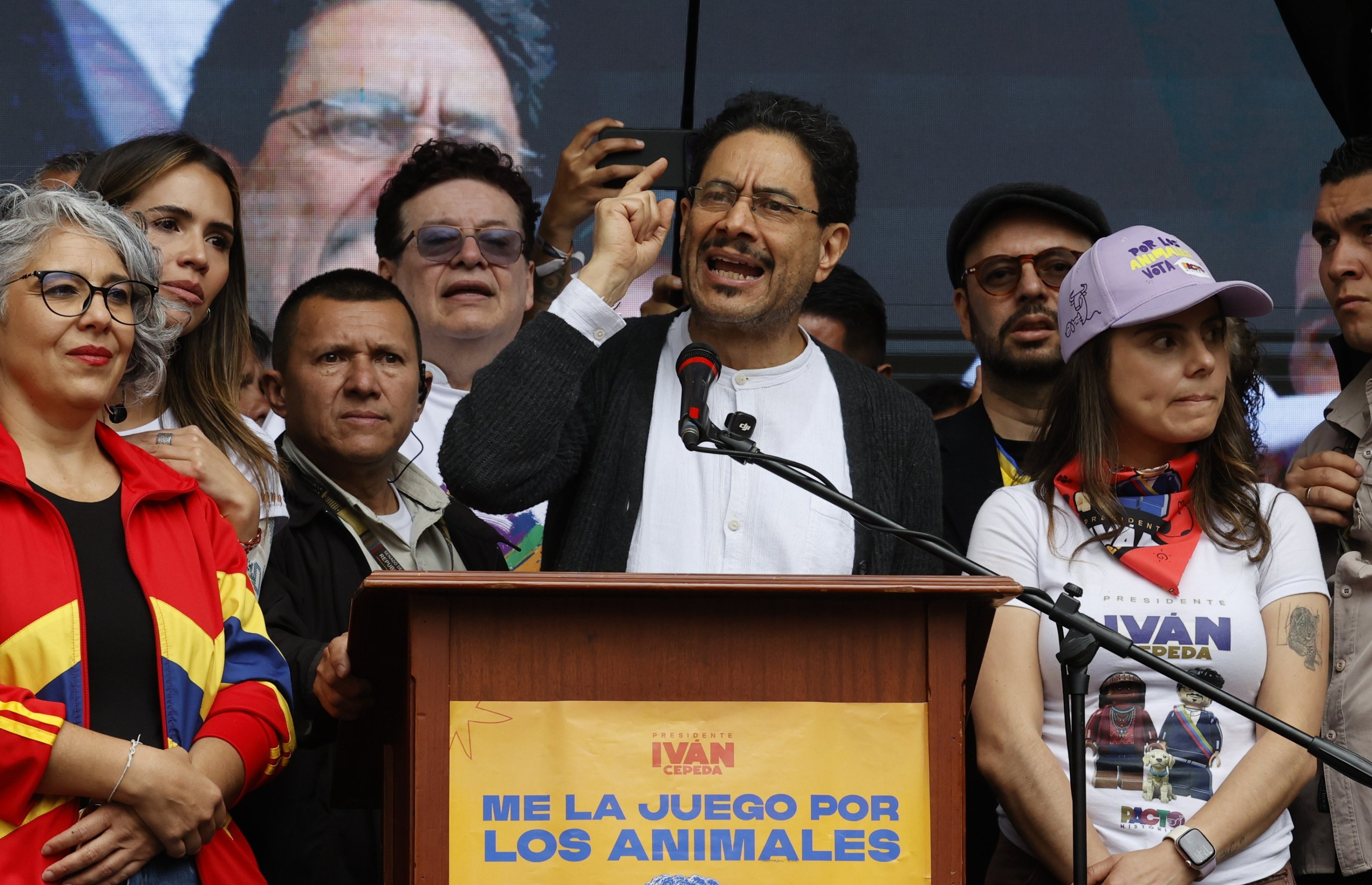
As Colombia’s first left-wing president, Petro left behind a contentious legacy that has shaped concerns driving voter behavior. His transformative program brought Colombians a reduced workweek, expanded social protections, lower poverty and unemployment, and increased land formalization.
However, Petro failed to implement even 60% of his National Development Plan amid congressional deadlock and fiscal constraints. While his supporters argue entrenched elites obstructed reforms, opponents point to his administration’s institutional overreach, corruption scandals and fiscal deterioration.
Now, conservatives backing Espreilla argue that Cepeda would deepen Petro's project and worsen crime, corruption and fiscal pressures. On the other side, progressives back Cepeda's commitment to continue "Petroism," fearing that an Espreilla presidency would dismantle hard-won leftist gains and entrench hardline politics.
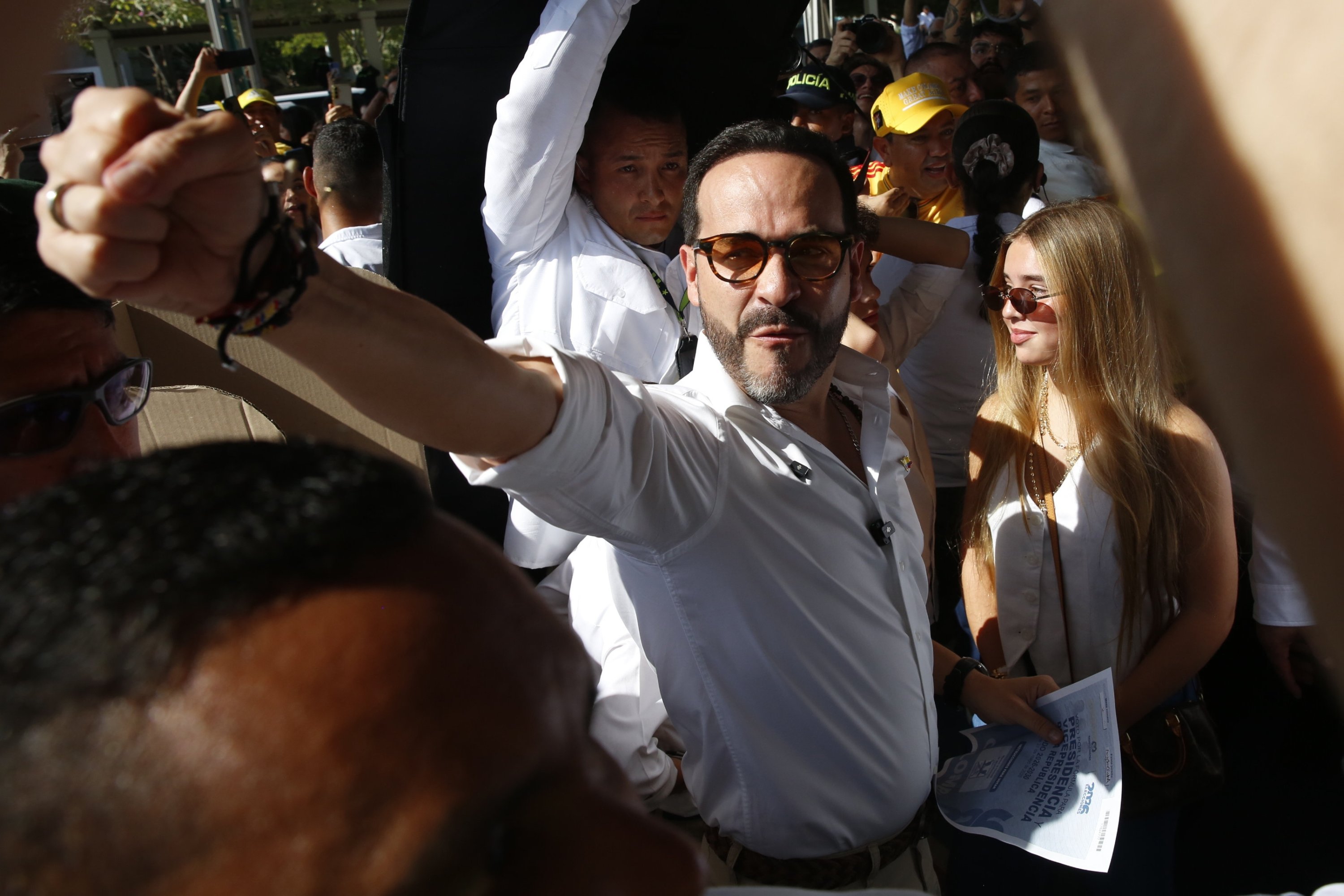
The first-round results reflect both rejection and endorsement of Petro's legacy, as much as they do support for Cepeda's and Espreilla's competing policy agendas. Espreilla’s electoral success underscores support for his hardline approach towards crime, while Cepeda’s competitiveness demonstrates the ongoing popularity of Petro’s political project.
Yet, security has emerged as the most contested element of Petro’s legacy and thus voter concerns. The failure of Petro’s "Total Peace" policy, which saw continued cease-fire breakdowns and armed groups expanding territorial control, to reverse resurging violence, has transformed security into a principal lens through which his administration’s performance has been assessed.
This has strongly benefited right-wing candidates advocating for tougher security policies. Espreilla has built his campaign around a "mano dura" strategy centered on expanded military deployments, aggressive counternarcotics operations, forced coca eradication and closer security cooperation with the United States. In contrast, Cepeda has defended negotiations with insurgent and criminal groups as necessary to conflict resolution, arguing that military force alone cannot address the structural drivers of violence.
The runoff, therefore, increasingly reflects a contest between two competing security visions: one prioritizing coercive state authority and deterrence and another centered on dialogue, social investment and the continuation of "Petroism."
Colombia’s polarization resembles broader regional trends.
Indeed, voters are increasingly abandoning the political center for distinct alternatives, reinforcing the dynamics that have long made Latin America prone to sharp electoral swings. This comes in a backlash against traditional politics that has proven unable to address rising crime that is eight times higher than the global average, economic stagnation, with the slowest regional growth of 2.1% in 2025 in the world, corruption and institutional erosion.
Its recurring "Pink" and "Blue" Tides are rooted less in ideological commitment than in voters’ anti-incumbency sentiment. Instead, these macro-political swings between left and right-wing dominance are seen as pragmatic and punitive reactions against factions that failed to deliver safety and economic growth.
The latest "Pink Tide" is increasingly challenged by right-of-center, anti-establishment politics.
Societal fatigue over rising insecurity has become a particularly powerful driver of this change. As organized crime and cartel violence weaken and overstretch state capacities, conservative figures who offer iron-fisted order capitalize on public perceptions of democratic processes as impediments to peace, mobilizing discontent.
At the core is the trade-off between civil liberties and public safety that is increasingly shaping political competition across the region. This is best exemplified by the immense regional influence of El Salvador’s President Nayib Bukele, whose militarized "security-first" model has provided a blueprint for such a trade-off.
Colombia's polarized election exemplifies how security has become the region’s dominant political currency, increasingly determining which political projects voters deem credible. Its runoff will be closely watched as an indicator of whether regional support for left-wing political projects remains resilient or is increasingly giving way to security-oriented solutions.
The domestic-regional-international nexus is nowhere more evident than in Colombia, where political polarization both shapes and reflects regional and foreign policy alignment.
While not a geopolitical contest, Colombia's election nevertheless carries geopolitical implications in a hemisphere increasingly shaped by U.S.-China competition. Beijing and Washington represent manifestations of broader foreign policy choices, as left and right-wing parties put forth different strategies for navigating external competition.
As Washington's principal strategic and military partner in South America, Colombia occupies a pivotal position in regional security architecture. Yet under Petro, Bogota has simultaneously deepened engagement with Beijing, joining the Belt and Road Initiative and expanding Chinese participation in infrastructure, energy and transport projects.
The candidates offer distinct approaches to navigating this environment. A Cepeda victory would likely preserve Petro's strategy of diversification and strategic autonomy, while an Espreilla administration would likely restore closer alignment with Washington on security, counternarcotics and defense cooperation.
These foreign policy choices would also shape Colombia’s domestic policy. Closer alignment with Washington would reinforce a security-first approach, while continuity under Cepeda would favor diversified economic and diplomatic partnerships and dialogue-based approaches to security.
The runoff will therefore help determine not only how Colombia balances between the hemisphere's two most consequential external powers, but also how it seeks to address the domestic security and economic pressures that have come to define its political debate.