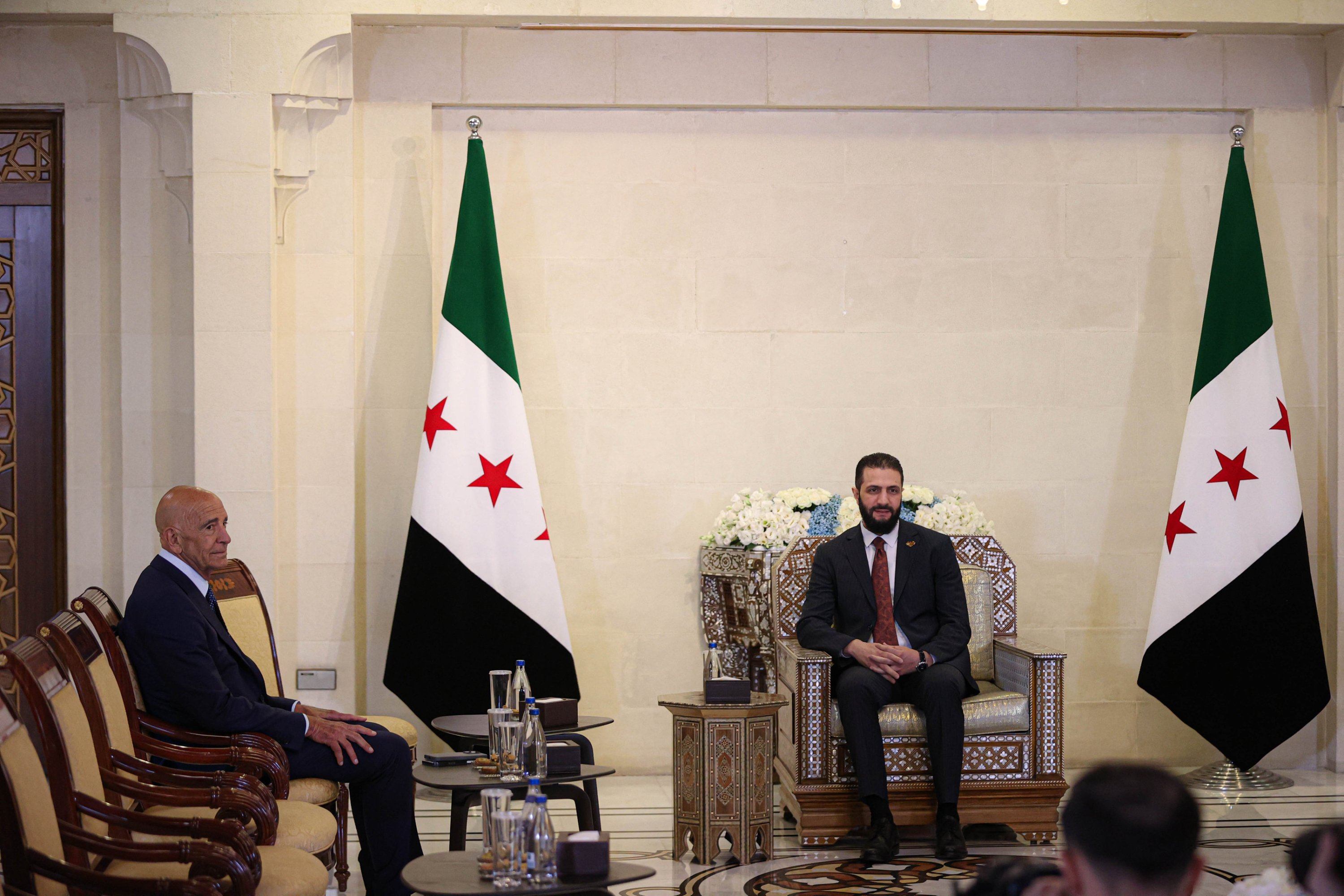
Following the collapse of the Assad regime, the U.S. has undergone a notable recalibration of its Syria policy. The partial lifting of sanctions on Damascus in May 2025 marked a turning point, signaling a shift in Washington’s approach toward a more pragmatic and multidimensional diplomacy on the ground. At the forefront of this diplomatic transformation stands Tom Barrack, U.S. ambassador to Türkiye and special envoy for Syria. His successive visits to Beirut and Damascus in July 2025 have not only redefined bilateral dynamics but also hinted at a broader reconfiguration of the regional power balance.
In Beirut, Barrack met with Lebanese President Joseph Aoun and other senior officials, presenting disarmament proposals targeting Hezbollah and stressing that Lebanon’s future is intrinsically linked to developments centered on Syria. His use of historically evocative language, such as calls for a “return to Bilad al-Sham,” resonated deeply with segments of the Lebanese public. However, the core strategic engagement took place in Damascus. There, Barrack held separate meetings with Syrian interim President Ahmad al-Sharaa and the leader of the PKK terrorist group's Syrian wing, Ferhat Abdi Şahin, code-named Mazloum Kobani, signaling Washington’s intent to establish a functional line of communication with both the regime and the PKK/YPG wings it uses to fight Daesh.
At the core of this revised U.S. approach lies the principle of “One country, one people, one army.” Barrack presents this as a basic condition for any negotiations. Instead of offering the PKK/YPG a formal political status, Washington aims to preserve Syria’s territorial integrity through the gradual integration of the militants into the central state structure.
Following his meetings in Damascus, Barrack held a press conference in New York on July 11, where he declared that the eight-point integration agreement signed between Damascus and the YPG-dominated SDF on March 10 had failed to yield results. Reaffirming Washington’s desire for a durable settlement, Barrack cautioned the PKK/YPG against pursuing maximalist ambitions and urged them to remain within the bounds of “reasonable” demands.
At the same briefing, Barrack stated unequivocally, “The SDF is the YPG. The YPG is a derivative of the PKK.” With this framing, Barrack effectively curtailed the SDF’s efforts to seek international legitimacy. His remarks also signaled a clear convergence between U.S. and Turkish perspectives on Syria, particularly in relation to the PKK and its wings.
Despite earlier commitments, the YPG continues to resist key elements of the political process. Although it publicly declared its acceptance of the March 10 agreement, the YPG has failed to implement any of its core provisions. While it has expressed willingness to accept the central authority over defense and foreign policy, it simultaneously insists on maintaining autonomous control over certain sectors. This selective approach to integration undermines efforts toward national unity and prolongs political fragmentation in Syria.
In short, the July 2025 developments show that while the U.S. supports Syria’s territorial integrity and pluralistic governance, it remains reluctant to endorse any form of structural autonomy. Washington continues to act as a facilitator in the Damascus-PKK/YPG talks, yet ongoing tensions and mutual suspicion reveal the fragile foundation on which this policy rests.
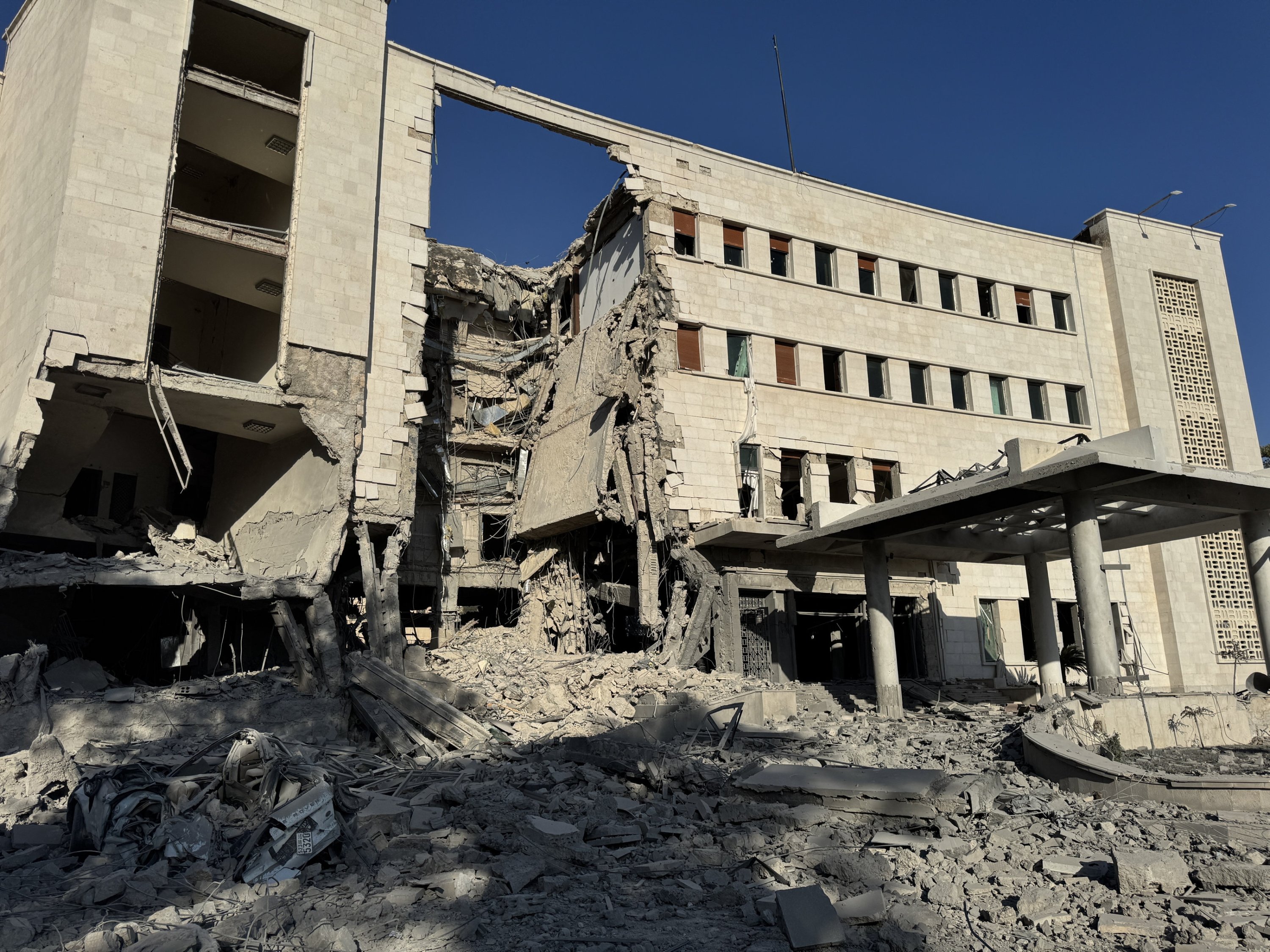
While developments in Damascus after Barrack’s visit drew regional and international attention, focus soon shifted to Syria’s southern border. In Suwayda, clashes broke out between government forces and Druze groups led by Hikmat al-Hijri, a well-known cleric with pro-Israel views. Tensions rose sharply when Israel intervened directly, launching airstrikes on Syrian military targets. The attacks quickly spread beyond Suwayda, hitting key sites in Damascus, including the General Staff building. The scale of the strikes, combined with sharp statements from Israeli officials, made it clear that the real aim was to pressure the new Syrian leadership rather than protect the Druze community.
A fundamental question thus emerges: Why did Israel initiate such attacks at a time when a U.S.-mediated rapprochement between Damascus and Tel Aviv appeared to be taking shape? If Israel's intent was solely to protect the Druze, the military action would likely have remained confined to Suwayda. Two key motivations stand out. First, rooted in its longstanding strategic doctrine, Israel seeks to prevent the Syrian government from fully consolidating control over territories near the Golan Heights, thereby maintaining a buffer zone.
Yet the matter goes beyond border security. As discussions surrounding Syria’s potential inclusion in the Abraham Accords gain momentum, Israel’s escalation can be interpreted as a maneuver to raise the stakes ahead of normalization talks. These strikes constrain Damascus’ ability to manage internal sectarian tensions and reduce its diplomatic flexibility on the international stage.
This situation directly affects the already fragile negotiations between Damascus and the PKK/YPG. As instability grows in southern Syria, the central government has focused on strengthening internal security, while its dialogue with the terrorist group continues to weaken. The delicate balance the U.S. has tried to maintain – between restoring Syria’s international standing and supporting the PKK/YPG in the northeast – has become more fragile under Israeli pressure.
Although the YPG has officially agreed to join the Syrian army, it seems to be deliberately slowing the process. Ongoing government operations against separatist and foreign-backed groups in the southern provinces may give the PKK/YPG a reason to keep its armed presence. This likely aims to delay disarmament and increase its bargaining power, but it also risks weakening U.S. mediation efforts under Barrack and could harm broader American interests in the region.
The July 2025 developments revealed the continued fragility of Syria’s post-conflict recovery. While U.S.-brokered talks between Damascus and the YPG had gained critical momentum, Israeli strikes on Damascus and Suwayda disrupted the process, undermining dialogue and reigniting mistrust under the guise of protecting the Druze and ensuring border security.
Amid escalating tensions, Türkiye has taken on a broader diplomatic role in Syria, extending beyond its traditional focus on border security. Foreign Minister Hakan Fidan’s coordinated phone diplomacy with Damascus, Riyadh, Amman and the U.S. special envoy underscores Ankara’s efforts to shape a regional response to Israeli aggression. Defining the attacks as a threat to regional peace, Türkiye reaffirmed its commitment to Syria’s territorial integrity and emphasized inclusive diplomatic solutions. Ankara maintains its rejection of the YPG’s legitimacy, prioritizing demilitarization and reintegration under central authority, while pursuing tactical coordination with the U.S. and advocating for regional dialogue to facilitate a political transition.
As of July 2025, Syria remains in a fragile transition. Developments on the ground continue to shape not only the relations between Damascus and the YPG but also the broader regional order. While Israeli interventions risk reigniting conflict, growing U.S.-Türkiye diplomatic alignment offers a potential stabilizing force. Realizing this, however, depends on the SDF’s integration into the state, inclusive governance in Damascus, and limits on external interference. Sustained political dialogue, rather than military calculation, will be key to securing lasting stability in Syria and beyond.