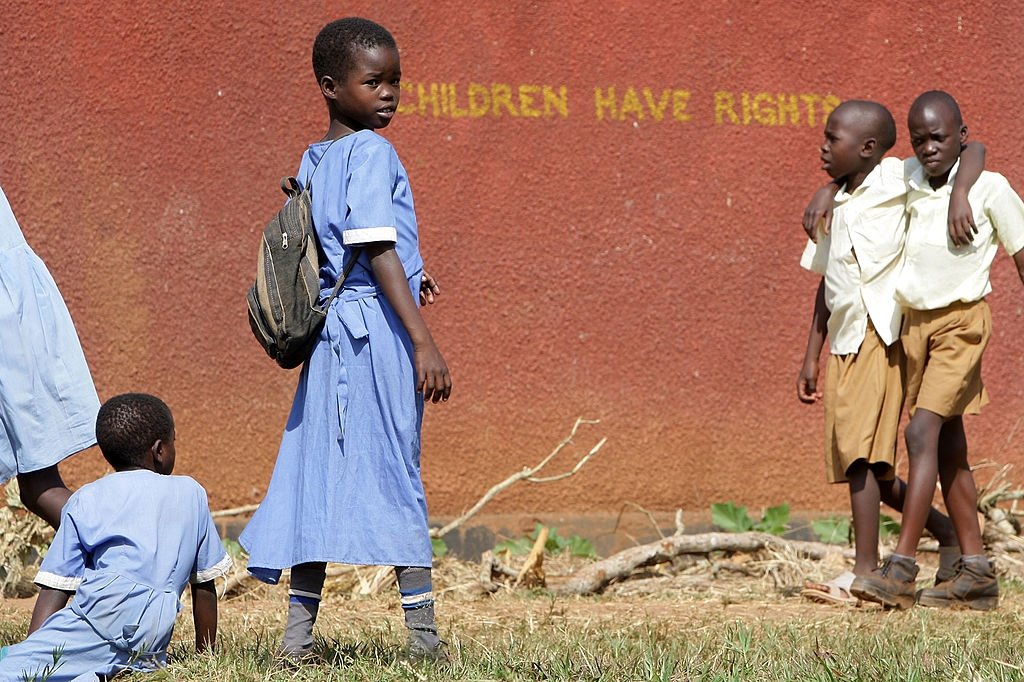
Kakada was 10 when school slipped out of reach. After his mother died, his family depended on him to work in the cassava fields of rural Cambodia. There was no speech, no ceremony, no moment that would register in a national budget. Just a child, a household under pressure, and a choice millions of families know too well: eat today, or keep a child in school and hope tomorrow will be kinder.
What brought him back was food support, school materials and a bicycle. Together, they changed a child’s future by removing the barriers that had kept him out of school.
For millions of children, education comes at a cost their families cannot afford. A missed meal, a long or unsafe walk to school, the need to support the family, or a war that forces them to flee can push education out of reach. With the right support in place, many come back.
But sustaining that support is becoming more difficult.
The global development financing landscape is changing rapidly. Preliminary Organisation for Economic Co-operation and Development (OECD) data shows that official development assistance fell by 23.1% in 2025, to $174.3 billion, the largest annual contraction on record, while aid to the least developed countries fell by more than a quarter.
UNESCO’s Global Education Monitoring Report projected that aid to education could fall by more than 25% between 2023 and 2027. In many low-income countries, aid can account for up to half of national education budgets. When funding is reduced, the consequences are felt across education systems, limiting governments and their partners’ ability to expand access, train teachers, support children who have fallen behind and reach those who remain excluded from education.
UNICEF illustrates the human cost, projecting that a $3.2 billion cut to education aid by 2026 could push 6 million more children out of school, increasing the total from 272 million to 278 million. Even children who remain in school will feel the effects: at least 290 million students face declining quality as teacher development, curricula and assessment weaken.
The greatest burden falls on children and families already under the greatest pressure. School feeding programs face severe cuts, and many children depend on those meals to stay in school and learn. In humanitarian settings, school provides structure after displacement and protection after violence.
When children are pushed out of education, the impact extends well beyond the individual, shaping communities, economies and societies for years to come.
This is where philanthropy has an important role. It can support innovation, demonstrate what works and help reach children who remain excluded from education.
For many development partners in the Gulf, investment in education reflects their own experience. Within a single generation, investment in education, health and public infrastructure helped transform societies. That experience continues to inform investments in humanitarian and development efforts today. One example is Education Above All (EAA), established in 2012, to transform lives through education by empowering the most vulnerable and marginalised populations.
The program that brought Kakada back to school is one of hundreds supported through the foundation. Since then, the EAA and its partners have enrolled over 14.8 million out-of-school children in 58 countries, mobilizing over $2.6 billion to expand access to quality education.
These figures show that exclusion can be overcome. The work requires patience and practicality: find the child, understand the barrier, remove it, and support children in enrolling and remaining in education.
The war in the Middle East has sent shock waves far beyond the region. Rising fuel prices, higher food costs and disruptions to global supply chains were almost immediately felt by households around the world. Fertilizer shortages threaten agricultural production in food-insecure countries, while interruptions to natural gas supplies have intensified economic uncertainty around the world. Together, these pressures are affecting billions of lives.
The temporary closure of the Strait of Hormuz has illustrated how quickly regional conflict can become a global challenge. Disruptions to trade, energy markets and economic activity can reduce the resources available for humanitarian and development efforts. Every increase in shipping costs, every delay in exports and every slowdown in economic activity reduces the resources available to support vulnerable populations elsewhere.
This is only one example of how modern conflicts affect communities far beyond the countries directly involved. Every new emergency competes with existing crises for a shrinking pool of humanitarian and development resources, while the children least responsible for these crises bear the greatest burden. Education is often treated as a sector that can wait, yet every year of lost schooling carries consequences that last a lifetime.
As difficult decisions are made about public spending, the long-term consequences of reducing investment in education should be carefully weighed. UNICEF estimates that cuts to international funding for primary education alone could cost children $164 billion in lost lifetime earnings.
Governments remain the primary financiers of education, and protecting domestic investment must remain the foundation of any sustainable response, even where fiscal space is under growing pressure. International assistance will remain essential, particularly in low-income and crisis-affected contexts where needs exceed national resources. Philanthropy has an important catalytic role, helping to demonstrate what works, unlock partnerships and accelerate progress, while innovative financing can mobilise additional resources and make existing investment go further. Together, these approaches can help protect and expand educational opportunity, but they cannot replace sustained public investment in education.
Kakada returned to school because someone noticed the barrier he faced and helped him remove it. The world now faces the same challenge on a far greater scale. Six million more children are at risk of being pushed out of school.
Short-term budget savings can carry long-term costs, measured by poverty, instability and lost opportunity.
The knowledge and the solutions already exist. The question is whether the world will choose to invest in them.
That would not be a funding adjustment. It would be a broken promise, one child at a time.