Iran, one of the countries currently at the center of attention in the Middle East, is increasingly coming to the forefront of international public opinion due to its nuclear energy activities and the threat of large-scale military operations aimed at regime change by states dissatisfied with these activities. Analyses of Iran are insufficient due to the neglect of the Turkic population living in the region.
With a population exceeding 30 million, the Turks of Iran (Azerbaijani Turks, Qashqai Turks and Turkmen Sahra Turks) constitute one of the strongest communities in the country. Due to their geopolitical location, socio-cultural structure, economic power and population potential, the Turks have played a leading role in political changes in Iran. Although this situation began to change after 1924, their strong position in Iran continues.
The region within the current borders of Iran is one of the ancient homelands of the Turks, a community with a rich and diverse cultural heritage. This region has been under the rule of various Turkic states and communities throughout history, each contributing to the cultural richness of the area. Examples include the Great Seljuk, Ilkhanid, Qara Qoyunlu, Aq Qoyunlu and Safavid states.
Azerbaijan's geography was divided into two by the 1828 Treaty of Turkmenchay, a significant event in the history of the region. The treaty, signed between the Russian Empire and Qajar Iran, saw the Aras River forming the north-south border of Azerbaijan. Northern Azerbaijan was given to Russia, while Southern Azerbaijan remained under Iranian rule. This division had profound effects on Turks in both regions, influencing their cultural and political ties.
Despite the end of the Turkic-origin dynasty in the first quarter of the 20th century, Iranians of Turkic origin have shown remarkable resilience. The Persianization policies implemented by the Pahlavi regime, aimed at political and cultural oppression and assimilation, were met with steadfast resistance.
Turks played a critical role in the 1979 Iranian Revolution. The events that triggered the revolution began in January 1978 at the Qom Seminary and quickly spread to Tabriz and other Turkic cities. Large-scale protests in Tabriz, involving students and market traders, were instrumental in bringing down the Shah's regime. With the Shah's departure from the country, Iranian Turks briefly enjoyed press freedom. Publications such as the Varlık magazine, established during this period, contributed to the development of Turkic culture. However, the Iranian government soon banned Turkic publications and put an end to their activities.
Starting in the 1990s, the political activities of Iranian Turks increased significantly. Dr. Mahmudali Chehregani, a prominent figure in the Turkic community, emerged as a key leader who strongly opposed the assimilation policies implemented by the Iranian government during this period. In 1996, Chehregani ran for parliament in Tabriz and won 600,000 votes, a testament to his popularity and the support he garnered. However, he was forced to withdraw from the election due to government pressure, leading to mass protests in Tabriz. The government's harsh intervention resulted in the deaths of many demonstrators, highlighting the severe measures taken against Turkic political activism.
In May 2006, Iranian Turks took to the streets following the publication of a cartoon in a state-owned media outlet. The cartoon depicted a Turkic-speaking insect, with the message that if Iranians loved their country, they should flush these insects down the toilet. This incident led to widespread protests and state intervention, resulting in the deaths of more than 50 people, hundreds of injuries, and thousands of arrests. This incident led to questions about the unifying nature of the Shiite sect in Iranian history, and Turkic nationalism came to the fore in Iranian politics for the first time.
One of the Iranian state's actions targeting Turks took place in 2015. On the children's program “Fitile” aired on TV-2, a channel affiliated with the Iranian Radio and Television Corporation, a father and son were complaining about a bad smell in a hotel while speaking in a Turkic language. In the program, the receptionist insulted the father and son, implying that their breath smelled bad and that they had brushed their teeth with a toilet brush. These remarks sparked outrage among Iranian Turks. As reactions grew on social media, the program was taken off the air, and TV-2 officials apologized. However, the Turks' anger did not subside, and they organized large protests.
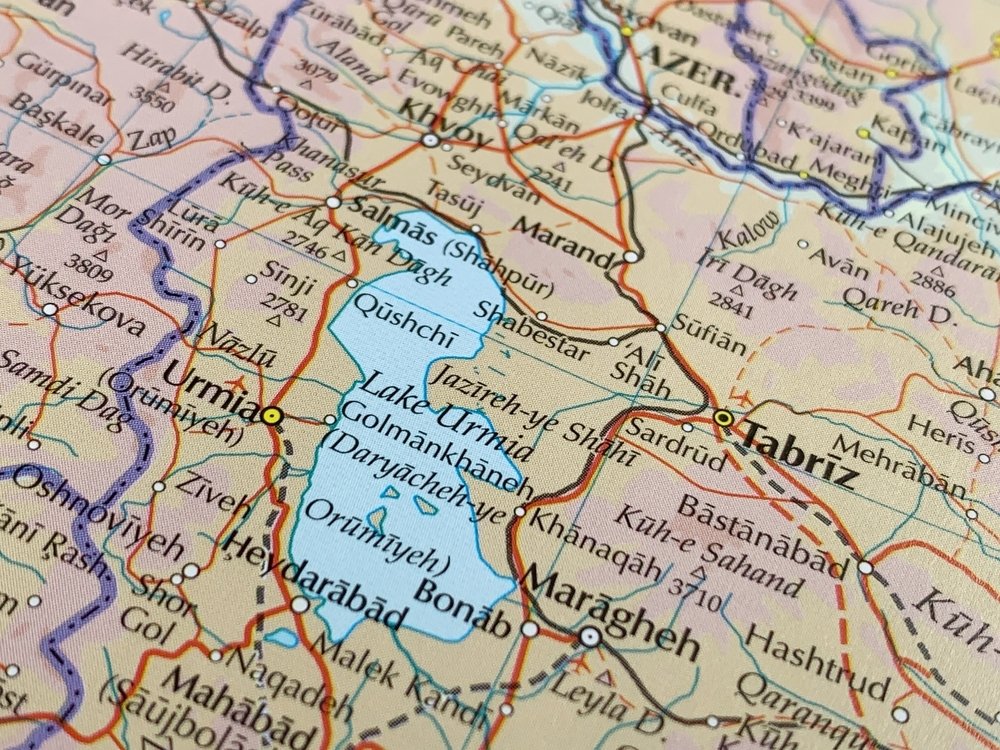
Last March, during Nowruz celebrations, demonstrations organized by PKK supporters in Urmia sparked outrage among the local Turkic population. The PKK, a terrorist organization, is viewed unfavorably by many Iranian Turks due to its historical conflict with the Turkish government. The demonstrations led to a large protest attended by tens of thousands of people, who chanted slogans such as “Urmia is Turkic and will remain Turkic” to protest attempts to change the city's identity. However, they faced a harsh response from Iranian security forces, highlighting the tensions and complexities of the Turkic identity in Iran.
At this point, the Turkic identity/perception in different cities of Iran varies according to their distance from the center, historical dimensions, economic and social living conditions. Most Iranian Turks see Iran as a state they founded and created. However, developments after 1990 have brought new identity perceptions to the fore in Iran. The newly emerging Turkic nationalist youth identity, born in the 1990s and later, sees itself as the brother of Türkiye and Azerbaijan. This new ideological development is still in the process of becoming mainstream.
The Iranian people closely follow Türkiye. There is a special interest in Turkic media. It should not be forgotten that Türkiye's policies toward Iran, as well as its policies toward Iraq, Syria, and Azerbaijan, have an impact on Turks in Iran.