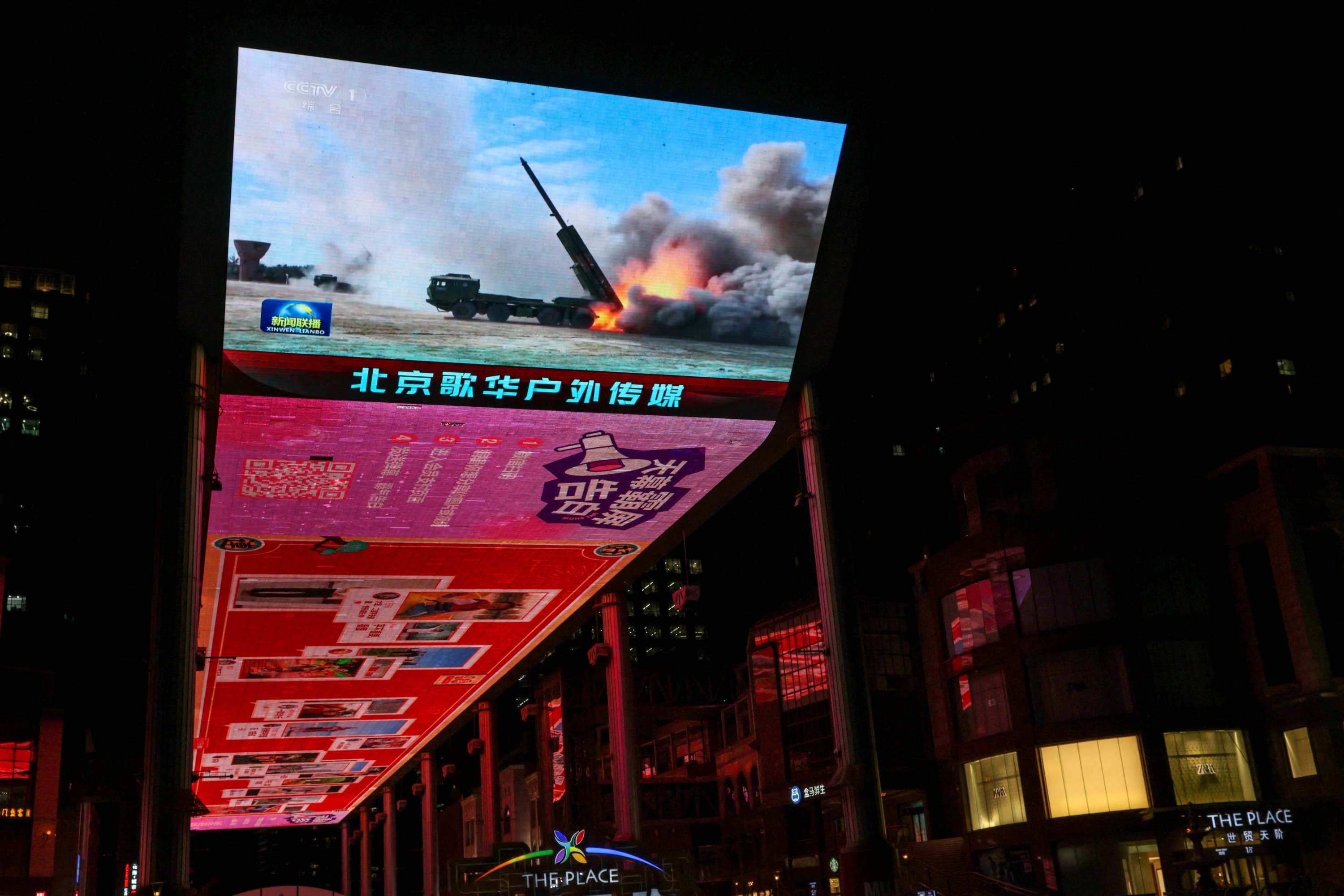
In early 2016, during the late Obama administration, South Korea controversially announced the deployment of the extremely rare and expensive Terminal High Altitude Area Defense (THAAD) air defense batteries, costing $1 billion per battery, on its territory, following consultations with the American government. The South Korean government ostensibly made this decision to address potential threats from North Korea. It was a decision that drew significant ire, particularly from the Chinese government, which fervently and continuously protested and condemned the move as provocative and as a threat to Chinese national security. However, neither the successive American nor South Korean administrations were willing to back down in the face of Chinese protests and sanctions, even at the potential cost of undermining decades of detente in South Korean-Chinese relations.
In 2026, a decade later, amid the highly tumultuous atmosphere surrounding the U.S.-Israeli war on Iran, the U.S. government silently and unceremoniously withdrew its THAAD batteries from South Korea. The U.S. government’s decision came shortly after several THAAD installations in the Gulf countries were reportedly struck by Iranian missile and drone attacks. While the South Korean government's objections against the move and the Korean media's strong denunciations occurred, such protests fell on deaf ears on the side of the U.S.
The sudden decision was a monumental move that truly symbolizes the utter death of the years-long American dream of a “pivot to Asia” since 2011, when the Obama administration announced a shift of focus from the Middle East to Eastern and Southeast Asia, aimed at balancing China's rise.
In retrospect, what was once framed and paraded as the most significant structural reorientation of U.S. foreign policy since the end of the Cold War turned out to be, at best, a fleeting aspiration rather than a durable commitment. Advocated by numerous diplomats and international relations scholars, ranging from institutionalists to liberals to neorealists, the idea of the world's (then) sole superpower pivoting to Asia was so logically compelling that, from an outsider’s perspective, it might make no sense for the U.S. to prioritize any other region in the modern world. Not only is Asia undoubtedly progressively becoming the new epicenter of global economic development and commerce, but it is at risk of coming under the hegemony of the U.S.’ sole peer competitor, China, which has made no secret of its geopolitical aspirations in its periphery.
However, as we discovered the hard way from the events leading up to and following the Iran war, strategy is not defined by logic alone. It is dictated by political will, prioritization and the ability to resist diversion and subversion. In all three, the White House and U.S. President Donald Trump in particular have failed on such a level and scale that it will undoubtedly perplex academia for decades, if not centuries to come, over how a superpower made so many disastrous judgments stacked on each other and to no benefit whatsoever.
Trump’s ongoing, stillborn war with Iran has effectively postponed or even cancelled any long-term aspirations the U.S. may have harbored in the Indo-Pacific region. Despite eliminating virtually the entire Iranian high command during the initial assault, including the then Supreme Leader Ayatollah Ali Khamenei, it quickly became evident that Trump lacked a coherent strategy to win the war that he had effectively wagered the entire global economy and the credibility of both himself and the U.S. as a superpower upon.
Notwithstanding the over a month-long heavy bombardment across Iranian military installations and an overwhelming degree of technological superiority of the U.S. and Israel over the Iranians, the Islamic Republic remains battle-effective, let alone being on the brink of collapse. The situation has progressed to the point that Iran is choking the global energy supply with minimal opposition from the Americans, which led to yet another episode of drama about American officials criticizing their own allies for insufficient support for their war effort in a war that all nations except Israel have consistently cautioned against initiating.
Even after the very brief air of optimism following the two-week-long temporary cease-fire deal between the U.S. and Iran, with the diplomatic talks in Islamabad collapsing and Trump announcing the naval blockade of Iran, it is more than clear that this war is nowhere near a conclusion. The Iran war has already devolved into a quagmire that will very likely overshadow the disasters of the Iraq War, the Afghan War or even the Vietnam War. While the Pentagon is hurrying American troops to the Gulf and asking for an additional $200 billion war budget, Trump will keep declaring victory, even as the conflict continues to escalate.
The issue goes beyond resource allocation. While significant, it pales in comparison to the war's primary American casualty, its strategic attention span. With the start of the war, there are no more mysteries as to who dominates and commands the American strategic attention and who is willing to exploit this dominance, even at the risk of permanently damaging the U.S.’ standing in the international sphere.
The Israeli government and the Israel lobby in the U.S. applied maximum pressure on Trump in the months leading up to the war, prompting the White House to once again reorient its strategic focus on the Middle East, thereby diverting attention and resources away from pressing matters in the Indo-Pacific. Persisting in fighting nations that are not even close to China in terms of their ability to challenge U.S. interests is what is happening right now. This fact became most evident immediately following the recent U.S.-Iran cease-fire deal, when the Israelis heavily bombed Lebanon hours after the deal to sabotage the agreement.
Because of this dilemma, the American government is openly deprioritizing Asia at a critical juncture when sustained engagement is vital. Tensions with China continue to escalate, and its influence expands in the Indo-Pacific region. Numerous U.S. allies and partners in the region already perceive a lack of devotion from a nation that disregards their interests and is prepared to toss the global economy into a state of anarchy over poorly planned wars. We might already be seeing the early signs of this across Asia.
This absence of American strategic focus permits China to maneuver freely in East Asia. The absence, or even the perceived absence, of an American strategic focus is itself a green signal to China and a red light to all countries that had long-term plans for alignment with the U.S.
The recent visit of the Taiwanese pro-unification opposition leader and potential 2028 presidential candidate Cheng Li-wun might be telling for us. The long-standing U.S.-aligned government in Taiwan already feels deeply insecure about the situation, as its foremost ally is in the process of diverting away from East Asia. Naturally, many Taiwanese politicians who support a peaceful reunification with China might gain traction in the following years as the idea of Taiwan defending itself against a potential Chinese invasion by itself becomes more outlandish day by day. This is a situation the Chinese might already be in the process of exploiting.
Or similarly, many of the Association of Southeast Asian Nations (ASEAN) countries might see no option but to capitulate to the Chinese demands in the South China Sea in the absence of American forces for deterrence. In a more extreme scenario, China could potentially emerge as a more predictable and sustainable partner for many Indo-Pacific countries than the U.S. itself, and while a scenario like that remains improbable at present, the new world we are all now living in continues to undermine the norms we once upheld with conviction.
Fundamentally speaking, the Trump administration misunderstands or simply completely disregards the vital importance of strategic hierarchy, something that Trump made clear during the utterly absurd Greenland annexation crisis a couple of months ago. Even if the White House were to come to a miraculous negotiated settlement with Iran tomorrow, it still would be too late to mitigate the damage that has been done, and it is undoubtedly too late to alter the new geopolitical landscape that is guaranteed to put China and Russia in a new, favorable position compared to the U.S.