The integration and cease-fire agreement reached in late January 2026 was the result of a long negotiation process that ultimately broke down under renewed violence. An initial framework agreement on integrating the YPG into Syrian state structures was signed on March 10, 2025, with U.S. mediation. Its implementation, however, stalled as deadlines were repeatedly delayed during the second half of the year. Disagreements persisted over military command, territorial authority and control of natural resources.
Tensions rose sharply in early January 2026. Fighting erupted in Kurdish-majority neighborhoods of Aleppo between Jan. 6 and 10, then spread east of the Euphrates after mid-January. During this period, the YPG suffered rapid territorial losses as large numbers of Arab fighters defected, withdrew or stood down. In response, senior YPG leaders traveled to Damascus in mid-January in an attempt to salvage a political deal that would preserve some form of YPG control. Syrian authorities rejected these proposals, insisting that no armed or administrative autonomy would remain. The final agreement, announced around Jan. 30, 2026, established a comprehensive cease-fire and a phased integration process.
It required YPG forces to withdraw from front lines and major cities, allowed Syrian army and Interior Ministry units to redeploy into cities such as Hassakeh and Qamishli, transferred border crossings, oil and gas fields, and detention facilities to state control, and dissolved or absorbed YPG-affiliated civil administrations into formal government institutions. Militarily, YPG elements were to be vetted and integrated individually into the Defense and Interior Ministries rather than retained as organized units, while non-Syrian cadres linked to the PKK were required to leave Syrian territory. Politically, the agreement allowed limited inclusion of YPG-nominated figures within state institutions and reaffirmed decrees recognizing Kurdish cultural and linguistic rights, while clearly restating Syria’s territorial unity and centralized authority. The agreement reflected not a negotiated balance of power, but a settlement reached after the strategic momentum had shifted decisively.
The agreement marked a clear turning point in Syria’s post-war order, formally ending a period in which northeastern Syria operated under a system of de facto autonomy supported by external military backing and justified by the fight against Daesh. Together, the agreement signals the return of centralized state authority and the dismantling of parallel political and security structures that emerged during the civil war. The cease-fire is less about mutual restraint than about a redistribution of power. Although presented as reciprocal, the arrangement establishes a clear hierarchy. The YPG gives up territorial control, economic resources and autonomous institutions, while the Syrian state reasserts authority over administration, security and the economy.
This shift fundamentally alters the YPG’s position within Syria. For nearly a decade, the group functioned both as a military force and a political project, controlling territory, governing populations and managing detention facilities with international support. The agreements bring this dual role to an end. The YPG is no longer an autonomous actor, but a transitional structure whose purpose is to facilitate a handover rather than shape future governance. Its role going forward is not collective or strategic, but individual and administrative. Military elements are absorbed into state institutions on a case-by-case basis, breaking chains of command and preventing the survival of a parallel force. Political inclusion, where it occurs, is limited and controlled, resembling co-optation rather than power sharing.
The organizational consequences are far-reaching. The YPG cannot continue in its existing form without contradicting the logic of the agreement. It's likely future involves fragmentation, with personnel redistributed across the army, police and internal security services, surplus fighters demobilized, and ideologically driven cadres sidelined as their transnational affiliations are now treated as liabilities. Any remaining local security arrangements, particularly in Kurdish-majority areas, are explicitly placed under the Interior Ministry rather than framed as community self-defense. Integration, therefore, does not preserve the YPG as an organization. It dissolves it as an autonomous political actor while retaining its manpower.
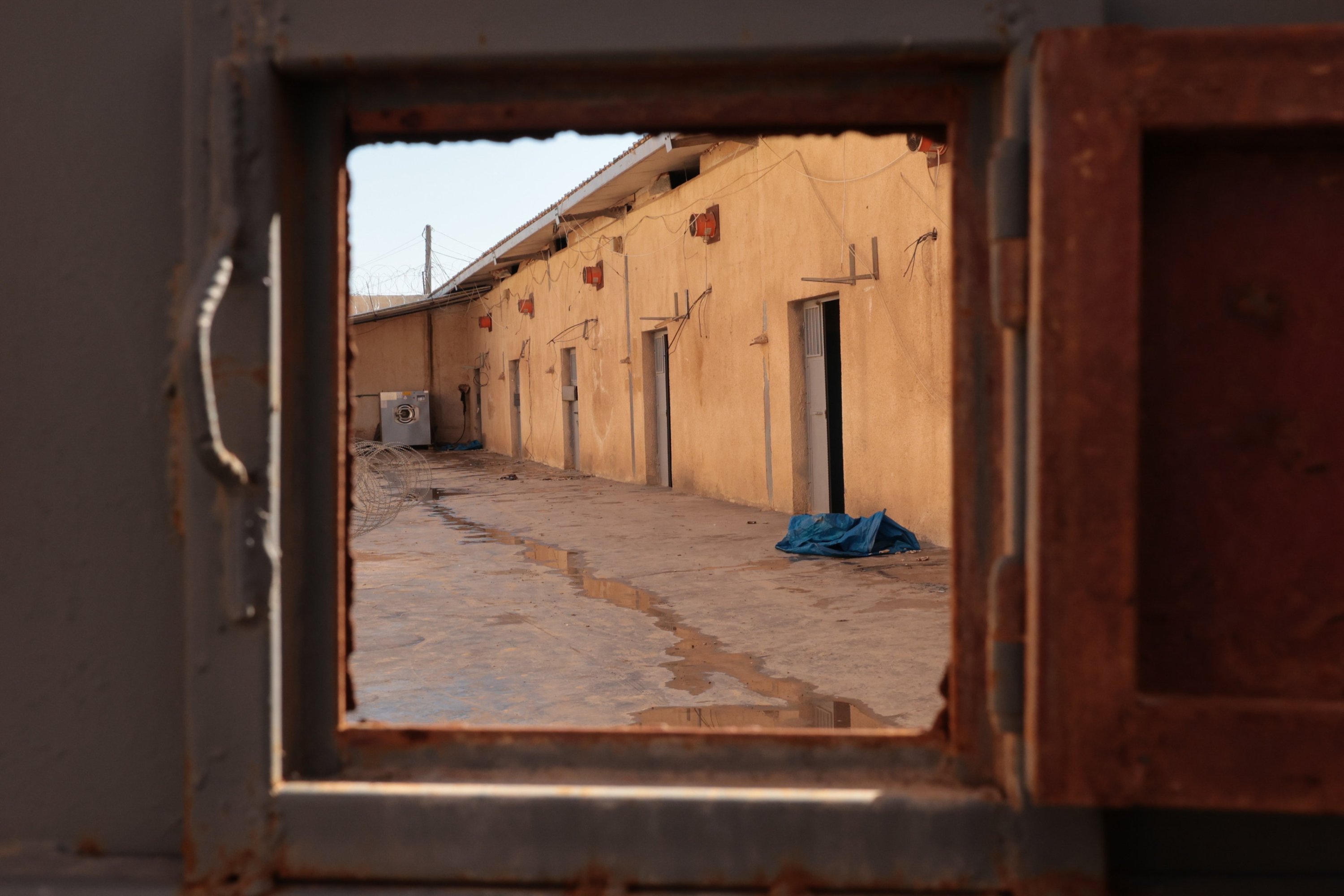
The handling of Daesh detainees is the most sensitive and unresolved aspect of this transition. Since late January 2026, the U.S. has accelerated the transfer of Daesh detainees from YPG-run facilities in northeastern Syria, mainly in Hassakeh province and nearby areas, to Iraqi custody. Iraqi authorities have confirmed receiving at least 1,300 detainees in an initial phase, with total numbers expected to exceed 7,000. These detainees have been moved to high-security prisons such as Nasiriyah and Karkh, with smaller numbers held in facilities in Suleymaniyah. The transfers are coordinated among U.S. forces, remaining YPG security personnel and Iraqi institutions, while Damascus prepares to assume responsibility for detention sites that remain on Syrian territory. This process raises serious diplomatic and legal questions about jurisdiction, evidence and nationality. Many detainees are accused of crimes committed outside Iraq, and many are foreign nationals whose home countries have long resisted repatriation. Iraq must balance its counterterrorism laws with international legal obligations, while Syria faces deep skepticism over due process and fair trial standards. In practice, the transfers reduce immediate security pressures in Syria but shift long-term responsibility to Iraq, highlighting the lack of a global framework for addressing transnational extremist violence.
More broadly, the detainee issue represents a shift from emergency containment to a test of governance. Under YPG control, detention was based on indefinite holding, sustained by external funding and lacking judicial resolution. Transferring this responsibility to Syria and Iraq turns detention into a measure of state capacity.
Syria faces major obstacles in this regard. Its judicial system lacks the capacity to process thousands of terrorism cases in a credible and differentiated way. Broad prosecutions risk deepening grievances, while prolonged detention without legal resolution risks further radicalization. Without transparent legal processes, Syria will also struggle to secure international cooperation on repatriation, evidence sharing, or sanctions relief. There is a real danger that detention becomes another form of repression rather than a path to accountability, recreating the conditions that once enabled Daesh to grow.
Iraq confronts a different set of challenges. Its counterterrorism courts have experience and institutional capacity, but they rely heavily on punitive laws that prioritize rapid convictions over rehabilitation. The transfer of large numbers of detainees from Syria risks overwhelming Iraq’s judicial and prison systems while importing security risks generated beyond its borders. Executions or mass life sentences may satisfy domestic demands for justice, but they do little to address the transnational and ideological roots of Daesh recruitment. Iraq’s growing role as a detention hub also exposes it to political backlash, especially if trials are seen as externally driven or disconnected from local victims’ experiences.
Addressing Daesh detainees in a sustainable way requires moving beyond a purely security-based approach. Effective management depends on distinguishing between hardened militants, coerced participants and non-combatants, especially women and children. Ending indefinite detention and establishing clear legal processes are essential to preventing renewed radicalization. Rehabilitation and reintegration programs for low-risk detainees are not concessions, but investments in long-term stability. Without such measures, prisons and camps will remain breeding grounds for future violence, regardless of who controls them.
Ultimately, the cease-fire and integration agreements close one phase of Syria’s conflict while opening another focused on governance rather than warfare. They end the YPG’s experiment in armed autonomy and place responsibility for security, justice and social order back on the state. Whether this transition leads to lasting stability will depend not on the absence of front lines, but on whether Syria and Iraq can exercise power, punishment and political inclusion in ways that avoid repeating the cycles of exclusion and coercion that fueled the conflict in the first place.