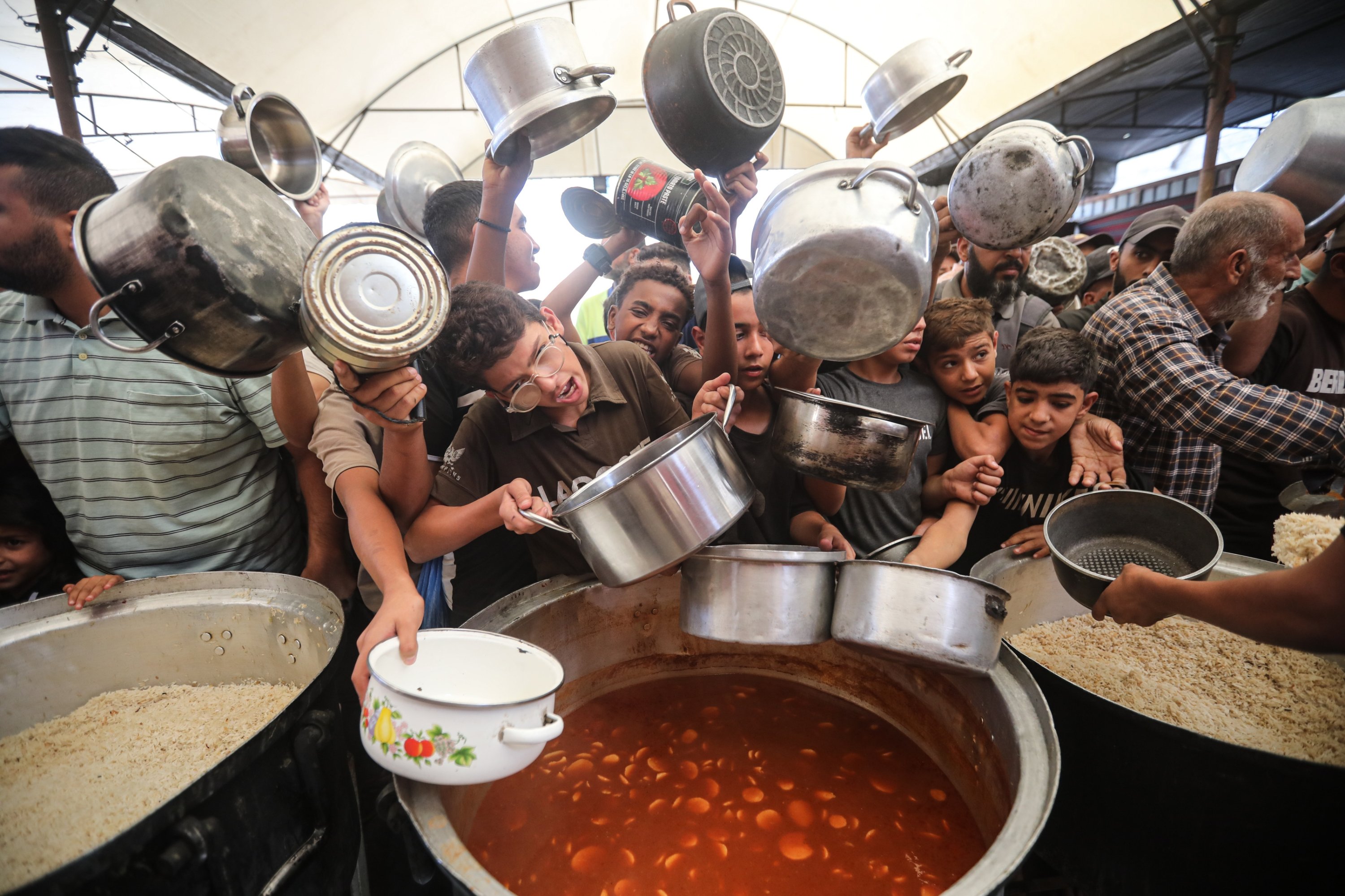
More than a year after the cease-fire in Gaza was signed – an agreement that, on paper, ended the genocide by all definitions – the situation on the ground has not changed. On the contrary, the general humanitarian situation has turned into a new chapter with new realities that keep the crisis affecting all the people there. The killing and bombardment continue, even at a slower pace than during the genocide itself. The siege continues, if not intensifies, depriving displaced people of adequate shelter materials to protect themselves from the harsh winter Gaza is already experiencing. As for nutrition and food, even if there were some improvements, what Israel allows into Gaza remains limited in both quantity and variety. This has brought to the fore a term widely used by human rights and United Nations groups to describe the situation: the engineering of starvation.
This term is not rhetorical; it describes a deliberate policy of controlling what enters Gaza, in what quantities, through whose hands and under what conditions. The result is a system in which food is not simply scarce but part of the daily hardship of almost every Gaza family. The deprivation is managed, sustained and calibrated down to the calories. It is sustained precisely because it serves a political purpose: keeping an entire population dependent, vulnerable and subjugated, with a singular aim of making life in Gaza impossible. And it is succeeding.
The term "engineered starvation" does not describe a natural shortage or an unintended consequence of war. It describes the deliberate, systematic control over the entry of food – the sources, the types and the distribution – in a way that makes deprivation a tool of pressure and subjugation. This is not merely a question of how much food reaches Gaza, but of who is permitted to bring it in and which items are allowed to pass. In practice, secondary items such as chocolates and sweets sit in plenty on shelves while flour and vegetables – the basic items – remain scarce or entirely denied.
The figures and statistics in Gaza tell a story of deliberate contraction. The World Food Programme (WFP) was forced to reduce its food assistance in Gaza by approximately one-third in October, cutting off roughly half a million Palestinians and reducing the number of beneficiaries from 1.6 million to 1.1 million. Food rations were halved, and daily hot meals were cut from 250,000 to 150,000. This reduction was attributed not only to funding shortages but also to Israel, which managed severe restrictions on the entry of goods, including food and shelter materials, through the crossings. The result is that even the humanitarian pipeline is being narrowed while the commercial pipeline is choked, and both remain under Israeli-managed control.
The bakery sector offers a stark illustration. In late October, the Gaza Bakeries Association warned that commercial flour stocks had completely run out and that only seven of 20 bakeries remained operational, with the remaining ones facing closure within 48 hours if new supplies were not allowed in. The association attributed the crisis to Israel's closure of the crossings during the preceding week and its refusal to allow commercial flour into Gaza, despite the partial reopening of the crossings. The message was unmistakable: bread, the most basic item, was being rationed not by scarcity but by policy. This policy repeats itself with near regularity, becoming part of the daily hardship of Gaza's residents, whose recurring conversations now revolve around the opening and reopening of the crossings and what entered.
The restrictions extend far beyond quantity, disregarding the desperate need for food and shelter materials in summer and winter alike. Palestinian economic sources report that what enters Gaza does not exceed 200 items, compared to more than 10,000 before the genocide, roughly 2% of the previous diversity of goods. The number of traders permitted by Israel to bring goods into Gaza after the genocide has reportedly fallen from 13 to eight, with supply confined to four Israeli companies, according to a legal petition filed by the General Union of Palestinian Industries before an Israeli court.
This means the crisis is not simply about how much food is available; it is about who is allowed to profit from its distribution and which products are permitted to reach the market. The restriction of items and traders is a mechanism of control that operates alongside the physical closure of crossings. It ensures that even when some food enters, the local economy remains strangled, and the population remains dependent on a narrow, managed pipeline, while the broader situation stays so fragile that it cannot withstand minor developments, such as storms or weather depressions.
The humanitarian toll of this system is measured in lives. The Integrated Food Security Phase Classification (IPC) analysis from July 2026 found that approximately 1.4 million Palestinians, representing around 67% of Gaza's population, were experiencing crisis or worse levels of acute food insecurity, with some 212,000 in emergency conditions. The analysis warned of expected deterioration in the second half of the year. It did not classify Gaza as being in famine, but it demonstrated the fragility of any improvement and the likelihood of regression with reduced assistance.
The legal framework governing these deliberate practices and policies is unambiguous. International humanitarian law prohibits the starvation of civilians as a method of warfare. The Fourth Geneva Convention obliges an occupying power to ensure the provision of food and other supplies necessary for shelter to the population, and Additional Protocol I explicitly forbids attacking objects indispensable to survival. Israeli rights group B'Tselem concluded in a 2024 report that Israel is committing the crime of starvation in Gaza, citing the blocking of adequate relief and the destruction of local food production.
Furthermore, since the cease-fire, new evidence has only reinforced this conclusion. In its “World Report” issued in February 2026, Human Rights Watch stated plainly that Israeli authorities "used starvation as a weapon of war in Gaza," citing the total blockade imposed and the severe restrictions on humanitarian and shelter aid that followed. This finding was not new, but a further documentation of a policy that continues under the watch of the world.
What is occurring in Gaza is not a humanitarian crisis that emerged from a chaos of war; it is a managed crisis, engineered through the control of crossings, the restriction of items, the narrowing of traders and the destruction of local production. The starvation and sustained scarcity of basic items now affecting most Gazan families, especially in this winter season, are a stark example of Israel's weaponization of food and every needed material, a clear, unmistakable policy of pushing for displacement.
This policy continues, undeterred, while the world responds with near indifference, falling far short of its legal and moral obligations to confront an inhumane method of war designed to make life unlivable while maintaining the appearance of allowing survival. This is what the engineering of starvation looks like.