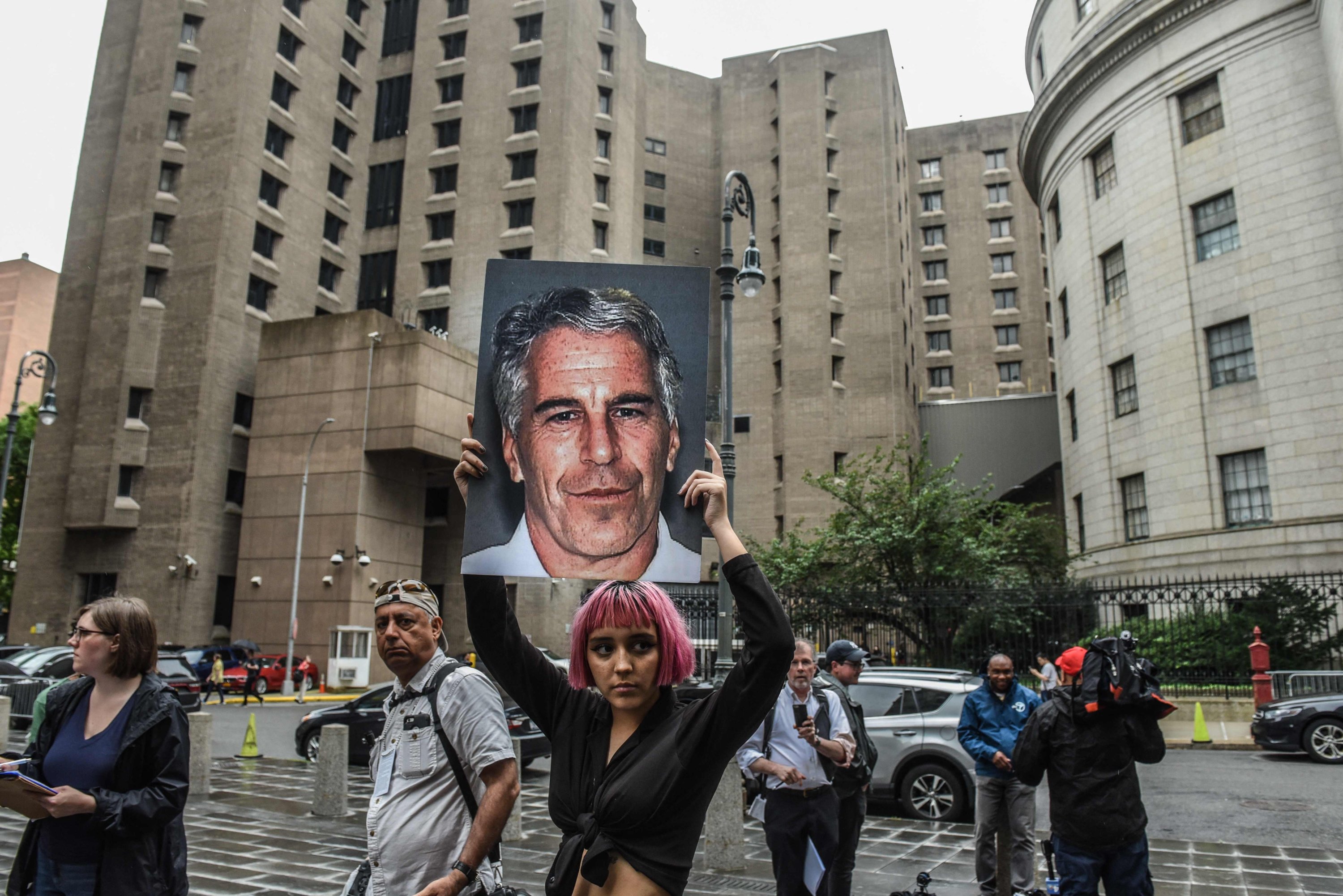
Recently, the apparent chasm between certain factions within U.S. President Donald Trump’s “MAGA movement” has become more visible, due to the “dear leader’s” refusal to fulfill one of his major election promises, namely, to release documents colloquially known as the “Epstein Files.” Despite having previously demanded that these documents be released, the members of Trump’s government seem to have suddenly abandoned the pretense that they ever cared about the scandal. Or perhaps they did care, but only later discovered the implications of doing so.
What would be those implications? The standard view is that members of any government can only go so far on certain matters. Otherwise, they may face consequences. This is, of course, simply an intuition, but one that is as strong as any for many people. However, what is meant by “consequences” in this context is not always clear. Take, for example, the allegation that Trump will never release the “Epstein Files” because he is in them. Even Trump’s former ally, billionaire Elon Musk, could not resist promoting it, posting on X a few weeks ago that Trump’s involvement was the real reason why the documents had not been made public.
It is understandable why someone like Trump would be intimidated by the prospect of being revealed as a child abuser, if the allegations were indeed true. Nonetheless, it is hard to believe that he would yield to such intimidation purely by “moral” pressure. It is true that, when Jeffrey Epstein was convicted of sex trafficking of minors, Trump tried to distance himself from him, stating that he was “not a fan” of Epstein. This was likely intended to counterbalance his earlier positive remarks, including his description of the convict as a “terrific guy.” Trump was also photographed alongside Epstein multiple times, suggesting that the two knew each other rather well.
The fact that Trump thought he needed to craft such a balancing act means that, for one reason or another, he does care about the implications of the “Epstein Files” after all. Since when has he cared? We do not know. What we know, however, is that he cares not because the documents would be particularly devastating in terms of their “moral” impact. For who can coherently argue that being photographed alongside Epstein, someone convicted of sex trafficking of minors, is morally more reprehensible than being photographed alongside Israeli Prime Minister Benjamin Netanyahu, a fugitive accused of murdering minors by the thousands?
It must be the legal implications that concern Trump, then. Being named in the “Epstein Files” would place anyone in a legally vulnerable position, to say the least. That would be quite unlike murdering minors, especially Palestinian ones, which seems to have become so routine that it is now considered “normal,” and apparently perfectly legal in the U.S. In fact, one wonders whether the Epstein scandal would have received more or less attention if the allegation had not been that his clients traveled to his island to sexually abuse children, but rather that they traveled there to murder Palestinian children. Here, imagining Israel as a private island could help.
Of course, the point is not to minimize the horrors of child sexual abuse. Quite the contrary, indeed: It is to question why certain atrocities are supposed to spark outrage while others are conveniently normalized, ignored, or even celebrated under the guise of politics. Why is it that a photograph with Epstein is considered highly problematic, as it ought to be, while a firm handshake with Netanyahu draws no comparable scrutiny, even when both figures stand accused of crimes involving minors? It is this question we must ponder.
And, meanwhile, we may consider another possibility: What if Trump’s hesitation stems not from what the “Epstein Files” contain, but from what releasing them would signal – that he is willing to rupture a pact that powerful men like him are so accustomed to honoring? In that case, disobedience would invite not scandal, but obliteration – and the desire to avoid obliteration would certainly require no “moral” pressure.