Daily Sabah logo

Politics
Diplomacy Legislation War On Terror EU Affairs Elections News Analysis
TÜRKİYE
Istanbul Education Investigations Minorities Expat Corner Diaspora
World
Mid-East Europe Americas Asia Pacific Africa Syrian Crisis Islamophobia
Business
Automotive Economy Energy Finance Tourism Tech Defense Transportation News Analysis
Lifestyle
Health Environment Travel Food Fashion Science Religion History Feature Expat Corner
Arts
Cinema Music Events Portrait Reviews Performing Arts
Sports
Football Basketball Motorsports Tennis
Opinion
Columns Op-Ed Reader's Corner Editorial
PHOTO GALLERY
JOBS ABOUT US RSS PRIVACY CONTACT US
© Turkuvaz Haberleşme ve Yayıncılık 2025

Daily Sabah - Latest & Breaking News from Turkey | Istanbul

  • Politics
    • Diplomacy
    • Legislation
    • War On Terror
    • EU Affairs
    • Elections
    • News Analysis
  • TÜRKİYE
    • Istanbul
    • Education
    • Investigations
    • Minorities
    • Expat Corner
    • Diaspora
  • World
    • Mid-East
    • Europe
    • Americas
    • Asia Pacific
    • Africa
    • Syrian Crisis
    • Islamophobia
  • Business
    • Automotive
    • Economy
    • Energy
    • Finance
    • Tourism
    • Tech
    • Defense
    • Transportation
    • News Analysis
  • Lifestyle
    • Health
    • Environment
    • Travel
    • Food
    • Fashion
    • Science
    • Religion
    • History
    • Feature
    • Expat Corner
  • Arts
    • Cinema
    • Music
    • Events
    • Portrait
    • Reviews
    • Performing Arts
  • Sports
    • Football
    • Basketball
    • Motorsports
    • Tennis
  • Gallery
  • Opinion
    • Columns
    • Op-Ed
    • Reader's Corner
    • Editorial
  • TV
  • Opinion
  • Columns
  • Op-Ed
  • Reader's Corner
  • Editorial

Ethiopia’s hegemonic ambitions will destabilize Horn of Africa

by Abdirashid Diriye Kalmoy

Feb 18, 2024 - 1:50 pm GMT+3
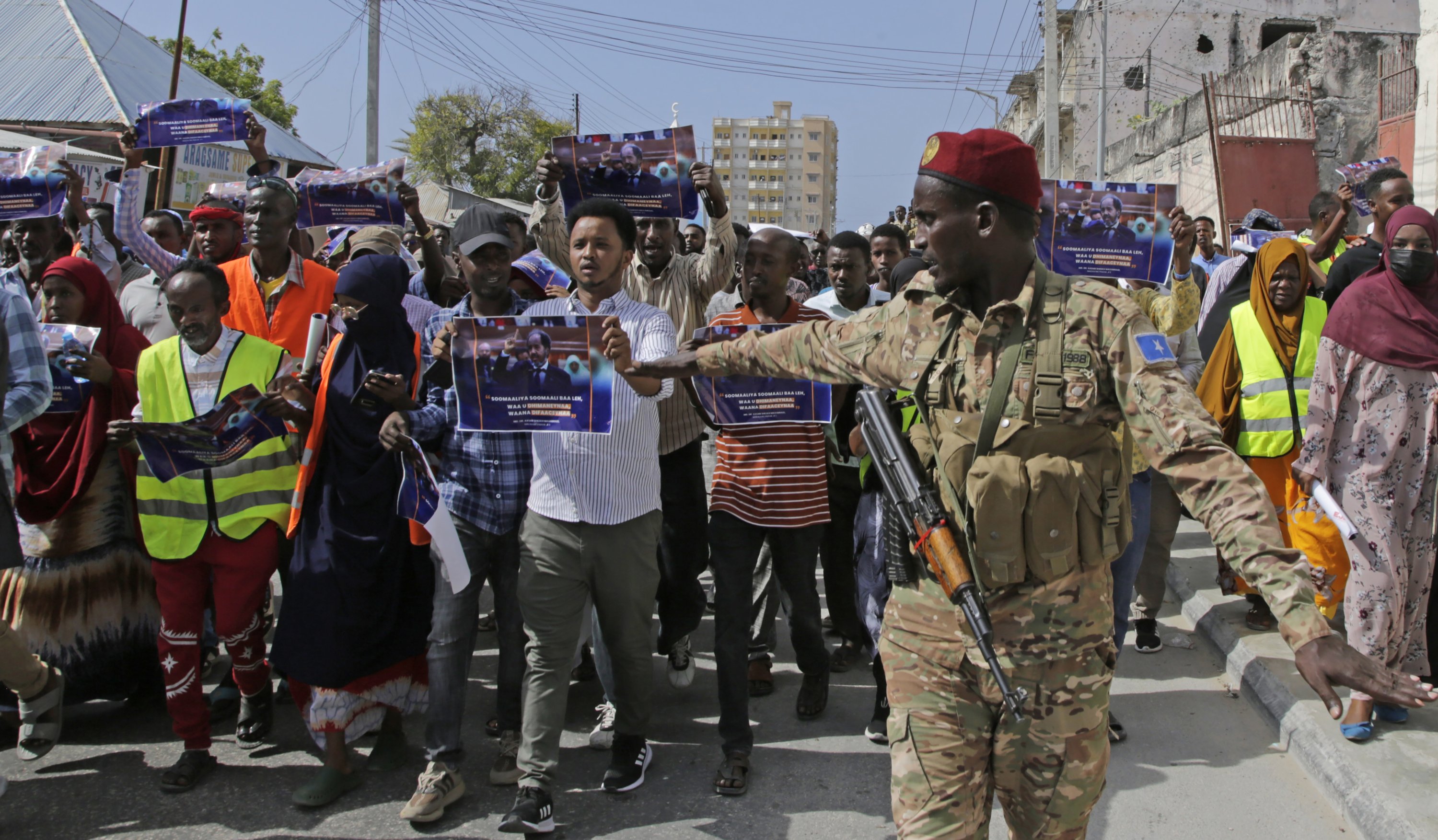
A Somali soldier controls the crowd as thousands of people attend a protest rally in Mogadishu, Somalia, Jan.3, 2024. (AP Photo)
by Abdirashid Diriye Kalmoy Feb 18, 2024 1:50 pm

On Jan. 1, a memorandum of understanding (MoU) signed in Addis Ababa by Ethiopia and Somaliland (a secessionist breakaway region in northern Somalia) ignited a diplomatic contretemps and a war of words between Somalia and Ethiopia. Somalia accused Ethiopia of undermining its territorial sovereignty, integrity and unity and consequently harboring plans to annex Somali territories.

Purportedly, this signed MoU agreement will grant landlocked Ethiopia a 20-kilometer (12-mile) piece of coastal land for establishing a military naval base and the right to construct a commercial port linked to Ethiopia. In return, Ethiopia would recognize Somaliland as an independent country – and would be the first to do so.

The signing of the MoU with breakaway Somaliland has reignited historical hostilities and anxieties between Somalia and Ethiopia. In a speech in parliament, Somali President Hassan Sheikh Mohamud swore that the Somali people would defend their territory and sea with their lives and blood, cautioning Ethiopia to retract from and render the MoU null and void. On the other hand, Ethiopia insists that the signed deal is commercial, will neither threaten Somali sovereignty nor will it lead to territorial annexation but will stabilize and boost economically both Somalia and Ethiopia.

The MoU Ethiopia signed has raised political tensions in a region that is already stagnated and perennially engulfed by perpetual violence, instability, famines and terrorism; and would be a wellspring of instability in the Horn of Africa region. But why has Ethiopia decided to sign a military deal with a breakaway region while disregarding in the process the legitimacy and sovereignty of the Federal Republic of Somalia?

An act of distraction

Ethiopia, a nation with a population of 120 million, lost its access to the Red Sea when Eritrea gained independence in 1993. Before Jan. 1, Ethiopian Prime Minister Abiy Ahmed embraced dangerous rhetoric and discourses that Ethiopia has a “historical right” to have access to the sea, and that it would achieve this through violent military means if negotiations fail. His national security advisor Redwan Hussien elucidated that Ethiopia cannot prosper and develop into a great power without having access to the sea.

However, behind the façade of projecting regional hegemony and power, Ethiopia is mired in internecine ethnic and rebel violence rendering major parts of the country unstable. Ever since Abiy Ahmed, a recipient of Nobel Peace laureate, came to power in 2018, Ethiopia descended further into cataclysmic violence and economic difficulties. A civil war erupted in Tigray leading to the death of nearly 600,000 people, and was followed by rebel violence in Amhara and Oromia regions.

To consolidate his shrinking nationalistic support base, Abiy Ahmed has resorted to Ethiopia’s ancient imperialistic fantasies of conquering and accessing the Somali coast and sea and messianic political rhetoric of being the savior and reviver of “powerful” Ethiopia. The MoU is a mobilizing drumbeat for Ethiopia’s fragmented internal politics but also a recipe for destabilizing the Somali peninsula.

The other signatory of this MoU, Somaliland, has failed to gain any recognition for its claimed independence for the last three decades. As a breakaway region of Somalia, Somaliland was celebrated to be politically stable and democratic unlike the rest of Somalia and hence deserved to be recognized as an independent country. However, after three decades of “recognition fatigue,” perennially postponed elections and violence in Las Anod, Somaliland’s aspired recognition seems foundering and out of reach.

The MoU with Ethiopia is a lifeline for the political elites in Hargeisa but could also lead to a violent fragmentation of Somaliland as a political entity. Somaliland already lost control of its Eastern region to the newly founded SSC-Khatumo state of Somalia, and there is a looming political uprising in the Awdal region occasioned by the MoU with Ethiopia.

Dangerous consequences

The MoU between Ethiopia and Somaliland is a recipe for violent destabilization of the Horn of Africa. First, the deal violates international laws that stipulate the inviolability and the sacrosanct nature of international borders and the national sovereignty of all countries. Hence the United Nations, the African Union, the Arab League, Türkiye, the United Kingdom and the United States all swiftly rejected the deal and affirmed Somalia’s territorial integrity and unity.

Second, the deal undermines gains made in Somali state-building efforts and stabilization. Countries like Türkiye, the U.S. and the U.K. invested in and contributed to the security and military capacity building of Somalia and the war against al-Shabab. The deal will boast al-Shabab’s recruitment strategies and propaganda against the Somali government in Mogadishu.

Finally, with the signing of the deal, Ethiopia resurrected its imperialistic and hegemonic ambitions in the region and this would equally lead to violent and militaristic counter-nationalistic sentiments and mobilizations in Somalia, Djibouti and Eritrea. Abiy Ahmed has indirectly revived the Greater Somalia (Soomaaliweyn) cause, narratives and discourses in the political, social and media spheres among Somalis.

History has returned in Eastern Africa, to use Canadian professor Jennifer Welsh’s term. For a region that has the potential for peace, integration and economic prosperity, latent grand narratives of imperialism, conquering and pan-nationalism were resurrected on Jan. 1.

Peaceful coexistence is possible

The Horn of Africa is geo-strategically significant for the global economy. Its proximity to the Red Sea, the Indian Ocean and the Bab el-Mandeb strait render it significant to the global flow of goods. Instability in the region will affect the global economy. All countries in the region can tap into this geo-strategic resource and collectively proper.

Ethiopia can have similar commercial deals like its arrangements with Djibouti with Somalia to access and use its numerous ports. This will enhance Somali infrastructure and open Ethiopia’s vast market to Somali traders and entrepreneurs. This will be a win-win for both countries and societies.

However, if the voices of reason don’t prevail in the region, the rhetoric and discourses of “we have a right to the sea” and other hegemonistic ambitions will unfortunately destabilize and engulf the Horn of Africa with violence.

About the author
Graduate student and a teaching fellow at Sociology Department, Ibn Haldun University
The views and opinions expressed in this article are solely those of the author. They do not necessarily reflect the editorial stance, values or position of Daily Sabah. The newspaper provides space for diverse perspectives as part of its commitment to open and informed public discussion.
  • shortlink copied
  • Last Update: Mar 18, 2024 2:35 pm
    KEYWORDS
    somalia-ethiopia ties somaliland ethiopia memorandum of understanding somalia al-shabaab
    The Daily Sabah Newsletter
    Keep up to date with what’s happening in Turkey, it’s region and the world.
    You can unsubscribe at any time. By signing up you are agreeing to our Terms of Use and Privacy Policy. This site is protected by reCAPTCHA and the Google Privacy Policy and Terms of Service apply.
    No Image
    Thai protesters use inflatable ducks against water cannons
    PHOTOGALLERY
    • POLITICS
    • Diplomacy
    • Legislation
    • War On Terror
    • EU Affairs
    • News Analysis
    • TÜRKİYE
    • Istanbul
    • Education
    • Investigations
    • Minorities
    • Diaspora
    • World
    • Mid-East
    • Europe
    • Americas
    • Asia Pacific
    • Africa
    • Syrian Crisis
    • İslamophobia
    • Business
    • Automotive
    • Economy
    • Energy
    • Finance
    • Tourism
    • Tech
    • Defense
    • Transportation
    • News Analysis
    • Lifestyle
    • Health
    • Environment
    • Travel
    • Food
    • Fashion
    • Science
    • Religion
    • History
    • Feature
    • Expat Corner
    • Arts
    • Cinema
    • Music
    • Events
    • Portrait
    • Performing Arts
    • Reviews
    • Sports
    • Football
    • Basketball
    • Motorsports
    • Tennis
    • Opinion
    • Columns
    • Op-Ed
    • Reader's Corner
    • Editorial
    • Photo gallery
    • DS TV
    • Jobs
    • privacy
    • about us
    • contact us
    • RSS
    © Turkuvaz Haberleşme ve Yayıncılık 2021