Turkish women's attainment of the right to vote and be elected became an important part of the republic's goals of modernization and democratization. Although women had achieved some progress in education and social life in the final years of the Ottoman Empire, they remained deprived of political rights. The intense wars and political turmoil in the Ottoman Empire's final years were among the key reasons for this.
With the establishment of the new Turkish state, emphasis was placed on implementing comprehensive reforms in line with the principle of gender equality. Among these reforms was ensuring women's participation in political life. In 1930, women were granted the right to vote and be elected in municipal elections, and in 1933, they gained the right to be elected to village mukhtars and elder councils. The final step was taken on Dec. 5, 1934, with the amendment to the Constitution, granting women the right to vote and be elected as members of parliament. Following this constitutional amendment, the general elections held on Feb. 8, 1935, became the first elections in which Turkish women actually exercised their political rights.
Sociologist and historian Afet Inan played an important role in establishing the intellectual and scientific foundation for this process. She was one of the pioneers among the intellectuals of the Republican era who addressed the issue of women's rights within an academic framework. Her work on the position of women in Turkish history is particularly valuable.
Through her academic work, conferences and meetings with Mustafa Kemal Atatürk, the founding father of the republic, Inan advocated the view that women's participation in political life was essential for a democratic society. In this context, she was not only a supporter of the process of granting women the right to vote and be elected, but also an intellectual who contributed to establishing the intellectual foundations of this right.
Inan's influence on women's participation in political life became even more apparent with an incident in 1930. She was teaching a citizenship course at the Music Teachers' School during the 1929-1930 academic year. One day in this class, to help her students understand elections, she held a mock election in the classroom. When a female student won the election, one of the male students objected to the result, saying that according to the law, only men can vote, but Inan let female students vote too. In that period, women had neither the right to vote nor the right to be elected. Deeply saddened by this incident, Inan told Atatürk about it. The pasha consulted with lawyers and asked Afet Inan to research the subject. Following the work of expert lawyers in the field, on April 3, 1930, Law No. 1580 granted Turkish women the right to vote and be elected in municipal elections.
Inan completed the research task assigned to her by Atatürk and gave a lecture titled “Universal Suffrage for Women” at the Ankara Türk Ocağı on April 3, 1930. She stated at the outset that she would address the issue of women's suffrage and spoke about different forms of government in a democratic regime. In the second part, she touched upon the situation of women and how this situation was experienced in other countries. At the end of her speech, she expressed why women needed to participate fully in political life. The discussions following this conference bore their first fruit on Oct. 26, 1933. Law No. 2349 granted Turkish women the right to vote and be elected to village councils and as village mukhtar.
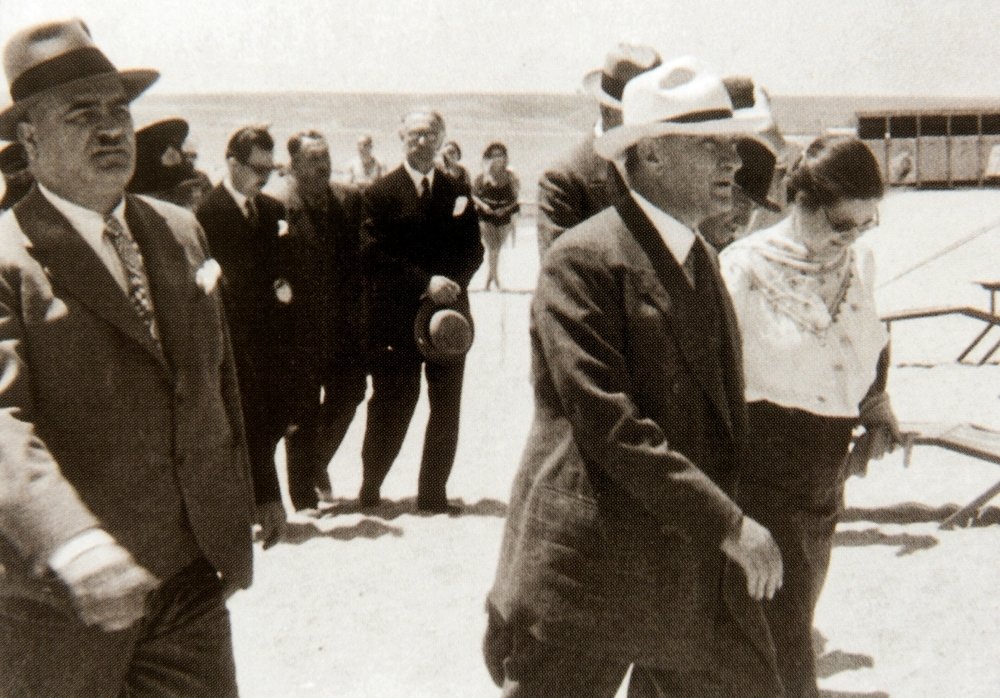
However, the issue of women's rights in general elections remained unresolved. In 1934, Atatürk and Ismet Inönü, who was prime minister at the time, worked through the night. After this, a proposal for constitutional amendments was submitted to the Grand National Assembly of Türkiye (TBMM). On Dec. 5, 1934, Articles 10 and 11 of the Constitution were amended, granting every Turkish woman the right to vote at the age of 22 and to be elected at the age of 30.
Feb. 8, 1935, is a historic turning point in terms of Turkish women's participation in the country's administration. In the general elections held on this date, Turkish women exercised their right to vote and be elected for the first time, not only going to the polls but also effectively gaining the right to be represented in the TBMM.
With the proclamation of the republic, fundamental transformations were aimed at in all areas of social life, and gender equality was one of the cornerstones of this transformation. The rights granted in municipal elections in 1930 and in village muhktar elections in 1933 were crowned with the granting of the right to vote and be elected as members of Parliament to women with the amendment to the Constitution on Dec. 5, 1934. Following this legal regulation, the elections held on Feb. 8, 1935, marked a moment when the reforms in this area came to life and took concrete form.
In 1935, 18 female members of Parliament entered the TBMM, taking their place in the country's political life. Considering the global conditions of the time, this was an extremely important step that set an example for other countries. Women in many European countries gained these rights later than in Türkiye. Women's first participation in elections became one of the most important agenda items of the election period. Both in the press of the period and in Parliament, the necessity and importance of granting women the right to vote were emphasized, and the issue remained on the agenda through cartoons and opinion pieces.
Feb. 8, 1935, is not just an election date; it symbolizes Turkish women gaining their most important civil right, their presence in the country's administration and their place in decision-making mechanisms. This is also a result of the republic's ideal of modernization and women's long struggle. While Atatürk's leadership was decisive in this achievement, İnan's contributions, which complemented the scientific aspect of the issue, played an important role in shaping the process.
As we mark the 91st anniversary today, it is of great importance to understand the historical process, to appreciate the value of these rights that have been achieved and to take them further. The step taken by Turkish women on Feb. 8, 1935, continues to live on as a valuable legacy on the path to democracy.