In recent years, technological advancements, population growth and humanity’s increasing impact on nature have led to a rapid rise in global energy demand. During this period, industrialized countries, in their efforts to meet growing energy needs, began to utilize not only fossil resources such as coal, oil and natural gas but also nuclear energy. Although renewable energy sources have gained popularity, their limited efficiency makes it unlikely for them to meet the continuously increasing energy demand on their own. Over the past 50 years, several developed and developing countries with limited fossil fuel reserves have turned to nuclear energy to ensure energy supply security. The primary motivations behind emerging countries’ pursuit of nuclear energy include meeting future electricity demand, enhancing energy security and reducing greenhouse gas emissions.
Currently, 31 countries around the world operate commercial nuclear power plants (NPP). As of 2025, a total of 411 reactors are in operation, with an overall installed capacity of approximately 371 GW. Nuclear energy today accounts for about 9% of global electricity generation, standing out as a strategic source that supports energy supply security. The fact that nearly 70 reactors are under construction demonstrates the determination of many countries to expand nuclear capacity in line with their carbon-neutral goals. This outlook indicates that nuclear energy will continue to play a defining role not only in the current global energy balance but also in shaping sustainable energy systems of the future.
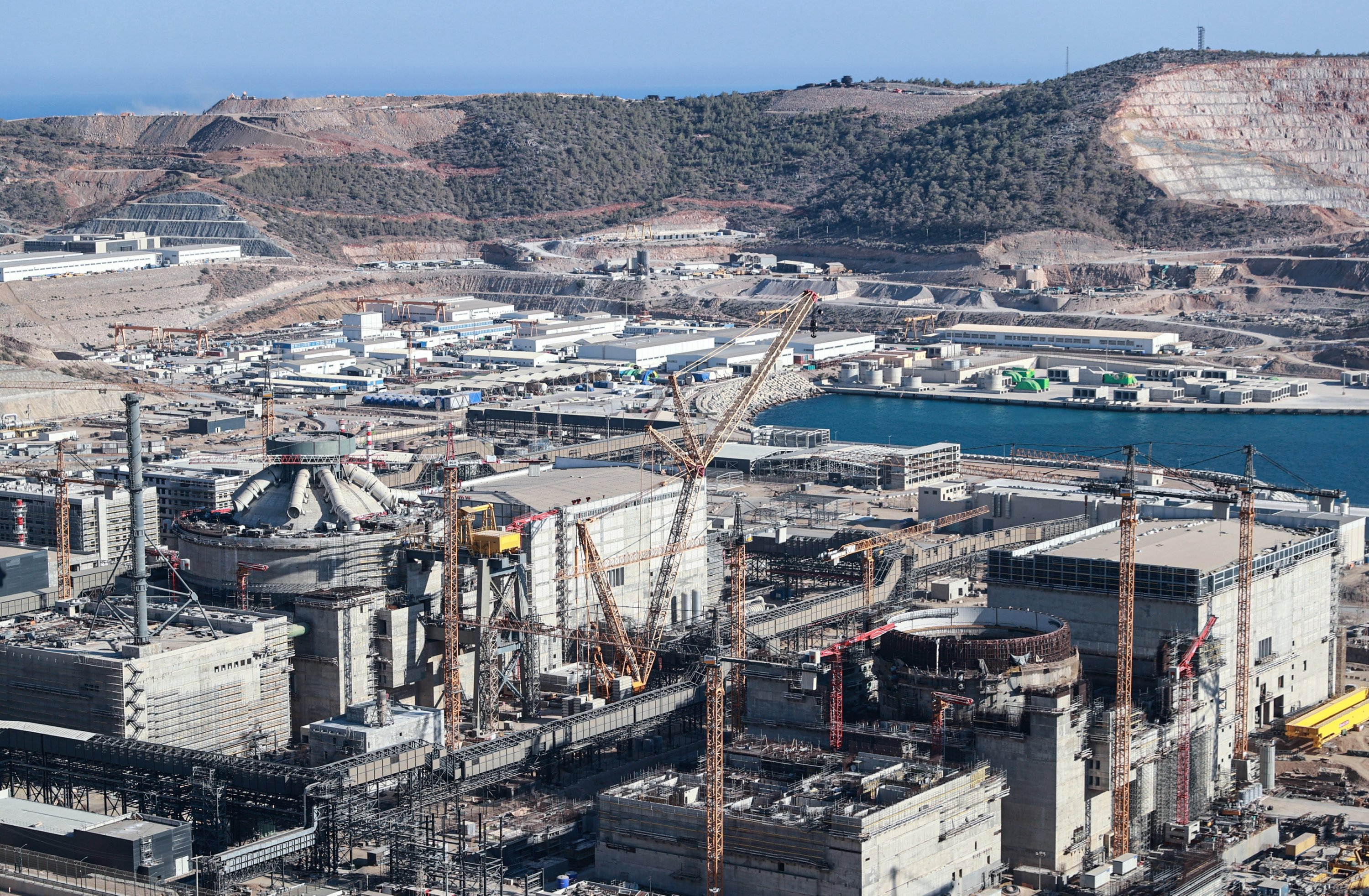
Despite delays, Türkiye has long strived to achieve significant capacity and has successfully integrated nuclear energy into its energy portfolio. The commissioning of the Akkuyu NPP represents a concrete step toward this goal. The primary objectives behind Türkiye’s nuclear efforts are to reduce dependence on imported fossil fuels, enhance energy security and improve the balance of trade. Despite its high initial costs, nuclear energy is regarded as a reliable baseload power source whose costs decrease over time.
The participation of foreign institutions in nuclear projects is expected to enhance Türkiye’s regulatory and technical expertise in nuclear technology; however, the anticipated technology transfer has not yet been fully realized. Recently, the climate-friendly characteristics of nuclear energy have become a major rationale, particularly under the European Union’s Carbon Border Adjustment Mechanism (CBAM), as it offers the potential to reduce greenhouse gas emissions and strengthen Türkiye’s position in climate diplomacy and green finance.
Türkiye’s efforts to integrate nuclear energy into its national energy strategy and develop domestic nuclear technology are progressing rapidly. The Turkish Energy, Nuclear and Mining Research Council (TENMAK) has taken over several capabilities from the Turkish Atomic Energy Administration (TAEK), while training agreements signed with Russia aim to educate Turkish nuclear facility personnel. Türkiye, which has outlined plans for significant technology transfer and domestic reactor development, is expected to encourage private sector participation to support this objective. Compared with the construction of the first nuclear plant, this represents progress toward localizing nuclear technology.
In an era when access to reliable and affordable energy has become critical, Türkiye distinguishes itself with an original approach known as the “Turkish Path.” Türkiye needs to establish a clear national nuclear program focused on developing an indigenous reactor for peaceful purposes. Coordination with the International Atomic Energy Agency (IAEA) and Euratom is vital for Türkiye’s R&D-based pursuit of nuclear capacity. Such cooperation is essential to ensure alignment with international standards and European designs.
In addition to Russian expertise, it is particularly important to diversify partnerships by strengthening collaboration with European and U.S. counterparts. Compliance with IAEA standards is indispensable for guaranteeing safety, security and safeguards. Türkiye’s nuclear energy policy concerning project development and management requires updates to address legal and policy issues more effectively. Since Russian state company Rosatom was the sole bidder in a previous tender, the transition toward more competitive tenders and international agreements must be reconsidered. Revising Türkiye’s legal framework for nuclear project tenders to promote transparent and fair competition between domestic and international companies is essential. This revision should emphasize nuclear safety, economic feasibility and technology transfer.
While the sensitive nature of nuclear projects necessitates confidentiality in certain aspects to protect investor interests, adopting international best practices for nuclear tenders would make it possible to strike a balance between transparency and discretion. Establishing a nuclear energy sector requires a high level of technological sophistication, compelling first-time nuclear countries to engage in partnerships with states possessing advanced nuclear programs. Such partnerships facilitate the transfer of complex technical knowledge, specialized equipment and compliance with international safety standards, all of which are crucial for the safe and efficient operation of nuclear facilities.
Several countries have built nuclear plants under turnkey or build-operate-transfer models; however, in the past 15 years, Russia has introduced a new collaboration model through the Build-Own-Operate (BOO) approach and has taken an active role in this market. The Akkuyu NPP, constructed by Rosatom since 2018, is the world’s first NPP built under the BOO model. The project represents Türkiye’s most concrete step in the field of nuclear energy and a major initiative on a regional scale. Implemented under an intergovernmental agreement between Türkiye and Russia, the project not only provides Türkiye with valuable experience in international nuclear cooperation but also serves as a model for the safe, sustainable and economically viable implementation of nuclear technology. Upon completion, the Akkuyu Plant will both increase Türkiye’s electricity generation capacity and add a new fundamental source to its energy supply.
Meanwhile, Türkiye has also developed a strategic perspective toward diversifying its nuclear cooperation. The key question for Türkiye is this: if the country aims to advance its nuclear policy, how can it construct multisourced collaborations? At this juncture, joint projects with the U.S. present a strategic alternative. The signing of the “Strategic Civil Nuclear Cooperation Memorandum of Understanding (MoU)” between Türkiye and the U.S. in 2025 has been a tangible sign of this orientation. This agreement aims to enhance cooperation opportunities in areas such as nuclear technology transfer, joint investment, capacity building, reactor construction and fuel management.
Cooperation with the U.S. offers particular advantages, as the American Atomic Energy Act establishes a framework known as “Section 123 Agreements,” which governs nuclear cooperation under legally binding terms in areas such as technology transfer, reactor supply and fuel provision. Such agreements may enable Türkiye to procure advanced reactor technologies from U.S. firms, such as the AP1000 and Small Modular Reactor (SMR) systems and to play a participatory role in their maintenance and operational processes.
Although a “peaceful cooperation agreement” similar to a Section 123 Agreement signed between Türkiye and the U.S. in 2008 remains in effect, practical cooperation has been limited. Collaboration with the U.S. could also provide Türkiye with an opportunity to open its nuclear market to private sector participation and move toward a more competitive structure. While nuclear projects have traditionally been viewed as large, state-supported initiatives, the growing technological maturity of the sector allows for greater private involvement. Areas such as modular reactor manufacturing, maintenance and repair services, software systems and fuel optimization may be undertaken by private companies.
In the U.S., the private sector plays a significant role across the nuclear energy market, from licensing and technology development to innovation. Adapting this dynamic to Türkiye’s policy framework would be possible through transparency, institutional capacity building and regulatory reform. The U.S. nuclear energy system, built on active private sector engagement, enables innovative models in technology development, reactor design and fuel cycle management. For Türkiye, this structure offers a crucial reference point for fostering private sector participation, enhancing technology transfer opportunities and cultivating a competitive ecosystem in nuclear energy production.
Within the framework of Türkiye’s nuclear energy policy, establishing diversified international partnerships carries strategic importance both for strengthening technical capacity and for ensuring long-term energy security. While the Akkuyu project with Russia has provided Türkiye with valuable experience in construction, licensing, safety and fuel management, the civil nuclear cooperation agreement with the U.S. will allow this experience to evolve into a model grounded in technology transfer, human resource development and R&D.
In this regard, Türkiye’s approach to nuclear energy is based on a mutually beneficial, multilateral and balanced cooperation model. The successful completion of existing projects, along with the realization of new investments with diverse partners in the future, will play a critical role in achieving Türkiye’s goals of energy supply security and sustainable development. Türkiye’s nuclear energy policy is not limited to diversifying energy production but is also built on a vision that includes technology acquisition, domestic industrial participation, the establishment of a nuclear safety culture and the deepening of international cooperation. The current partnership with Russia and the developing strategic memorandum with the U.S. constitute two complementary pillars of this vision. Through this multidimensional approach, Türkiye continues to advance toward becoming a stronger, more sustainable, and technologically capable actor in the regional energy landscape.