The Treaty of Berlin, signed on July 13, 1878, marked a major turning point in the European international system, testing the great powers' ability to manage crises through diplomatic negotiation rather than armed conflict. The Congress of Berlin also reflected the broader political context of an era in which the close relationship between heavy industry, technological advancement and military power was becoming increasingly apparent.
Today, the international security architecture is entering a new phase in which artificial intelligence, unmanned systems, integrated air defense networks, and cyber sovereignty are increasingly converging. This emerging integration of the defense industry, advanced technology, and state power can be described as the "Neo-Kruppist" paradigm. In this context, global power depends not only on processing raw materials or mass-producing conventional weapons but also on the capacity to develop cutting-edge technologies, secure critical supply chains, and rapidly mobilize industrial production infrastructure.
The Ankara NATO Leaders’ Summit, held on July 7-8, served as a concrete demonstration of this transformation. The procurement agreements announced in Ankara, the expansion of joint production capacity, the strengthening of institutional cooperation within the defense industry, and increased investment in artificial intelligence and unmanned systems collectively represent a clear declaration of the alliance’s determination to adapt to the demands of industrial mobilization in the emerging strategic environment.
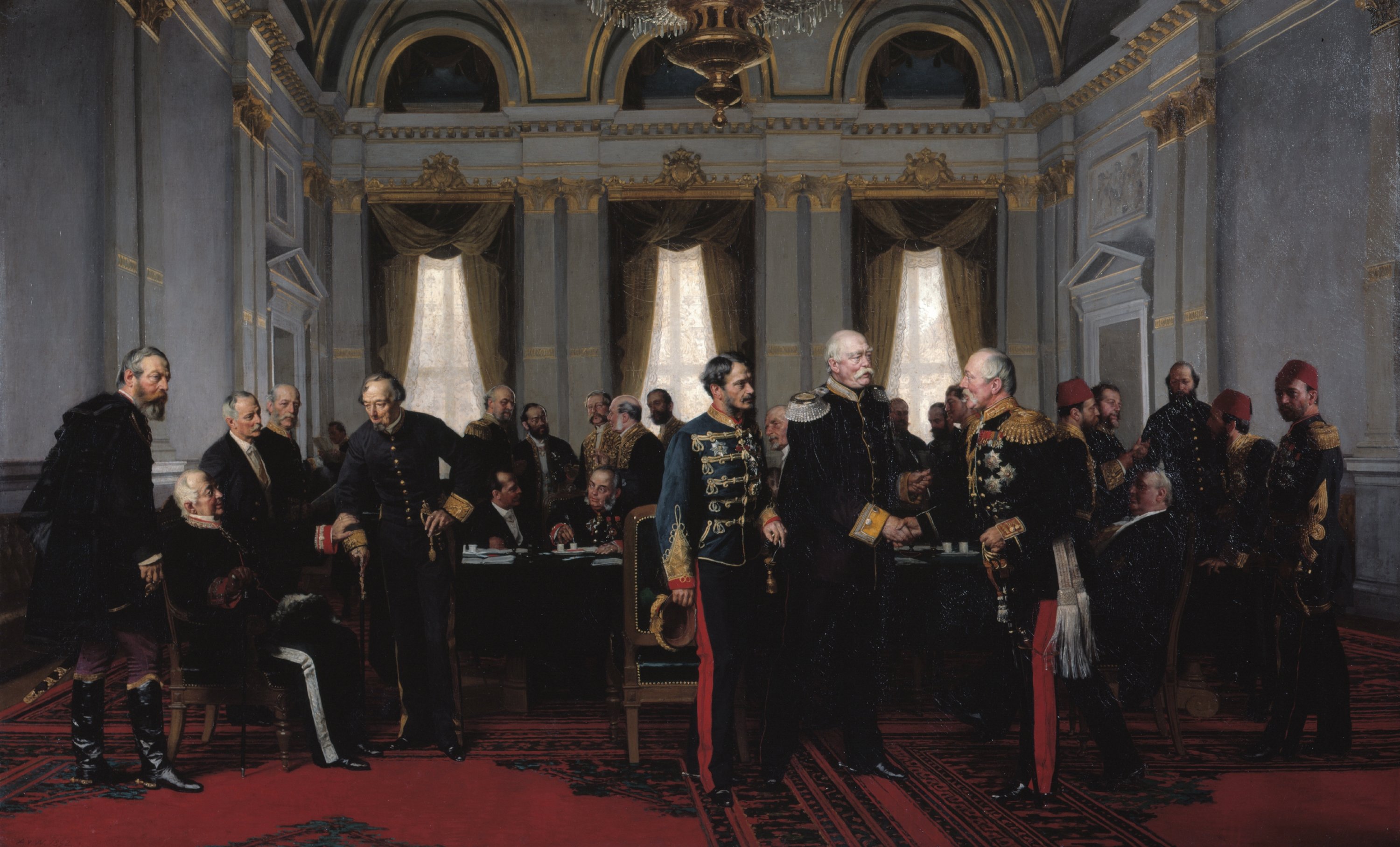
In this context, I draw attention to two images separated by nearly a century and a half. The first is German painter Anton von Werner’s painting of the Berlin Congress in 1878. The second is the photo of leaders from the Ankara Summit.
This comparison is not an anachronistic contrivance but a deliberate methodological choice informed by Fernand Braudel’s concept of the longue durée (long-term perspective), which seeks to move beyond momentary fluctuations in historical events. Viewed through this lens, the sense of exclusion experienced by the Ottoman delegation at the Berlin Congress in 1878 and the central role assumed by Ankara in 2026 can be understood as distinct ruptures and transformations within the historical continuity of the same geopolitical current.
The Ottoman Empire, and later the Republic of Türkiye, has always occupied a central position in Eurasian geopolitics. Situated at the crossroads of three continents and commanding the Mediterranean and Black Sea basins as well as the principal East-West trade routes, the Ottoman Empire constituted a foundational pillar of the European balance of power. Consequently, its reduction during the 19th century to a passive object of the "Eastern Question" should not be regarded as a permanent characteristic of this geostrategically vital region but rather as a temporary interruption in a much longer historical trajectory.
Following the 1877-1878 Russo-Ottoman War and the Treaty of San Stefano, the prospect of Russian influence extending through the Balkans to the warm-water seas became increasingly evident, while the Paris Settlement of 1856, which had guaranteed the Ottoman Empire’s territorial integrity, had effectively collapsed. Consequently, the Congress of Berlin was convened to limit Russia’s unilateral dominance, prevent a looming continental war, and reconstruct the European balance of power that had been undermined since the Crimean War.
Although the Congress succeeded in preventing direct conflict among the great powers in the short term, it failed to provide a lasting solution to the questions of borders, nationalism and minority rights in the Balkans. Instead, it merely bought time. This temporary respite created a strategic opportunity for Berlin to secure a stronger position in future struggles over the distribution of power. Germany capitalized on this opportunity not only through diplomacy but also by expanding its arms exports and military influence.
In the post-Congress period, the principal driver of German influence within Ottoman territory was the German arms industry, led by the Krupp family. The fact that a substantial portion of the Ottoman Army’s artillery inventory during the reign of Sultan Abdulhamid II was supplied by Krupp factories gave rise to a system of arms diplomacy, which can be described as "Kruppism," and was further reinforced through German military missions.
This model, in which arms sales, credit, military advisory missions, and political influence were closely intertwined, transformed the Berlin-Istanbul axis into a strategic partnership extending from the Baghdad Railway to the oil fields of the Middle East. It also laid the economic and military foundations for the alliance formed in 1914. Within this framework, arms were not merely instruments of war but also mechanisms of political dependence; the Ottoman Empire remained the recipient of military assistance and the object of strategic direction.
This new order, established in 1878, was also inscribed into the collective memory through Anton von Werner’s famous Congress of Berlin painting, commissioned by the Berlin Senate. In the composition, Werner places Chancellor Otto von Bismarck at its center as Europe’s "honest broker," while relegating the Ottoman delegation to the periphery of the canvas. He reinforces this visual hierarchy by positioning Marshal Mehmet Ali Pasha in isolation at the far right.
Born in Magdeburg as Karl Detroit, Mehmet Ali Pasha was a former Prussian who fled to Istanbul as a young man aboard a ship, converted to Islam, and rose to the rank of marshal in Ottoman service. He was later sent to Berlin as part of Sultan Abdülhamid II’s calculated diplomatic strategy.
Bismarck viewed the presence of a German-born convert, who had even adopted the name Mehmet Ali, at the negotiating table as a representative of the Ottoman Empire as a personal affront, and he made his discomfort evident throughout the congress. Werner, who was acutely aware of Bismarck’s sensitivities, relegated Mehmet Ali Pasha to the edge of the composition, depicting him in a solitary and melancholic posture. In doing so, the Pasha became a symbolic representation of both the hierarchy of power at the Berlin Congress and the diplomatic isolation of the Ottoman Empire.
The fragile balance established in Berlin was soon undermined by the accelerating industrial arms race. Rather than resolving the imperial question, the Berlin settlement evolved into an arrangement that generated new disputes over borders and minority populations, ultimately collapsing with the outbreak of the Balkan Wars. This process culminated in World War I, a global reckoning that brought an end to the six-century-old Ottoman Empire and gave way to the emergence of the young Republic of Türkiye. During the interwar period, the Republic established its own security architecture and pursued a rational strategy of active neutrality throughout World War II.
In line with its geopolitical vision centered on peace and cooperation since the founding of the Republic, Türkiye made a historic strategic choice in response to the rising Soviet threat after World War II and joined NATO on Feb.18, 1952. This membership, which reshaped the longstanding regional balances of the 19th century through the Cold War framework of collective defense, became a cornerstone of Türkiye’s security policy. By securing a strong security guarantee through Article 5 of the Washington Treaty, Türkiye’s role within the alliance evolved alongside periodic disagreements and mutual dependencies. Through its contribution to safeguarding NATO’s southeastern flank throughout the Cold War and its active involvement in various crises, Türkiye emerged as a strategically significant ally within the alliance.
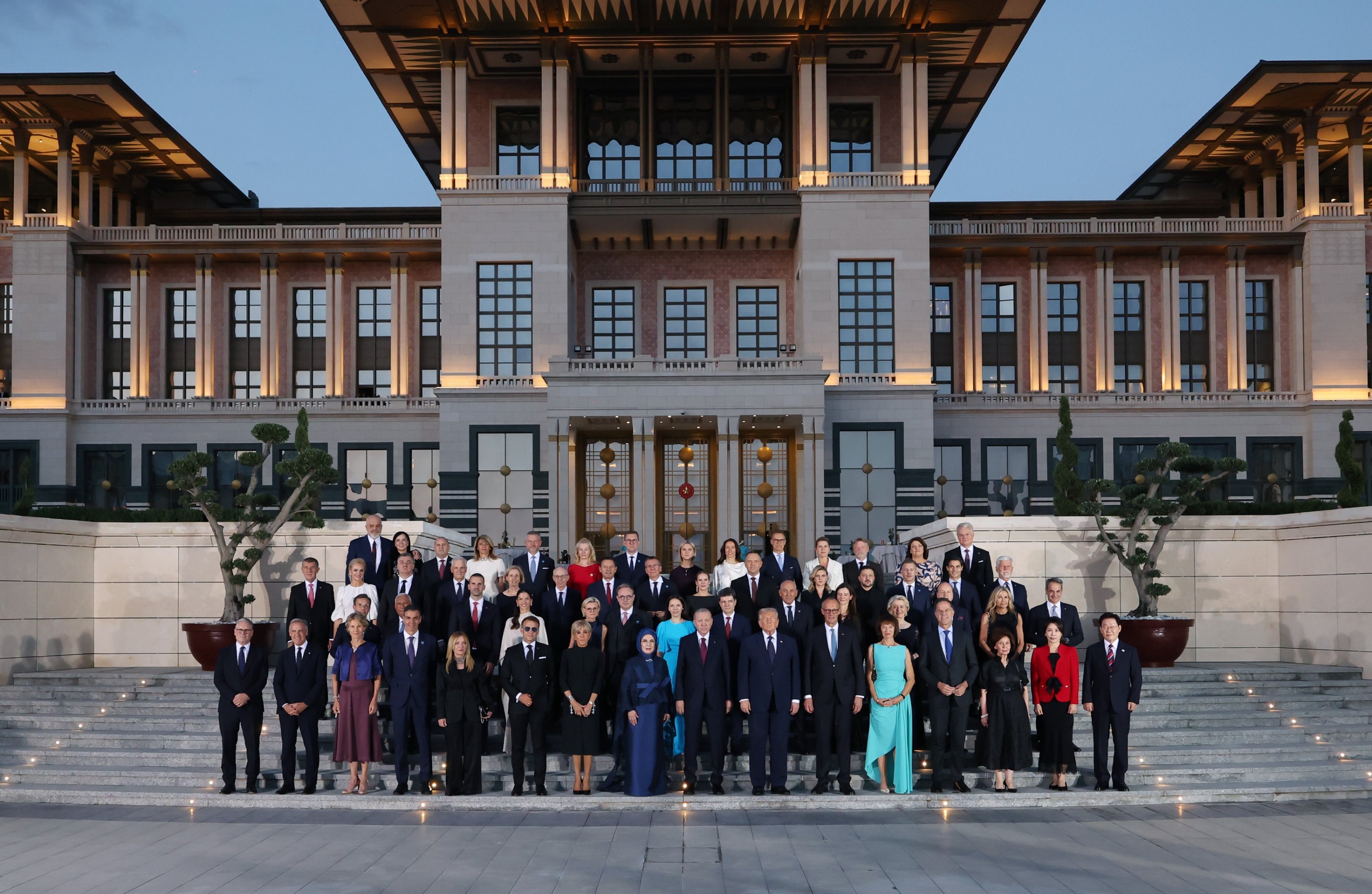
History does not repeat itself exactly; however, the international system may assign similar roles to different actors across different periods. In today’s fragmented world, the factor that distinguishes Türkiye is its position as one of the few actors capable of engaging simultaneously with competing power centers.
By complementing the Western ties provided by its NATO membership with a multifaceted diplomatic approach toward Moscow, Kyiv, the Islamic world, Turkic states and Africa, Ankara is emerging as an increasingly important hub for dialogue and negotiation.
The Russia-Ukraine talks, the Black Sea Grain Initiative, prisoner exchanges, the Ethiopia-Somalia Ankara Declaration, and the Astana process represent only a few concrete examples of this multichannel diplomacy. President Recep Tayyip Erdoğan’s direct and cordial relationships with various leaders, along with his emphasis on crisis diplomacy, have strengthened the institutional impact of personal diplomacy within Turkish foreign policy.
Former U.S. Secretary of State Henry Kissinger’s observation that “As a professor, I tended to think of history as run by impersonal forces. But when you see it in practice, you see the difference personalities make” effectively illustrates the influence of personality and leadership in shaping diplomatic outcomes.
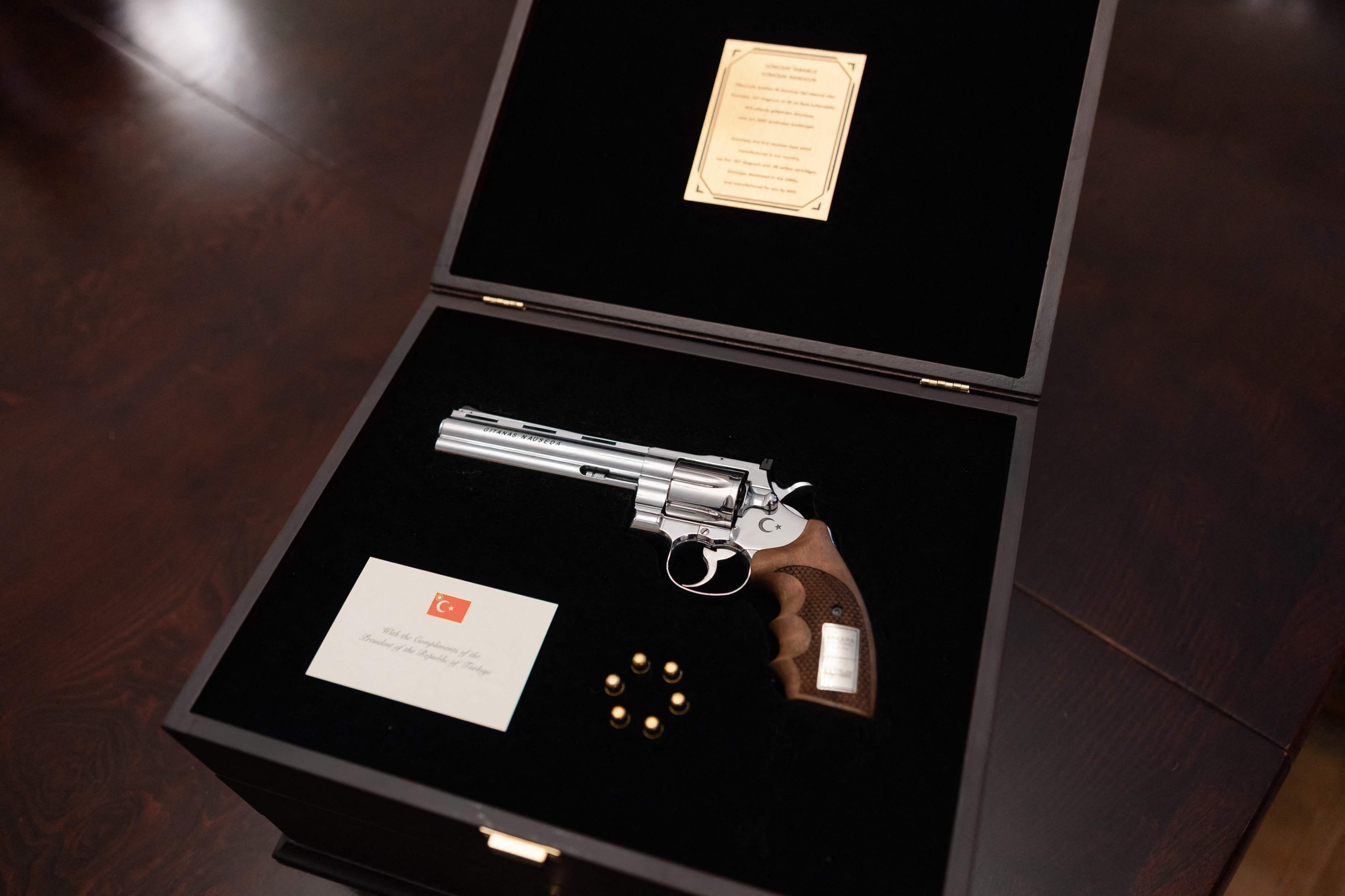
The domestically produced “Silvermoon” (Gümüşay) magnum revolvers, engraved with the names of the leaders and presented to them by President Erdoğan at the Ankara summit, provide a powerful example of this symbolism.
This gesture, which demonstrates that security commitments acquire meaning only when supported by industrial production capacity, may have generated debate and hesitation in some allied capitals regarding firearms legislation and diplomatic protocol. Nevertheless, when viewed through a longue durée perspective, the gift can be interpreted as a symbolic realpolitik message emphasizing Türkiye’s growing domestic defense production capabilities.
The factor that makes it meaningful to view Werner’s painting and the group photograph from the Ankara Summit through the same historical lens is precisely the profound transformation that Türkiye has undergone. This historical process, stretching from Berlin to Ankara, symbolizes not only the shift in global centers of power but also the manner in which Türkiye has redefined its geopolitical position.
Unlike the Ottoman delegation depicted on Werner’s canvas, representing a defeated empire whose territories were subject to division, and unlike the Türkiye that became dependent on Marshall Plan aid after World War II, today’s Türkiye is developing the capabilities to move beyond being merely an object of power politics. Through defense production, alliance membership, and multifaceted diplomacy, it is increasingly able to manage its international relations with greater strategic autonomy.