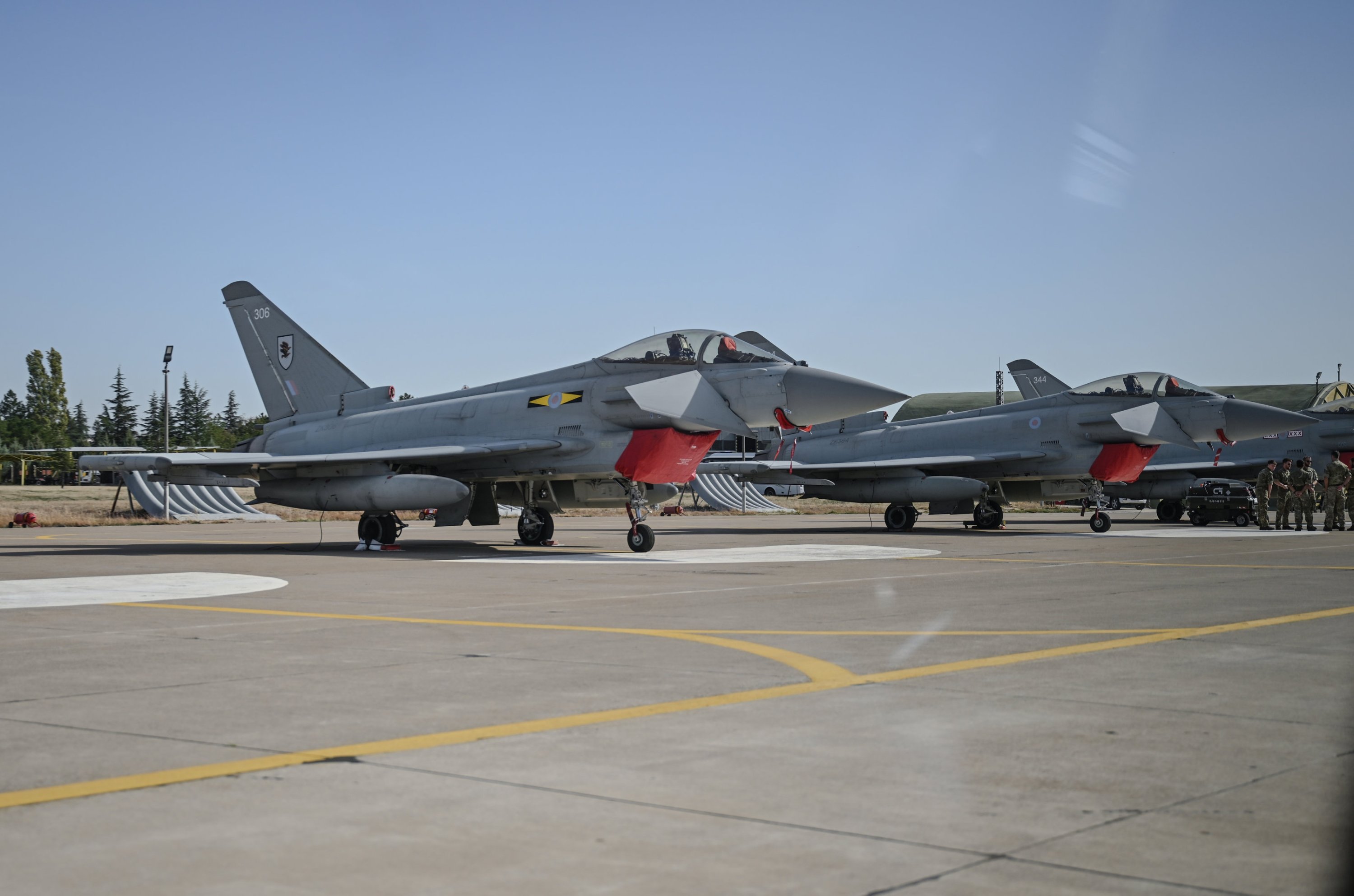
Türkiye’s process of modernizing its air force became a necessity following its removal from the F-35 program and the S-400 crisis. In this context, negotiations accelerated with the Eurofighter consortium, which includes the U.K., Italy and Spain. However, Germany’s long-standing veto became the most critical obstacle to Türkiye’s strategic move. This objection, justified by Berlin under the rhetoric of a “value-based foreign policy,” was associated with Türkiye’s cross-border operations, energy policies in the Mediterranean and domestic political practices. This resistance became even more pronounced during former Chancellor Olaf Scholz's government, in which the Green Party played an influential role.
After the 2025 elections, Friedrich Merz, who assumed the chancellorship in Germany, initiated a remarkable transformation in policy toward Türkiye. Despite the Social Democrats holding the Ministry of Defense, the Merz-led government approved Türkiye’s Eurofighter purchase. This decision should be evaluated not merely as a technical export license, but as part of Germany’s process of redefining Türkiye as a “strategic partner.” Merz’s official reception at the Presidential Complex, his visit to Anıtkabir, inter-delegation meetings and joint press statements reinforced the symbolic and diplomatic dimension of this strategic rapprochement. Merz’s statement, “We must better utilize the great potential in our relations with Türkiye,” reflects the political determination behind this transformation.
Türkiye’s Eurofighter Typhoon fighter jet procurement process should be considered not only as a defense acquisition but also as a multi-layered diplomatic victory. This success is a concrete reflection of Türkiye’s patient, multidimensional and results-oriented diplomacy in international relations. First and foremost, the lifting of Germany’s years-long veto is the result of Türkiye’s diplomatic patience and strategic communication skills. The 8 billion pound ($10.7 billion) agreement signed with the U.K. reveals Türkiye’s capacity to diversify and deepen international cooperation in the defense industry. This agreement is not merely a commercial understanding between two countries; it is also a step that reinforces Türkiye’s strategic role within NATO. Statements made by U.K. Prime Minister Keir Starmer during his visit to Türkiye indicate that this cooperation will pave the way for long-term defense projects and enable the armed forces of both countries to work more closely together.
The planned procurement of 24 Eurofighter jets from Qatar and Oman constitutes a complementary part of Türkiye’s strategy to diversify regional defense partnerships. These acquisitions demonstrate Türkiye’s intention to establish coordination in the field of defense not only with Western countries but also with its allies in the Gulf region. Moreover, this diversity helps Türkiye reduce its dependence on a single source in its supply chain and increases its operational flexibility.
Türkiye’s emphasis on its domestic defense industry during this process should not be overlooked. The project of Kaan, Türkiye's locally made fifth-generation stealth fighter jet, reveals Türkiye’s determination to increase its domestic production capacity in parallel with foreign acquisitions. The Eurofighter procurement does not diminish interest in the Kaan project; rather, it is positioned as a strategic complement to domestic production. This approach aligns with Türkiye’s goals of reducing foreign dependency and enhancing technological competence in its defense policies.
From Türkiye’s perspective, overcoming Germany’s years-long resistance and securing approval for the Eurofighter sale, along with the 8 billion pound British-Turkish agreement, represents a diplomatic success. From the perspectives of Germany and the U.K., these developments are steps toward strategic rapprochement. This is evidenced by the recent visit of Merz, during which the goal of increasing the trade volume between Türkiye and Germany from $50 billion to $60 billion in the near term was emphasized, and by the visit of Starmer in the same week, during which agreements worth 8 billion pounds were signed.
From a defense standpoint, this decision aligns with the goal of balancing Türkiye’s regional role and defense capacity while enhancing its functionality within NATO. Germany’s security dilemmas arising from the Russia-Ukraine war and the Gaza war necessitate closer ties with actors like Türkiye, which possess strong diplomatic and military capabilities. Merz’s statements clearly express a desire for multifaceted cooperation with Türkiye in areas such as migration, energy, trade and security. Additionally, according to the U.K.'s Ministry of Defense, this agreement will contribute to the sustainability of a workforce of 20,000 people across the U.K. The Eurofighter procurement is not only a significant step in Türkiye’s defense modernization but also a model success in diplomatic initiative. Overcoming Germany’s years-long resistance is not merely a technical achievement – it is a political and strategic gain. This development is a concrete indicator of Türkiye’s capacity to conduct multidimensional, patient and results-oriented diplomacy in international relations.