Daily Sabah logo

Politics
Diplomacy Legislation War On Terror EU Affairs Elections News Analysis
TÜRKİYE
Istanbul Education Investigations Minorities Expat Corner Diaspora
World
Mid-East Europe Americas Asia Pacific Africa Syrian Crisis Islamophobia
Business
Automotive Economy Energy Finance Tourism Tech Defense Transportation News Analysis
Lifestyle
Health Environment Travel Food Fashion Science Religion History Feature Expat Corner
Arts
Cinema Music Events Portrait Reviews Performing Arts
Sports
Football Basketball Motorsports Tennis
Opinion
Columns Op-Ed Reader's Corner Editorial
PHOTO GALLERY
JOBS ABOUT US RSS PRIVACY CONTACT US
© Turkuvaz Haberleşme ve Yayıncılık 2026

Daily Sabah - Latest & Breaking News from Turkey | Istanbul

  • Politics
    • Diplomacy
    • Legislation
    • War On Terror
    • EU Affairs
    • Elections
    • News Analysis
  • TÜRKİYE
    • Istanbul
    • Education
    • Investigations
    • Minorities
    • Expat Corner
    • Diaspora
  • World
    • Mid-East
    • Europe
    • Americas
    • Asia Pacific
    • Africa
    • Syrian Crisis
    • Islamophobia
  • Business
    • Automotive
    • Economy
    • Energy
    • Finance
    • Tourism
    • Tech
    • Defense
    • Transportation
    • News Analysis
  • Lifestyle
    • Health
    • Environment
    • Travel
    • Food
    • Fashion
    • Science
    • Religion
    • History
    • Feature
    • Expat Corner
  • Arts
    • Cinema
    • Music
    • Events
    • Portrait
    • Reviews
    • Performing Arts
  • Sports
    • Football
    • Basketball
    • Motorsports
    • Tennis
  • Gallery
  • Opinion
    • Columns
    • Op-Ed
    • Reader's Corner
    • Editorial
  • TV
  • Opinion
  • Columns
  • Op-Ed
  • Reader's Corner
  • Editorial

G-7's determined tone is welcome, but talk alone won't end wars

by Umar Tasleem

Jun 21, 2026 - 12:12 pm GMT+3
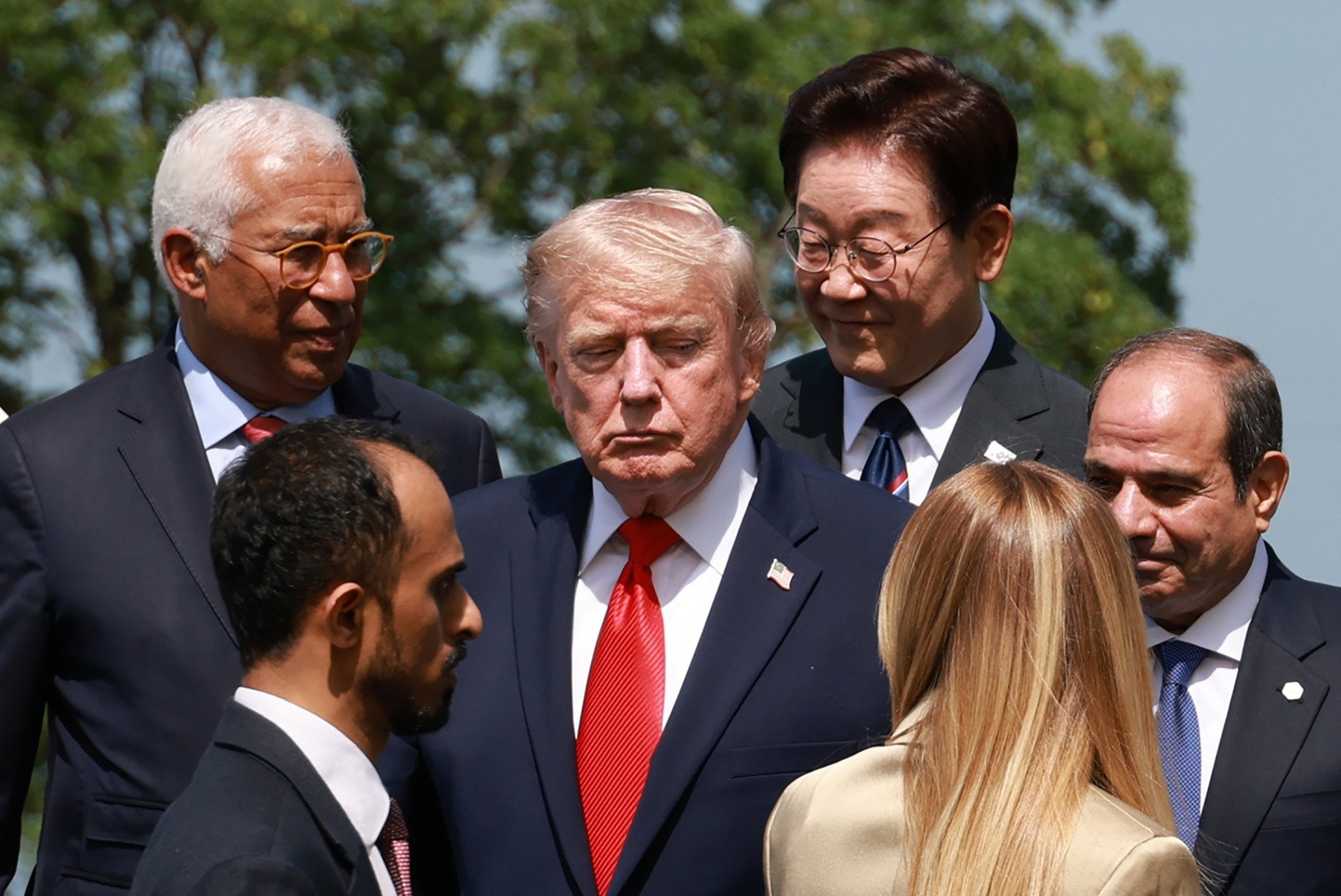
(L-R) European Council President Antonio Costa, U.S. President Donald Trump, South Korean President Lee Jae Myung, Italian Prime Minister Giorgia Meloni, and Egyptian President Abdel-Fattah el-Sissi prepare for a group picture at Hotel Royal during the G-7 summit, Evian-les-Bains, France, June 16, 2026. (EPA Photo)
by Umar Tasleem Jun 21, 2026 12:12 pm

G-7 unity on Russia is hardening in rhetoric, but similar statements have been made throughout the Ukraine war

The G-7 summit in Evian-les-Bains produced one genuine breakthrough last week: a signed memorandum to end the war between the U.S. and Iran. It also produced something less concrete but still notable: a sharper, more united tone from Western leaders toward Russia. The two outcomes sat side by side at the same summit, and the contrast between them is worth thinking about.

For years, U.S. President Donald Trump's approach to the Ukraine war has frustrated European allies, who never quite knew whether Washington saw Russia as the problem or simply as an inconvenience to be managed. Last year's G-7 summit ended with Trump walking out early. This year, he stayed, signed onto a joint statement referencing the war, and spoke with visible impatience about the toll the fighting has taken. German Chancellor Friedrich Merz called the statement a success. French President Emmanuel Macron went further, describing a big change in the American position.

That is a significant step, but whether it will be the beginning of further change remains an open question.

The substance behind the new unity is a promise to tighten sanctions on Russia's war economy, particularly its fossil fuel revenues, along with more air defense supplies for Ukraine and new licenses for Ukrainian companies to build long-range missiles. These are important measures, but sanctions have been tightened before, and Russia has adapted before.

What changed last week is tone, not leverage. Trump himself summed up the limits of the moment when he said of his conversations with Ukrainian President Volodymyr Zelenskyy and Russian President Vladimir Putin that both want to do something; they just do not know how to do it. That is an honest admission, but still, it is not a plan.

The risk for the G-7 is that unity becomes its own achievement, celebrated in a joint statement, while the war itself grinds on largely unchanged. Three years into this conflict, words of frustration from Western leaders are no longer in short supply. Results are.

For countries like Türkiye, sitting at the edge of both the Black Sea and the wider Middle East, the stakes in getting this right are not abstract. Ankara has already raised concerns directly with Moscow about drone attacks near its coastline, including one on a Turkish-owned vessel, and continues to offer itself as a venue for talks between Kyiv and Moscow. A G-7 that talks tough but cannot translate that into an actual negotiating breakthrough leaves regional players to manage the fallout in the meantime, from shipping risks to energy markets to the broader question of who eventually sits down to negotiate an end to the war.

The Iran agreement signed at Versailles shows what is possible when major powers commit to an actual document with actual terms. The G-7's new language on Russia shows only that the appetite for pressure has grown. But we should not forget that this appetite is only a start, not a result. Until tougher words are matched by a clear path to negotiations, the unity celebrated this week in Evian will remain a mood, not an outcome.


About the author
Senior editor at A News and host of Türkiye’s Diplomacy, a show covering regional and global affairs
  • shortlink copied
  • KEYWORDS
    g7 summit g7 us-iran peace deal transatlantic alliance us-europe relations russia-ukraine war
    The Daily Sabah Newsletter
    Keep up to date with what’s happening in Turkey, it’s region and the world.
    You can unsubscribe at any time. By signing up you are agreeing to our Terms of Use and Privacy Policy. This site is protected by reCAPTCHA and the Google Privacy Policy and Terms of Service apply.
    No Image
    In photos: The forgotten Nubian pyramids of Sudan
    PHOTOGALLERY
    • POLITICS
    • Diplomacy
    • Legislation
    • War On Terror
    • EU Affairs
    • News Analysis
    • TÜRKİYE
    • Istanbul
    • Education
    • Investigations
    • Minorities
    • Diaspora
    • World
    • Mid-East
    • Europe
    • Americas
    • Asia Pacific
    • Africa
    • Syrian Crisis
    • İslamophobia
    • Business
    • Automotive
    • Economy
    • Energy
    • Finance
    • Tourism
    • Tech
    • Defense
    • Transportation
    • News Analysis
    • Lifestyle
    • Health
    • Environment
    • Travel
    • Food
    • Fashion
    • Science
    • Religion
    • History
    • Feature
    • Expat Corner
    • Arts
    • Cinema
    • Music
    • Events
    • Portrait
    • Performing Arts
    • Reviews
    • Sports
    • Football
    • Basketball
    • Motorsports
    • Tennis
    • Opinion
    • Columns
    • Op-Ed
    • Reader's Corner
    • Editorial
    • Photo gallery
    • DS TV
    • Jobs
    • privacy
    • about us
    • contact us
    • RSS
    © Turkuvaz Haberleşme ve Yayıncılık 2021