Israel's genocidal war on Gaza and expansionist strategy toward the Middle East has revealed that the Zionist regime intends to expand the invasion far beyond its borders. The war on Gaza and the Gazan people not only impacts Palestinian lives but also reveals complex geopolitical dynamics, highlighting long-standing issues within U.S. politics, energizing competitors like China and Russia, exposing European divisions, stirring global public protest and revealing a noticeable lack of Islamic solidarity. Furthermore, the conflict challenges traditional notions of state power or superiority. As a result, the Oct. 7 Al-Aqsa Flood Operation has caused international spillovers and broader geopolitical effects.
U.S. President Joe Biden has demonstrated his support for Israel throughout his presidency. In several public statements, Biden declared himself a Zionist, thus implying that supporting Israel is a "holy duty" even if the Israeli army commits genocide. Moreover, both parties in the U.S., Republicans and Democrats, compete to surpass each other in their pro-Israel rhetoric, leading to increased scrutiny of American foreign policy and allegations of hypocrisy. This unconditional support has damaged the U.S.’s global image, as its foreign policy framework increasingly appears to comply with a double standard.
U.S. policies have fueled anti-American sentiments worldwide, as Washington’s democracy promotion policy fails when it ignores addressing alleged Israeli war crimes. In the Middle East and beyond, resentment towards U.S. policies is growing daily. Domestically, American Muslim communities – historically inclined towards the Democratic Party – are becoming disappointed. Michael Dunne of the Arab Center in Washington argues that states like Michigan, strongholds for Muslim American voters, are now politically ambiguous. This shift hints at a potential “American Intifada,” where Muslim Americans might abstain from supporting any candidate in the 2024 elections. This situation reveals how deeply the Gaza conflict is entangled in U.S. political shifts.
China and Russia have seized the moment to exploit the widening power gap created by the U.S.’s polarizing stance. Both nations present themselves as credible alternatives in the global arena, fostering ties with Palestinian factions and proposing themselves as potential mediators in the Israeli-Palestinian conflict.
China’s proactive engagement was evident in July when it hosted 14 Palestinian political groups, indicating its willingness to play a mediating role in the conflict. Russia, while maintaining a balanced strategy, has also extended diplomatic outreach, welcoming Hamas officials to Moscow and abstaining from condemning the Oct. 7 events. By shifting global attention from Ukraine to Gaza, Russia seeks to mitigate criticism of its actions while offering itself as a counterbalance to U.S. influence. These initiatives underscore Beijing and Moscow’s ambitions to reshape the power dynamics in the Middle East, challenge U.S. dominance and seek international support from those critical of Washington’s policies.
European Union members have generally sided with Israel, with countries like Germany, Italy and France affirming Israel’s right to self-defense while largely ignoring Israeli genocide in Gaza. This response has underscored Europe’s dependency on Israeli security and intelligence cooperation, as well as its complex ties with the U.S. Yet, a divergence within European politics is clearly obvious. Countries such as Ireland, Spain and Malta have sided with the Palestinians, condemning Israel’s actions in Gaza. Spain’s Prime Minister Pedro Sanchez has taken a step further by recognizing Palestinian statehood and lobbying other nations to follow suit. Spanish diplomats have even contacted Norway to build a coalition advocating for Palestinian sovereignty. This internal division highlights the tension between pro-Israeli sentiment and a growing sympathy for Palestinian rights within Europe. Such ruptures not only strain EU unity but also reflect broader debates over Europe’s moral and political alignments.
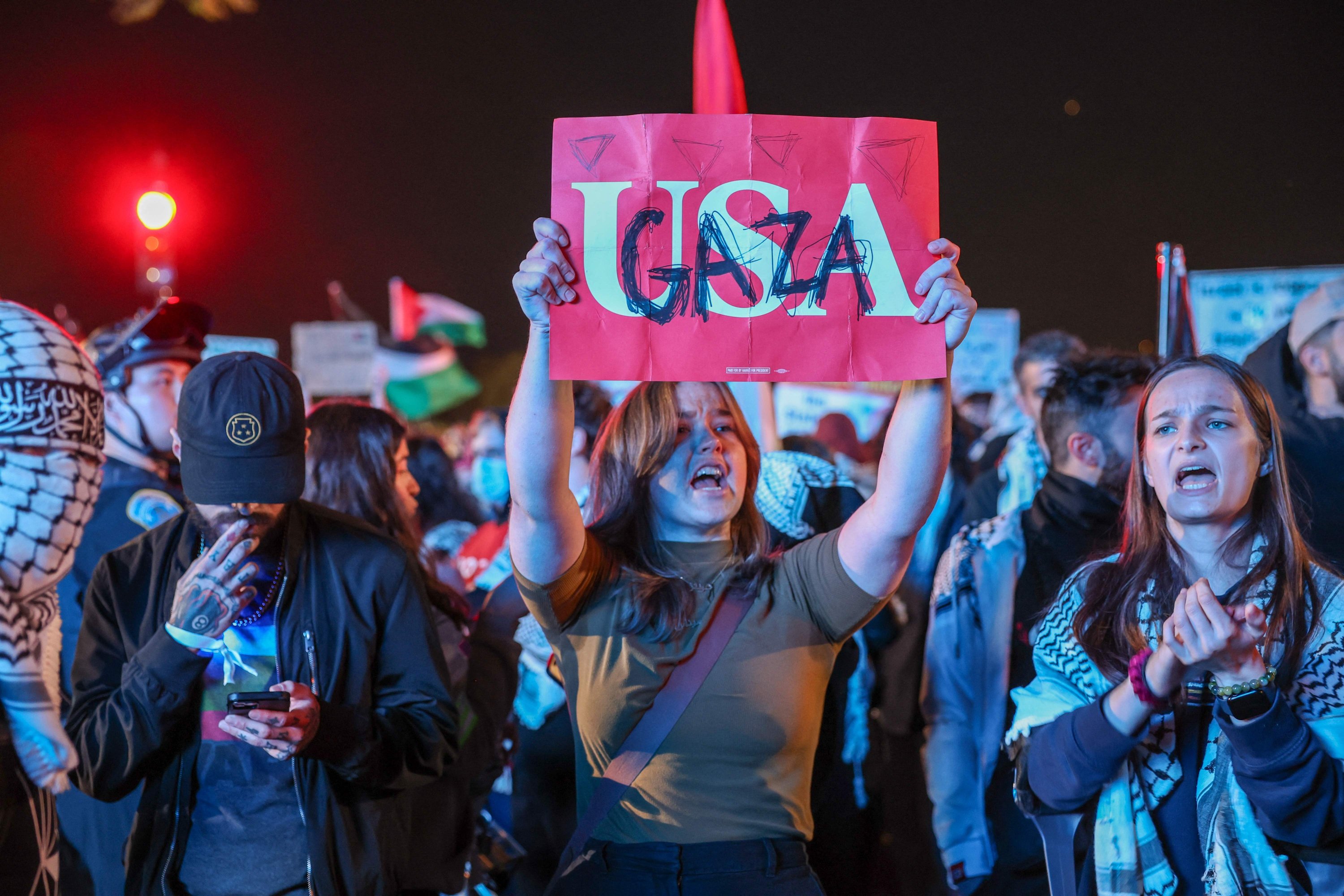
Public protests against the Israeli genocidal war on Gaza have been widespread, with university campuses and city streets worldwide witnessing massive demonstrations. Social media has amplified this discontent, bringing attention to government actions that seem to stifle free speech, particularly in Germany, the U.K. and the U.S., where pro-Palestinian protests have sometimes been met with authoritarian and aggressive responses. The rise of global boycott campaigns against Israeli goods and entities further illustrates the public’s growing awareness and moral stance. This movement, reminiscent of the anti-apartheid boycotts, challenges the narrative put forth by Western governments, suggesting a significant disconnect between public sentiment and official policy. The international protests indicate that while governments may support Israel, global citizens are increasingly questioning these policies and advocating for Palestinian rights.
The lack of a unified Islamic response to the Gaza crisis has exposed a fragmentation within the Muslim world. In the 1950s and 1960s, Palestine was central to Arab politics, but today, national interests have largely overshadowed this cause. Countries like Saudi Arabia have refrained from leveraging their oil wealth as a tool of resistance, clearly signaling a shift away from the unified Islamic solidarity of the past. Saudi Arabia’s decision not to weaponize oil against Israel or the U.S. highlights the extent to which economic priorities now overshadow ideological commitments. Similarly, Jordan has intercepted missiles from Iranian-backed groups targeting territories under Israeli occupation, underscoring the absence of a coherent Islamic front. In short, while condemnations have been vocal, concrete actions remain notably absent, revealing the practical limitations of Islamic solidarity in contemporary geopolitics.
Hamas and Hezbollah have effectively demonstrated that Israel’s state apparatus has its vulnerabilities. Despite Israel’s outstanding intelligence capabilities, the surprise attack on Oct. 7 indicated significant intelligence failures. This conflict has, therefore, underscored the limitations of state power in dealing with non-state actors, which can operate with greater agility and unpredictability.
Hamas’ success in evading Israeli intelligence and launching a major operation highlights how traditional state actors are struggling to adapt to the asymmetric tactics employed by non-state actors. The conflict has shifted perceptions of power in the region, showing that states are not always the ultimate arbiters of international affairs. This development has implications far beyond Gaza, suggesting a new era in which decentralized actors with local support and global influence increasingly challenge state power.
The Al-Aqsa Flood Operation and Israel’s subsequent genocidal war on Gaza have exposed far-reaching geopolitical implications far beyond Gaza. The genocidal war on Gaza underscores the fragility and complexity of global alliances, as seen in the U.S.’s unwavering support for Israel and the resulting political shifts domestically. It also presents opportunities for nations like China and Russia to exploit the situation, positioning themselves as alternative power brokers in the Middle East. Meanwhile, Europe’s fragmented response reveals not only internal fractures but also a growing divergence between public sentiment and government policies.
At the same time, global public protests have demonstrated a revived international conscience, with people demanding accountability and ethical governance, even as their governments remain aligned with Israel. The passive response from Muslim-majority countries, prioritizing national interests over Islamic solidarity, highlights a significant shift away from past Arab unity in the Palestinian cause. Furthermore, the effectiveness of non-state actors like Hamas challenges traditional notions of state power and raises questions about the future dynamics of regional conflicts. Therefore, the Gaza conflict is not just a localized tragedy but a reflection of deeper, systemic shifts in international politics. It calls into question the efficacy of traditional alliances, state authority's resilience and moral leadership capacity in an increasingly polarized world. As this crisis unfolds, it is clear that its repercussions will continue to shape the geopolitical landscape, influencing not only the Middle East but also the broader global order.