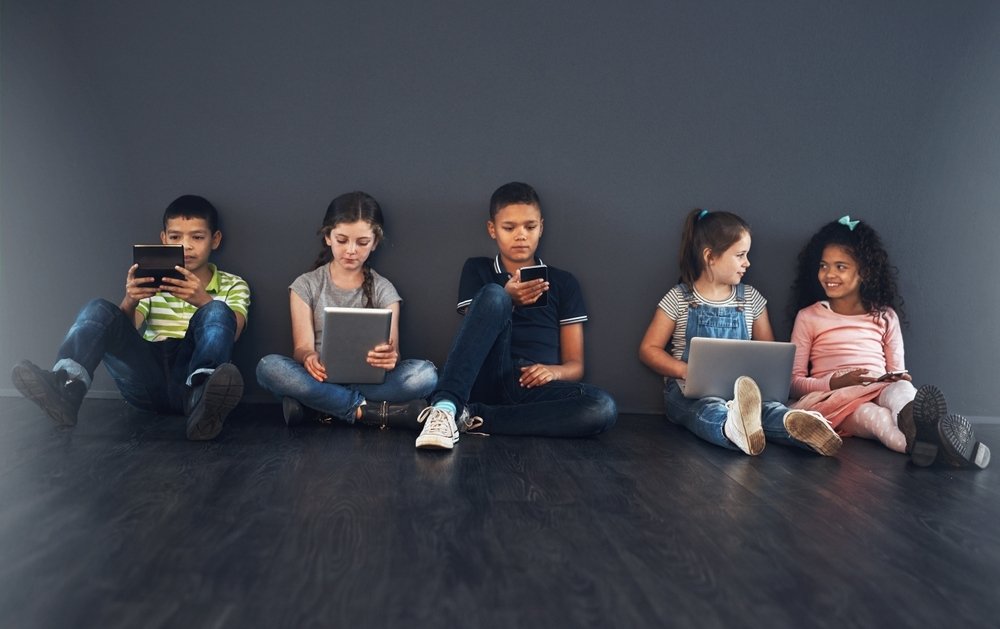
Long before they became “smart,” mobile phones slipped into family life as a quiet solution. In many places, a phone became a tool to keep a child occupied. When smartphones and tablets arrived, the habit deepened. Across cultures, screens started to act like a universal babysitter, unfortunately.
In the last decade, pediatric bodies in the United States and Europe, including the American Academy of Pediatrics, have urged parents to limit or delay screen exposure in early childhood. The World Health Organization has also issued similar guidance. The point is not drama. It is simple: early routines shape later habits.
In Türkiye, the Green Crescent (Yeşilay), an organization that fights smoking, alcohol and other addictions and focuses on the young, also speaks of excessive screen use as a form of behavioral dependency.
Many families have started to reconsider. Not because they reject technology. Simply because something feels off.
At the heart of this discussion lies a simple situation: a child sitting in front of a screen, absorbed in it in a one-sided way, without real interaction. It may be a smartphone, a tablet, or even a television. The device itself is not really the decisive point. What matters more is the direction of the flow. The image moves toward the child but the child does not meaningfully respond.
Allow me to open a parenthesis here:
As many child development specialists often emphasize, not every screen moment is the same. When a child speaks with a loved one through a video call, the experience is more than just watching. There is exchange of voice and response, waiting and answering. In that context, it is still a form of dialogue.
With that brief parenthesis now closed, we may continue.
Some parents try “screen-free habits” from infancy, and even keep televisions off when babies or children are nearby. It can feel like a sacrifice, because adults must change too. Yet they quietly ask the same question: until when? At what age should the boundary soften, so the child can adapt to the world?
Research offers direction but not a perfect formula. Many pediatric guidelines suggest avoiding screens under the age of two or even four, then introducing them gradually and with supervision. The aim is not permanent prohibition. It is protection during formation.
Perhaps what we are witnessing is not only a parenting choice, but the quiet birth of a new social distinction. In the past, privilege often meant earlier access to technology. It may soon mean the opposite: the ability to delay exposure. In a world where constant connection is normal, protecting a child’s unhurried attention could become a subtle form of cultural capital.
Children who grow up with limited screen exposure from infancy often display a different kind of focus. Educators observe that such children can stay with a book longer, listen without constant interruption, and tolerate moments of boredom. When they visit a museum or an exhibition, they are often able to examine what they see carefully and for a longer time, without their concentration breaking easily. This does not mean they are superior. It means their attention has been trained differently.
As an ancient thinker, Aristotle once argued that character is formed by habit. He was not thinking about screens, of course. Yet his observation still feels relevant. Children slowly grow into what they repeat. Not what they are told once, but what quietly fills their days.
The ethics of Islam also speak of disciplining the gaze, not only to avoid what is forbidden, but to protect the inner world from excess. For a child whose mental filters are still forming, constantly flowing images can tire the mind early. Screen exposure is therefore not only technical. It touches clarity and balance.
Even today, you can still see some parents traveling with babies, a smartphone placed in front of the child or fixed to a stroller, the child absorbed for long minutes in moving light. These scenes remain. It is widely believed and commented that his practice will slowly lose its dominance.
We live in a time when information arrives without pause. Adults themselves speak of exhaustion. For children and even for the babies, the question is practical: can they learn to stand steady on their own, without needing a screen to occupy every quiet, innocent moment?