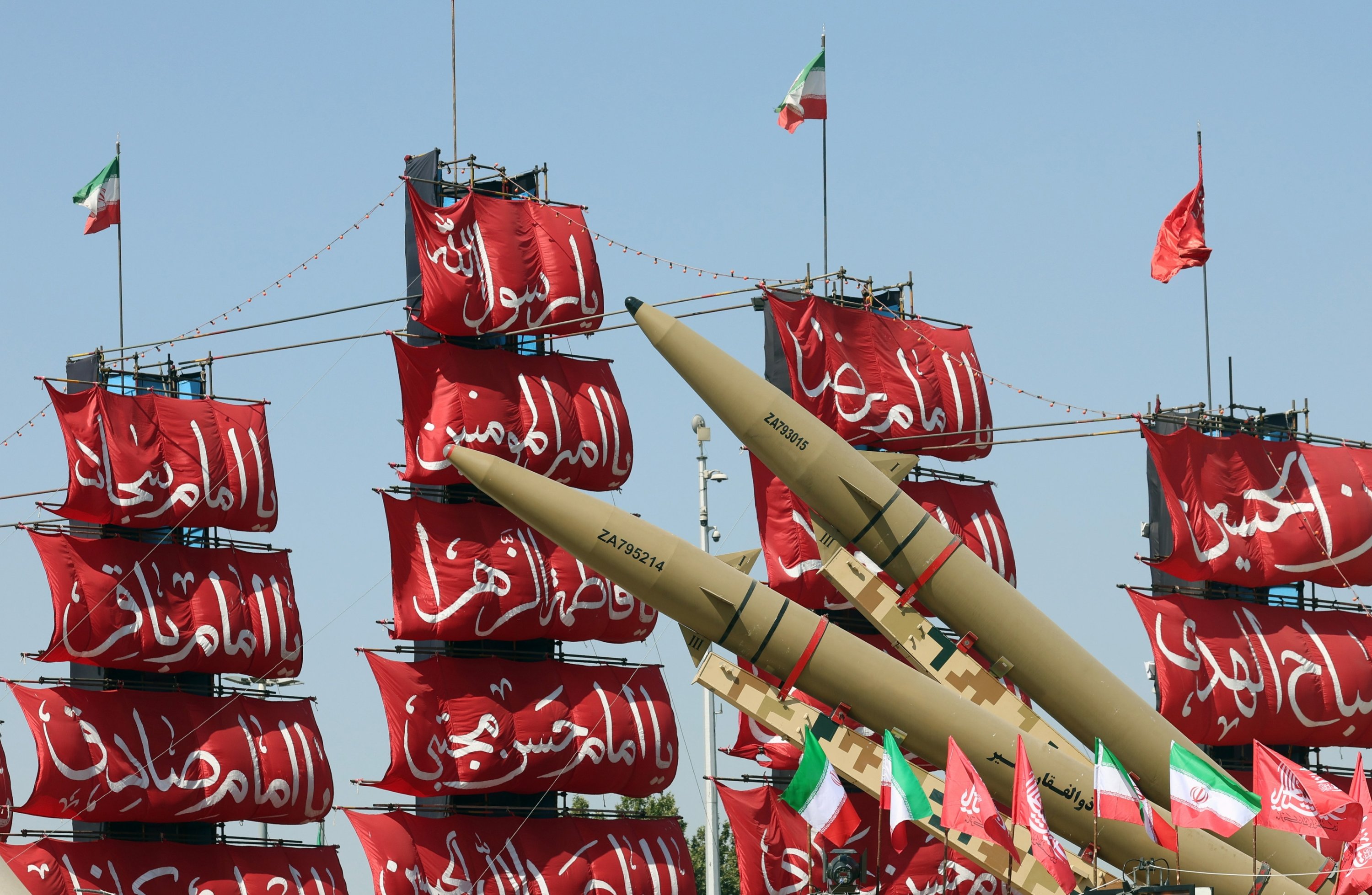
The arrangement that ended the heaviest phase of the U.S.-Israeli confrontation with Iran has not restored equilibrium to the Gulf. It has produced a suspended crisis of measurable fragility. Washington's airstrikes conducted in July against southern Iran and its coastal belt demonstrated how rapidly that fragility can escalate, and how thin the line separating the present pause from renewed war has become.
The most instructive episode, however, was what followed. U.S. President Donald Trump appeared to be moving toward a substantially larger air campaign, one that would have extended the target set to civilian and energy infrastructure inside Iran, before abruptly reversing course and granting diplomacy a further opportunity. However, the reversal did not alter the objective. Washington's central aim remains to break Iranian resolve over Hormuz and a return to pre-war conditions in the strait.
What has changed is the instrument. Negotiation is Trump's first preference, but intensification of the naval blockade and the tightening of economic sanctions are equally regarded as usable methods of coercion. Military action remains a last resort because of cost and risk, above all the prospect that Iran would answer a large-scale campaign with far heavier retaliation against the Gulf states rather than American assets alone.
That calculus is not shared uniformly. Where the political wing reasons in these terms, the military wing holds that a larger campaign should be launched and expanded, and that continuation of the conflict is a necessity rather than a liability.
The recent statements of CENTCOM commander Brad Cooper are telling in this respect. His assessment that the July campaign had reached its point of saturation and culmination in terms of effect and effectiveness carried a clear strategic subtext: that the succeeding phase should be an amphibious operation directed at Iran's southern coastline and the Strait of Hormuz. His appearance in August at a conference hosted by the Israeli military, in notable proximity to Chief of the General Staff Eyal Zamir, reinforced that reading.
Institutional developments point in the same direction. CENTCOM plans to establish Task Force Falcon Strike, its first multinational, multi-domain attack-drone formation, operating one-way attack drones in the air, on the surface and underwater with American and regional personnel. The initiative builds upon Task Force Scorpion Strike, whose drones have already been employed against Iran. Read alongside the continuing blockade, these indicators raise the probability of a comprehensive American operation combining amphibious and air components, possibly alongside Israel. Saudi operations in Iraq and Yemen conducted in coordination with Washington further suggest that Gulf states may now provide active military support rather than basing and logistics alone.
Tehran reads the same indicators. Compared with Washington, Iran keeps the diplomatic option further in the background. It has not retreated on Hormuz, describes a return to pre-war conditions as no longer possible, and asserts absolute sovereignty and initiative in the strait. Recognizing at the same time that renewed conflict has grown likelier, it has moved into a posture of alert and, more consequentially, into institutional reorganization.
The appointments carried out on Aug. 9-10, 2026, at the senior levels of the security bureaucracy, over the signature of Supreme Leader Mojtaba Khamenei, indicate a restructuring of considerable scope. The sequence began with the replacement of Mohammad Bagher Zolghadr by Mohsen Rezaei as secretary of the Supreme National Security Council. Maj. Gen. Ali Abdollahi was appointed chief of the General Staff, Brig. Gen. Keyumars Heydari deputy chief, Maj. Gen. Ahmad Vahidi, commander of the Islamic Revolutionary Guard Corps (IRGC), Maj. Gen. Mostafa Izadi, his deputy, Rear Adm. Ali Azmai, commander of the IRGC Navy, and Hojjatoleslam Hossein Taeb, commander of the Basij.
These decisions are no routine rotation. Khamenei accompanied them with messages setting out Iran's defense concept for the coming period: maximum deterrence; intelligence capacity developed to support offensive operations; higher readiness across the armed forces and the Basij; stronger defensive reflexes against conventional and hybrid threats alike; and completion of the integration between the General Staff and the Khatam al-Anbiya Central Headquarters.
The concept has a two-year trajectory. Its first signs appeared with the True Promise operations of 2024, when Iran, having long relied on asymmetric instruments and proxy actors, used its own military capability directly and on a broad scale against Israel for the first time since the Iran-Iraq war. The 12-day conflict of June 2025 accelerated the shift while exposing its deficiencies: gaps in command, control and coordination, and inadequate protection of senior commanders and critical infrastructure. It also demonstrated that offensive capabilities, no less than defensive ones, can generate deterrence. The war that began on Feb. 28, 2026 rendered the resulting reorientation toward a more offensive posture incorporating pre-emptive elements, both permanent and institutionally binding.
Two elements of Khamenei's messages deserve particular attention.
The first is the separate naming of the Basij alongside the armed forces, despite its formal subordination to the IRGC. Beyond social mobilization in wartime, the Basij operates in the domains Tehran classifies as hybrid threats: cognitive warfare, terrorism, provocations and social movements. Its distinct mention suggests a more central role: organizing local resistance against possible ground operations, controlling social movements, countering separatism and conducting psychological and cognitive operations.
The second, the emphasis on integration between the General Staff and Khatam al-Anbiya, is no administrative detail: given the coordination failures exposed in 2025 and 2026, it reflects the need to plan and direct Artesh and IRGC elements jointly so that the offensive approach can be executed coherently.
The individual appointments follow the same logic. Rezaei's long experience coordinating military and political institutions suits the council. Vahidi's command of the IRGC aligns with a deterrence concept in which offensive elements predominate. Izadi's background in defense planning and budgeting addresses the administrative machinery such a shift requires. Heydari, born in Kermanshah, brings extensive field experience against Kurdish armed groups in the west and Baluch groups in the southeast, a background that gains weight as separatist threat perception rises while American ground and amphibious options remain on the agenda. Abdollahi's move to the General Staff from Khatam al-Anbiya, where he directed joint operations during the 2026 war, carries wartime command-and-control experience to the highest echelon and serves the integration objective directly. Ozmayi commanded the Bandar Lengeh-based 5th Naval District for 13 years, covering Qeshm, Kish and the Greater Tunb, Lesser Tunb and Abu Musa islands, positions critical to Iranian activity in Hormuz and prominent among those any American amphibious operation would contest. Taeb, who helped establish and long directed IRGC intelligence, matches the tasks now assigned to the Basij in local intelligence, propaganda and cognitive warfare.
Taken together, the appointments indicate that Iran's defense strategy has passed from discourse and doctrine to institutional structure and implementing cadres. Washington, in contrast, remains divided between coercion short of war and preparation for a campaign its military planners consider unfinished. Both trajectories converge on the same waterway, and neither at present contains an evident mechanism of restraint.