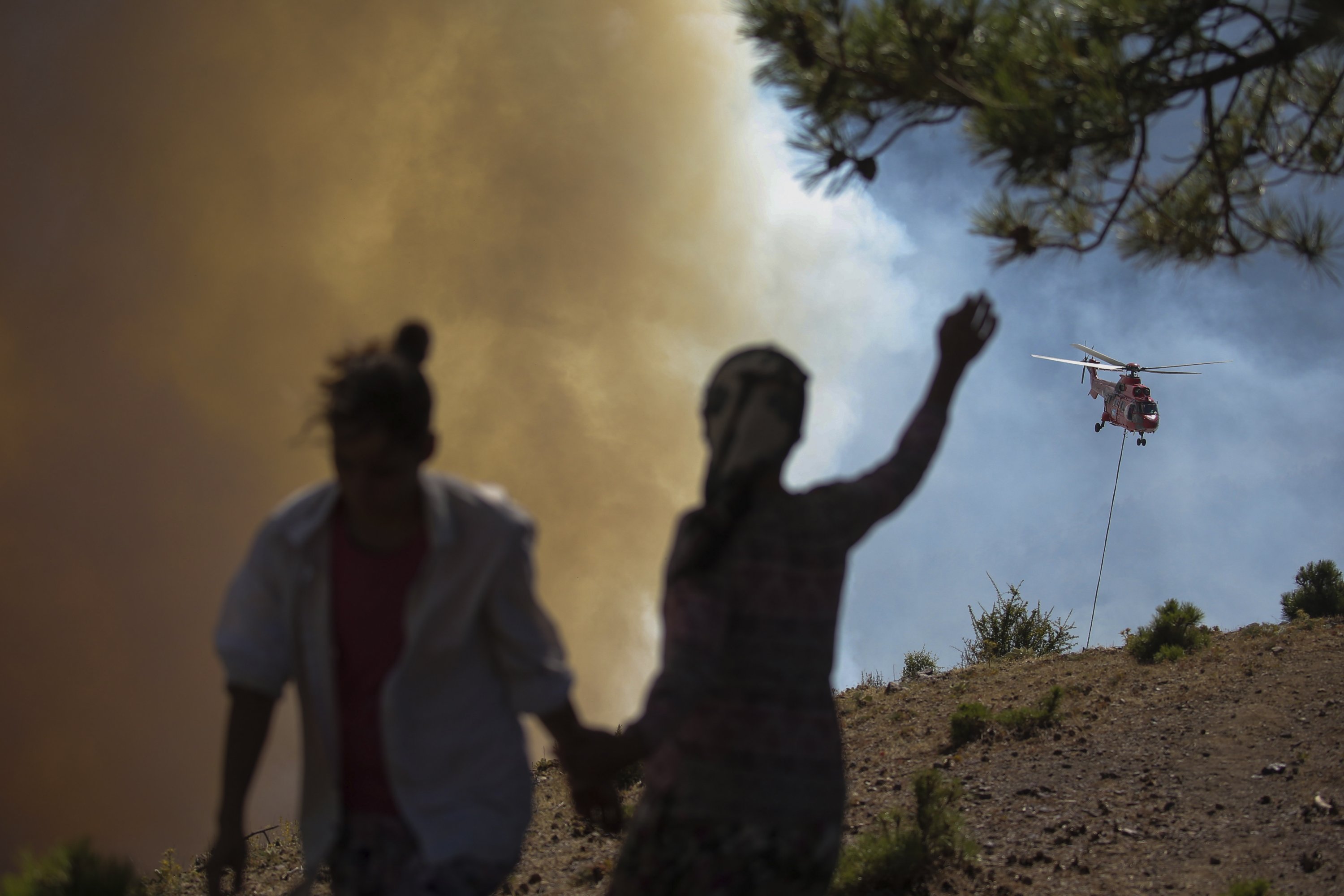
Wildfires can cause a lot of stress since the factors that influence their direction and intensity are unpredictable, sudden and can change at any time. People who have lived through wildfires may experience strong emotions following the ordeal.
After a disaster, people may feel stunned or disoriented, be in denial or have difficulty absorbing stressful information. However, once the acute reactions subside, common responses may be as follows: Feelings become intense and raging: individuals may become more irritable than usual, while dramatical mood swings, anxiety, nervousness and feeling depressed are common.
Disruption in thinking and behavior patterns: having repeated vivid visions of the incident such as evacuating animals or seeing fire approach you. Having difficulty concentrating and making decisions or feeling confused.
Disruption of sleeping and eating patterns: you may lose your appetite or increase your food consumption. You may also suffer from lack of sleep or sleeping too much.
Somatic symptoms may accompany extreme stress: for instance, headaches, chest pain, nausea, pain in different parts of body, muscle pains and digestion problems.
People who are involved directly in disasters such as wildfires or exposed to the effects of disasters may experience lots of negative emotions. Losing your sense of security, control and certainty is a major source of stress.
People who live in rural areas depend on nature to make their living. Agriculture and livestock go hand in hand with nature. After disasters such as wildfires, nature takes its time to heal itself.
That means agriculture and livestock have to wait until then. Moreover, people losing their animals to fires is not only a heartbreaking loss since they are part of the family but also a financial loss as their livelihood depends on animal products. Not knowing how to sustain their life after the disaster can cause extreme stress.
Losing items of sentimental value or seeing the destruction of areas familiar to you since your childhood, that are somehow part of the self. When we grow up, we develop a bond with our surroundings.
Losing a village house where you spent your summers as a child or a forest on a particular mountain that you used to have family picnics in can mean losing part of yourself. Places, people and objects become part of our identity over time. Losing them may mean losing a part of yourself.
Helplessness is another major emotion that is triggered. The longer fires last, the more intense the feeling of helplessness becomes.
People who do not experience the disaster directly have the tendency to feel guilt and shame. People who were not involved in the wildfires experience the guilt and shame of not being able to share the difficult conditions that their loved ones experienced while living in safer conditions.
Under the influence of these feelings, they may feel a responsibility to communicate with disaster victims more often, to support them financially and spiritually and to improve their situation.
When the severity of feelings of shame and guilt increases, negative beliefs about not deserving to live can occur.
Ecological mourning is caused by the loss of nature, its ecosystems and species, our place in nature, landscapes meaningful to us and our memories of nature. Shaking the sense of space and the bond established with the Earth sends people into mourning.
If you experience such emotions so strongly that you can not cope with them on your own, it is very important for you to seek professional support.
A person who has a bond based on love and decency with their primary caregiver before the age of six often has the ability to cope with their good and bad feelings and tolerate negative feelings. It is easier for a person who has developed this skill to get over such emotions when he or she experiences loss in adult life.
A person experiences a lot of loss and trauma as a child. If their caregiver does not approach these losses in a healthy way, the child suppresses their feelings. Repressed mourning is triggered when an adult suffers a loss but cannot properly mourn that loss.
Sometimes the parents experience a loss, but the parents are unable to face the feelings of that loss and they transfer it to the child without realizing it.
Over time, the child begins to experience various emotions such as grief and anger while the parents stand upright in the face of loss.
Bereavement is transferred to a child when the parents experience their own loss as adults and are unable to grieve on their own.
The scenarios that affect us the most are often related to our personal childhood history. In a wildfire, burning animals may disturb someone, while another is disturbed by the smoke in the sky. Whatever we feel disturbed by has to do with our personal history.
Give yourself time to adjust. Accept the fact that it is a difficult time for you and allow yourself to mourn over the losses you have experienced.
In times of loss – any loss such as loss of freedom, of a family member, childhood memory, animals, forests, beautiful scenery – our brain feels the need to mourn. This is not a choice, it is a necessity.
To mourn is a universal need for all cultures all over the world. In the case of losing something or someone valuable, mourning and grieving are inevitable parts of life.
What underlies the mourning process is that losing a beloved object or person means not being able to access it again due to its loss or destruction.
It is important to provide for urgent needs – shelter to sleep under, food, etc. – to sustain life. Instead of taking some time to mourn, many people rush into planting new trees or replacing whatever is lost.
Everything has its time. Nature takes its time to digest what has happened and renew itself afterward.
The Australian wildfires in 2020 can be a suitable example of how nature deals with its loss. The forests started to renew themselves after a year.
Sigmund Freud says "unexpressed emotions never die. They are buried alive and will come forth later in uglier ways.’’
Express what you feel in any way you feel comfortable such as talking to a friend or family member or keeping a diary or drawing or singing songs.
People often come to console and hug the disaster survivor, and sometimes they cry together. Hugging is important for emotion regulation. As two people hug each other, the body releases oxytocin, the bonding hormone. It has a soothing function. When someone hugs a person who is mourning, some emotions transfer between the two individuals and it has a relaxing effect on the bereaved person.
I think some of the false news shared on social media was published to inflame the community. We see that some disturbing content belongs to different times or countries. We must realize that every news story we read or watch may not be real, and we need to be selective.
As the crisis continues, we cannot heal all the wounds of disaster victims, and if there are circumstances in which you can help financially and spiritually, I suggest that you wait for the proper time to show your support.