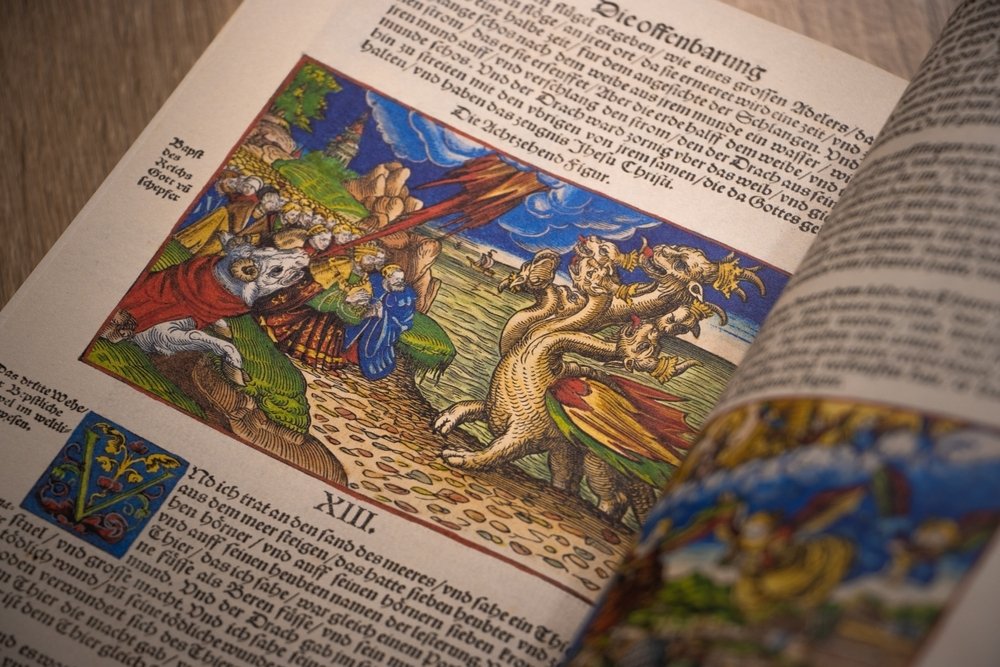
In the fog-laden enclaves of San Francisco, far removed from the public scrutiny of boardrooms and legislative hearings, a new gospel is being preached. It is not a sermon on quarterly earnings or algorithmic efficiency. It is related to a theological treatise on the end of days. Peter Thiel, the billionaire co-founder of PayPal and Palantir, has recently delivered a series of “clandestine” lectures centered on the figure of the Antichrist. These talks, hosted by the Acts 17 Collective, reveal a disturbing and fascinating blend of biblical eschatology and Silicon Valley futurism. By framing technological stagnation as the ultimate evil and casting critics, such as climate activist Greta Thunberg and AI safety advocate Eliezer Yudkowsky, as archetypes of the anti-messiah, Thiel is constructing a techno-political theology that seeks to justify unchecked acceleration as a divine imperative.
As a scholar of intelligence studies and techno-politics, I view these sermons as a sophisticated exercise in intelligence reproduction, the creation of a narrative that reshapes our perception of threat and security. Thiel’s rhetoric risks normalizing the billionaire philosopher as a modern oracle, dictating the terms of global survival while conveniently absolving the tech elite of accountability.
At the heart of Thiel’s lectures lies the concept of the katechon. Borrowed from the Second Epistle to the Thessalonians and heavily influenced by the German jurist Carl Schmitt, the katechon is the “restraining force” that holds back the lawlessness of the Antichrist. For Schmitt, this was the Christian empire or the state. For Thiel, it appears to be the aggressive acceleration of technology and a new type of hegemony.
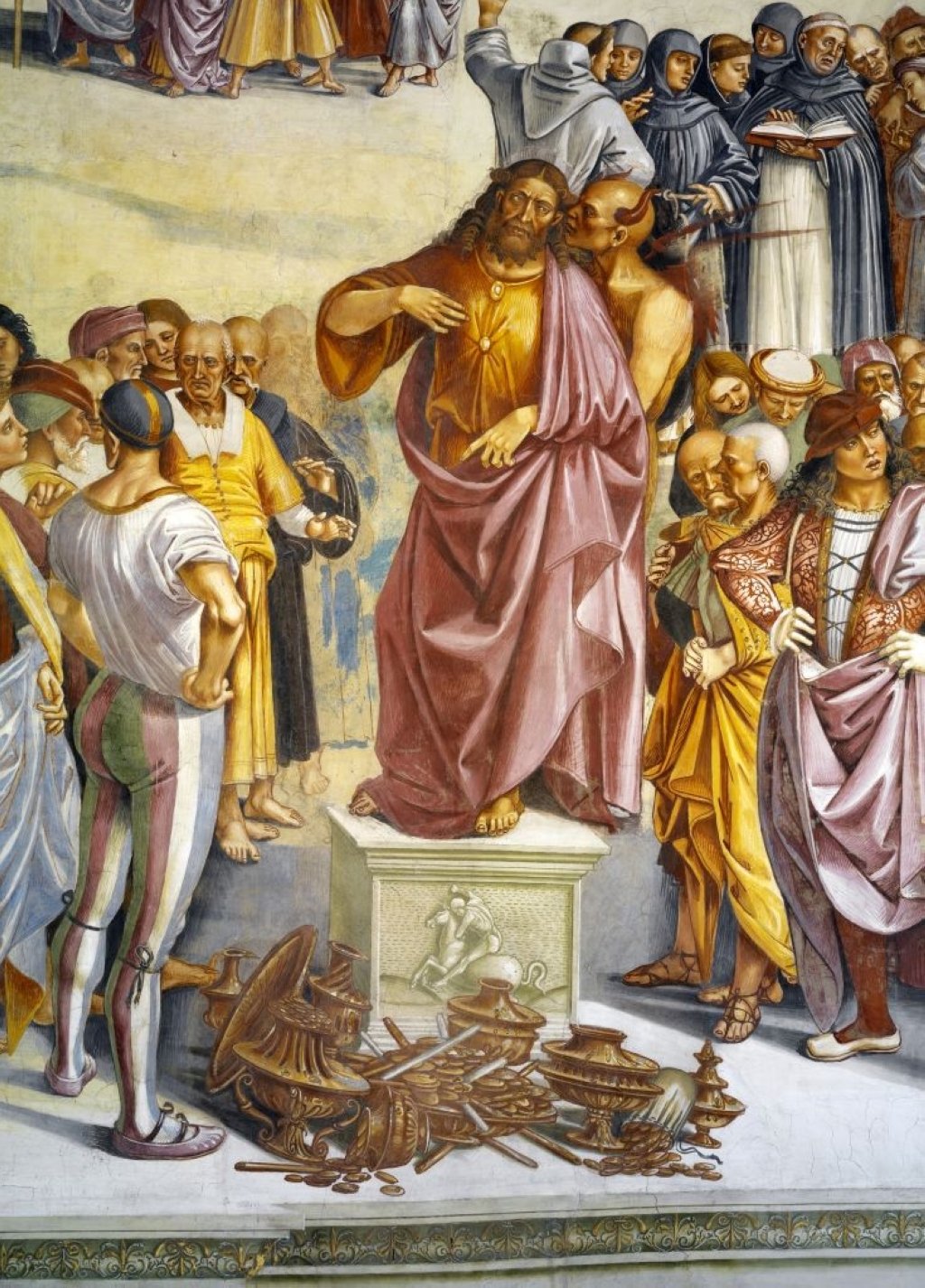
Thiel posits a provocative inversion of the traditional Antichrist narrative. In his view, the Antichrist is not a "Dr. Strangelove" figure, a mad scientist pushing the boundaries of nature, but a “Luddite” who demands the cessation of progress. He argues that the Antichrist rises to power by weaponizing the fear of Armageddon, promising “peace and safety” (a direct reference to 1 Thessalonians 5:3) in exchange for total global control. In this framework, figures like Greta Thunberg, who warn of climate catastrophe, or AI doomers who call for a pause in development, are cast as “legionnaires of the Antichrist.” Their calls for regulation and global consensus are interpreted not as prudence, but as the foundational steps toward a holistic “one-world state” that stifles human agency.
This is a masterstroke of rhetorical framing. By identifying the restraining force (Katechon) with technological acceleration and the force of chaos (Antichrist) with regulation, Thiel transforms venture capital into a holy war. Investing in AI, defense tech and surveillance is more about profit. In essence, it is a moral duty to delay the apocalypse. Conversely, to regulate these industries is to do the devil's work.
There is a profound irony in Thiel’s warnings against a surveillance dystopia and a “one-world state.” This is, after all, the architect of Palantir, a company named after the all-seeing stones in J.R.R. Tolkien’s legendarium. Palantir’s software powers the intelligence apparatuses of Western governments, aggregating data to track insurgents, immigrants and citizens alike. In my research on “Techno-Politics and the Construction of Security," I have analyzed how state-corporate symbiosis allows private entities to assume sovereign functions. Thiel’s companies are the very engines of the surveillance capacity he theoretically fears in the hands of a “globalist” elite.
Thiel resolves this paradox through a specific application of Girardian mimetic theory of Rene Girard, who has been one of the influential figures in Thiel’s life. He likely views his technology as the necessary tool of the katechon, a hard power required to preserve the distinctiveness of the West against a homogenizing global order. In his worldview, a strong U.S. security state, empowered by Silicon Valley innovation, is the bulwark against the “chaos” of multipolarity or the “stagnation” of global bureaucracy.
However, this absolves the techno-elite of the very sins they preach against. When a private corporation holds the keys to the state’s panopticon, questions of sovereignty arise. If the “restraining force” against chaos is a private monopoly on data and violence, who restrains the restrainer? Thiel’s theology offers no answer, implying that we must simply trust the “good” technologists to save us from the “bad” regulators. It is a demand for faith in a sector that has repeatedly demonstrated a disregard for privacy, democracy and ethical boundaries.
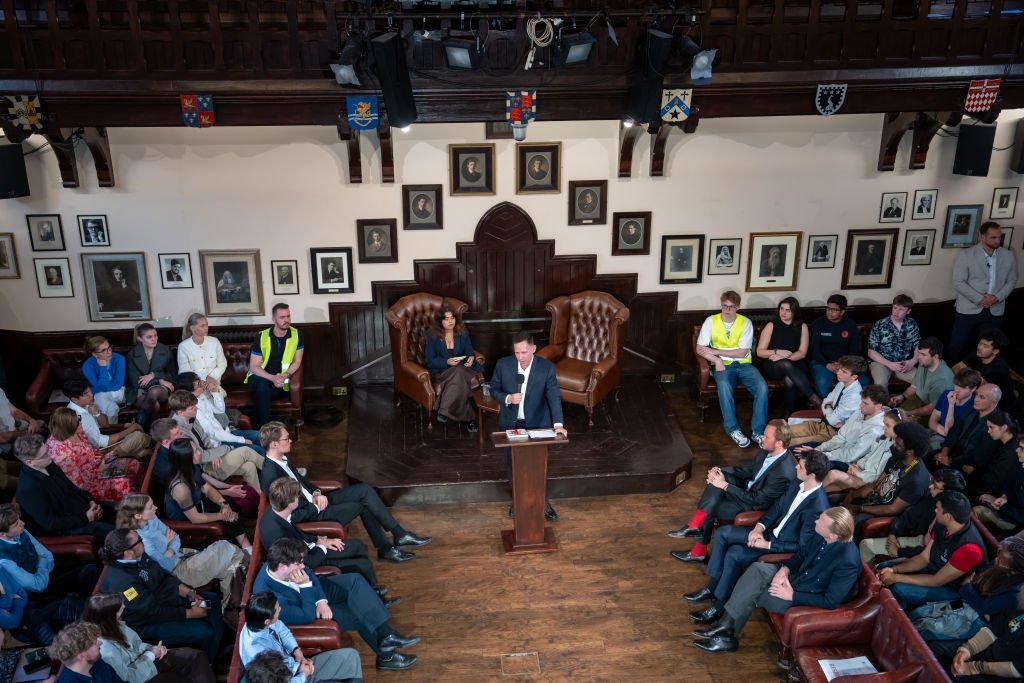
The danger of this messianic monopoly lies in how it processes dissent. In a democratic society, the tension between innovation and regulation is resolved through public debate, policy analysis and ethical forums. In Thiel’s eschatological framework, this tension is elevated to a cosmic struggle between good and evil.
When regulatory bodies like the European Union or the United Nations attempt to establish guardrails for artificial intelligence, they are doing the mundane work of governance. Yet, through Thiel’s lens, these bureaucratic efforts are transmuted into spiritual warfare. The “Precautionary Principle,” the idea that we should tread carefully with existential risks, is reframed as a tool of the Antichrist to enforce stagnation.
This is a dangerous displacement of political discourse. If resistance to unregulated AI development is branded as “satanic interference,” then compromise becomes impossible. How does one negotiate with the “legionnaires of the Antichrist”? You don’t; you defeat them. This rhetoric encourages a dismissal of legitimate ethical concerns regarding algorithmic bias, labor displacement and autonomous weaponry. It creates an intellectual environment where acceleration is the only pious path, and caution is heresy.
Thiel’s vision is inherently Western-centric, entrenching a divide that alienates the Global South. By positioning the U.S. tech ecosystem as the katechon, he implicitly relegates the rest of the world to the status of either subjects to be saved or chaotic forces to be contained. The “one-world state” he fears is often a code for international institutions that give voice to developing nations.
In the Global South, where the digital divide is stark and digital sovereignty is a fierce battleground, this narrative is particularly perilous. The “multipolar innovation” that many emerging economies strive for, building their own digital infrastructures independent of Silicon Valley or Shenzhen, threatens the monopoly of Thiel’s katechon. If the salvation of humanity depends on American tech hegemony, then independent technological development in Türkiye, Brazil or another place in the world could be viewed as a fragmentation of the “restraining force” and thus a danger.
This theology preempts the possibility of a truly global, pluralistic conversation about the future of technology. It suggests that the destiny of the species must be scripted in San Francisco, with the rest of the world serving merely as the audience, or the collateral damage, in a biblical drama directed by venture capitalists.
We must reject the false dichotomy Thiel presents. The choice is not between a divine technological acceleration and a satanic global stagnation. There is a third path, one grounded in human agency rather than messianic fantasy.
To counter the rise of these billionaire oracles, the international community must demand the demystification of technology. AI and biotechnology are not mystical forces of salvation or doom. They are tools born of human labor, shaped by human decisions, and subject to human laws. We need open ethical forums that are not exclusive to the elite “elect” of Silicon Valley but are accessible to civil society, academia and policymakers from across the globe.
Furthermore, we must champion decentralized protocols and digital sovereignty. The concentration of power, whether in a “one-world state” or a “one-company state,” is the true threat to freedom. Security is constructed not by surrendering to a katechon, but by building resilient, distributed systems where no single actor possesses the power to script the end times.
Peter Thiel’s lectures are a warning, though perhaps not the one he intended. They warn us of what happens when immense power seeks to justify itself through myth. As we stand on the precipice of the AI age, we must ensure that our future is defined by collective progress and democratic deliberation, not by the clandestine sermons of those who profit from our fear. We do not need a katechon to restrain the future. We need the courage to build it ourselves, with eyes wide open.