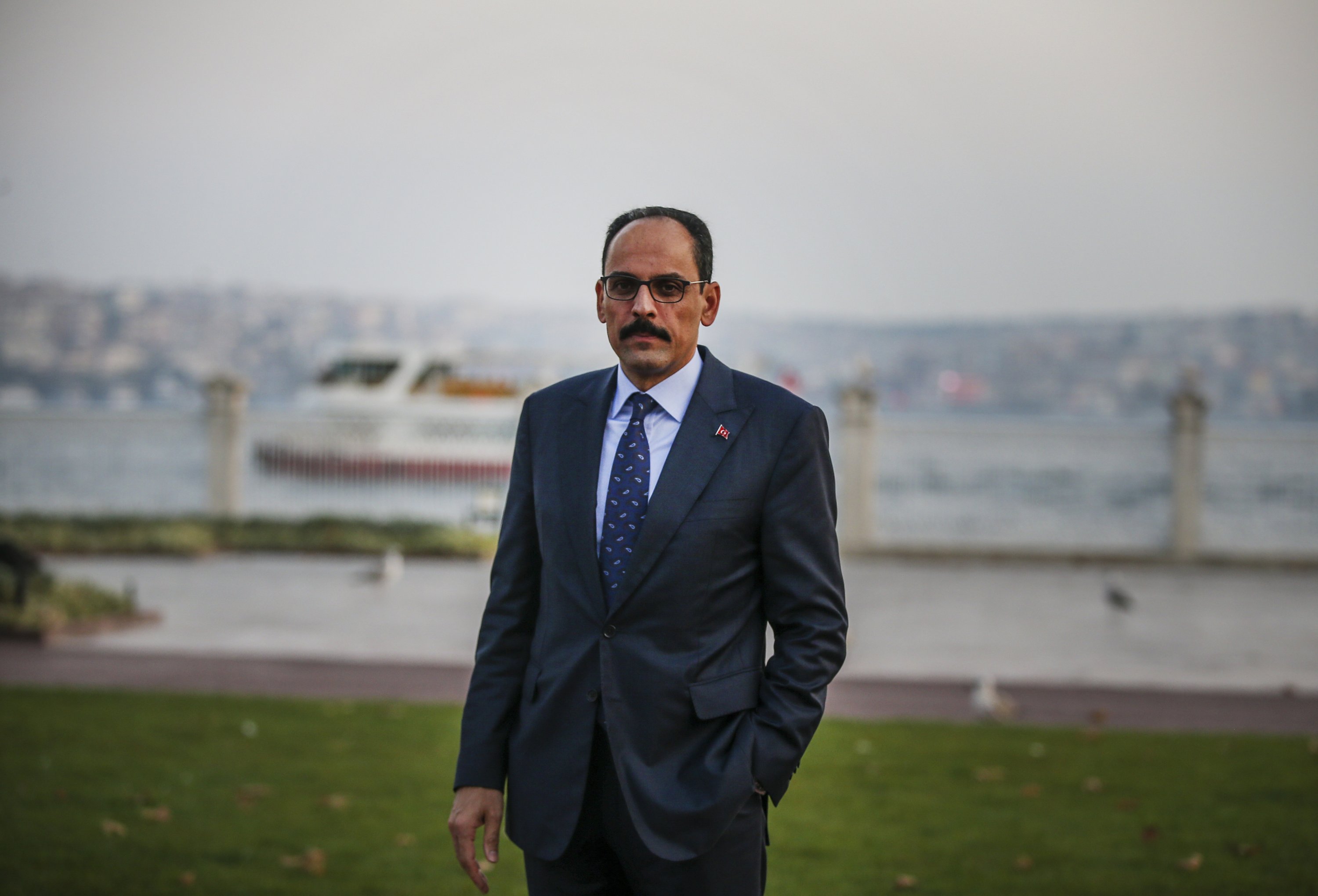
In classical understandings of intelligence, agency heads are expected to remain invisible, operationally focused and institutionally bounded. Diplomacy, on the other hand, is traditionally associated with visibility, representation and formal negotiation. The case of Ibrahim Kalın, the director of the Turkish Intelligence Organization (MIT), challenges this dichotomy. His appointment as the head of the Turkish intelligence does not represent a routine bureaucratic transition, but rather signals a conceptual shift: from intelligence leadership as operational command to intelligence leadership as strategic coordination. Actually, Kalın embodies a new model of intelligence leadership in which intelligence services function not merely as information-gathering bodies, but as diplomatic coordinators operating across formal and informal channels. This role is neither accidental nor purely personal; it reflects Türkiye’s broader recalibration of intelligence as a core instrument of foreign policy.
The growing overlap between intelligence and diplomacy is not unique to Türkiye. However, what distinguishes the Turkish case is the explicit institutionalization of this overlap. Contemporary international politics is characterized by fragmented conflicts, hybrid threats and negotiations that cannot always be conducted through official diplomatic channels without political cost. Kalın’s background positions him uniquely within this framework. Unlike conventional intelligence chiefs shaped primarily by operational fieldwork, he enters the institution with a long record of strategic communication, narrative construction and diplomatic mediation. This allows intelligence to operate not only as a security mechanism but as a coordinating node between political leadership, diplomatic actors and international counterparts.
In this sense, one of the most striking differences between Kalın and traditional intelligence leaders lies in the question of visibility. Classical intelligence doctrine treats visibility as a liability. Strategic coordination, however, allows for selective visibility – not of operations, but of intent and narrative. Kalın’s intellectual background in political philosophy and civilizational discourse contributes to this approach. Rather than viewing intelligence solely through a realist lens of power maximization, his framework incorporates meaning, perception and legitimacy. This does not weaken intelligence practice; rather, it enhances its diplomatic utility. Controlled opacity – knowing what to conceal and what to signal – becomes a key tool. Intelligence diplomacy, in this sense, is not about secrecy for its own sake, but about managing ambiguity strategically.
Turkish intelligence diplomacy should not be understood as an ad hoc practice or the personal initiative of individual officeholders. Rather, it reflects a structural logic shaped by Türkiye’s geopolitical position, threat environment, and middle-power status. Operating in a region marked by protracted conflicts, non-state actors and fluid alliances, Türkiye has increasingly relied on instruments that allow flexibility, deniability and speed – qualities that traditional diplomacy alone cannot always provide. Within this context, intelligence services have evolved from supporting actors into active diplomatic instruments, facilitating backchannel negotiations, crisis de-escalation and indirect communication with actors outside the reach of formal diplomatic engagement. Intelligence diplomacy, therefore, emerges not as a substitute for diplomacy but as a mechanism that expands its operational space.
Turkish intelligence diplomacy illustrates a broader transformation in the practice of statecraft. In an international system marked by uncertainty, fragmentation, and informal power relations, the ability to operate silently has become a strategic competence. Kalın’s role within this system reflects not a personalization of intelligence diplomacy, but its professionalization. As a silent professional, his function lies not in visibility or assertion, but in coordination, restraint and timing. In this sense, Turkish intelligence diplomacy does not challenge diplomacy; it protects its possibility by acting where diplomacy cannot, and remaining silent where speaking would foreclose strategic options. Kalın’s role within Turkish intelligence should be analyzed through this professional lens rather than through biographical exceptionalism. Despite his visibility in earlier state roles, his position in intelligence leadership aligns with the silent professional archetype in many ways. Kalın’s intellectual and strategic background contributes to a leadership style that values anticipation over reaction. The silent professional does not respond loudly to crises; instead, he works to prevent escalation by managing ambiguity and maintaining discreet channels of communication. In this sense, Kalın does not abandon the tradition of intelligence professionalism; he reinforces it by adapting silence to a more complex diplomatic environment.