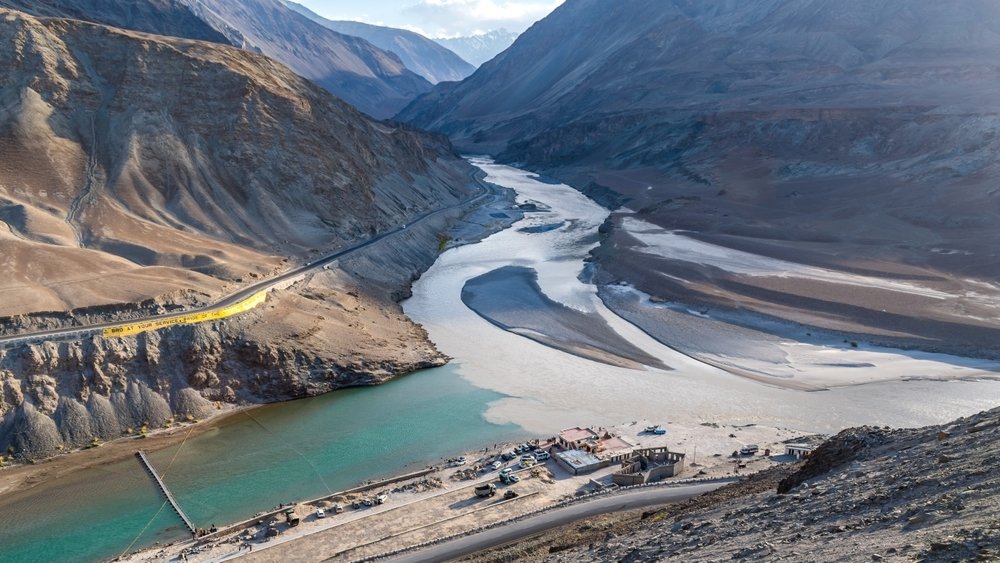
It began like a familiar line, one of those sharp political remarks that usually fade into the background of India-Pakistan rhetoric. India’s Water Minister C. R. Patil recently declared that New Delhi was working to ensure “not a single drop” of water reaches Pakistan. This time, however, the statement carried a different strategic weight due to the broader regional context.
At a time when the Indus Basin is already under pressure and bilateral tensions are high, the remarks were seen in Pakistan as more than mere political signaling. Islamabad warned that any disruption or manipulation of water flows would carry serious consequences under international law, including reference to Article 51 of the United Nations Charter.
What makes this episode different is not the rhetoric itself, but the fact that it comes at a time when trust is collapsing, and both countries increasingly disagree on how shared rivers should be managed.
The Indus Waters Treaty, signed in 1960 under World Bank facilitation, has long been regarded as one of the most resilient bilateral agreements in South Asia. It survived multiple wars, prolonged hostility, and repeated diplomatic breakdowns. Even during full-scale crises, water governance remained largely insulated through technical rules and institutional mechanisms. However, that arrangement is now beginning to break down.
Following the Pahalgam attack in 2025, India placed the treaty in abeyance, marking a decisive shift in its approach to shared water governance. Since then, New Delhi has been insisting on revisiting the treaty to expand its hydropower capacity and make fuller use of the upstream western rivers.
Pakistan has responded with sustained concerns over compliance, infrastructure design, and the lack of transparency in data sharing. As a result, the Indus framework is no longer functioning as a mere technical arrangement. It is gradually becoming part of a wider struggle over influence and strategic advantage.
Historically, even during wars and prolonged confrontations since 1947, water management remained a relatively insulated domain.
But now, water is increasingly being treated as a strategic tool alongside traditional security and regional influence. The central issue is no longer only physical flow disruption, but who controls its timing, release patterns, and critical upstream infrastructure.
For Pakistan, the Indus Basin is not a secondary resource; it is the backbone of agriculture, food security and rural livelihoods. In a region already exposed to climate volatility, glacier retreat, and erratic monsoon cycles, predictable water flows have become a matter of national security rather than a technical concern.
The transformation of water into a strategic issue cannot be separated from internal political dynamics in India. Over the past decade, India’s political landscape has shifted toward stronger majoritarian nationalism under the Bharatiya Janata Party (BJP), accompanied by the growing influence of Hindu nationalist ideological currents.
Within India, these developments are defended as part of national consolidation and governance efficiency. However, critics point to rising social polarisation and growing communal tensions as evidence of internal fragmentation.
In Pakistan and elsewhere in the region, these domestic changes are increasingly seen as influencing India's external behaviour. While such assessments remain contested within India, they are shaping regional perceptions and adding to an already deep trust deficit.
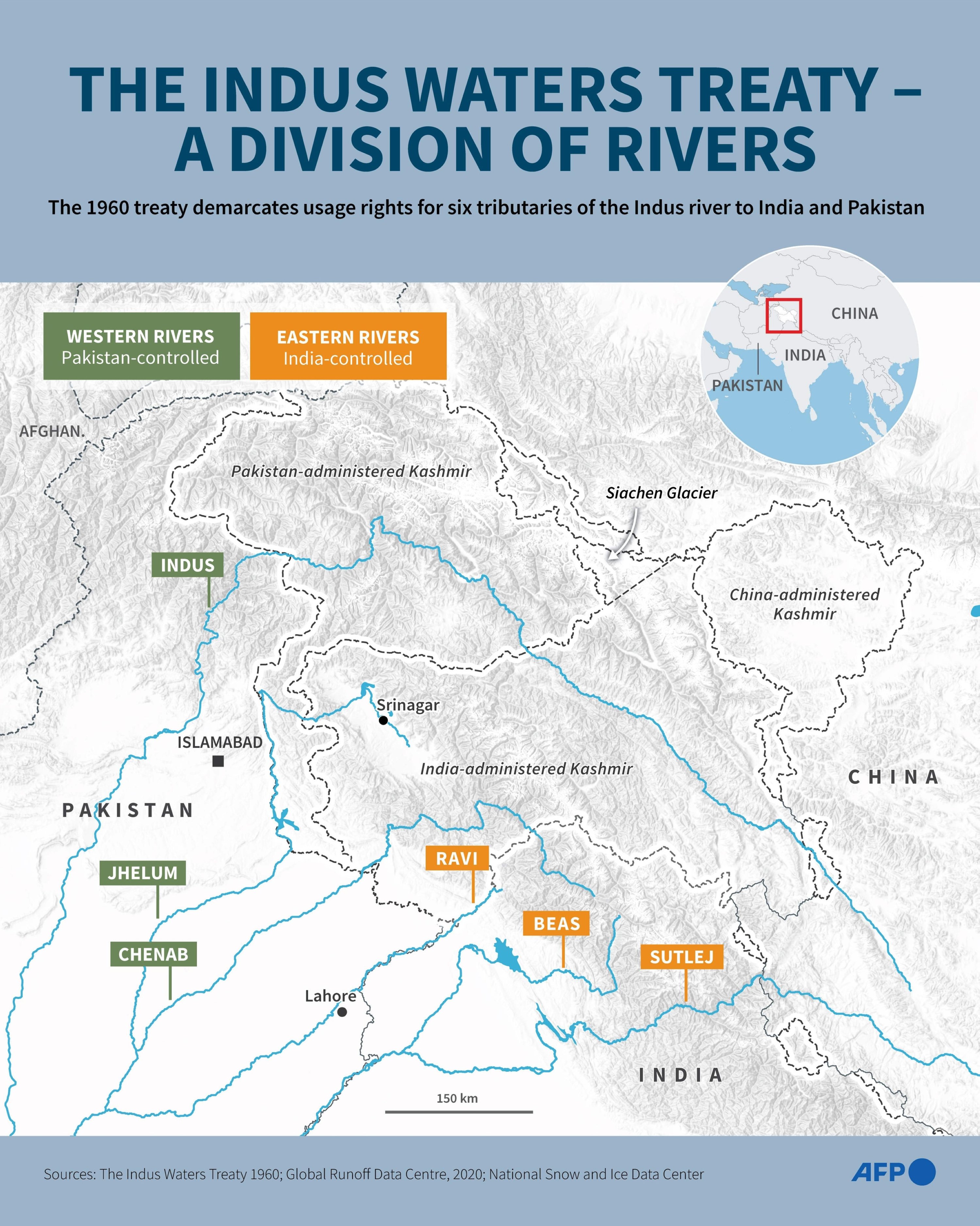
Tensions over the Indus system are also reflected in disputes surrounding hydropower and upstream infrastructure projects, including developments on the Kishanganga and Chenab rivers. Pakistan has raised consistent concerns over flow timing, storage capacity and downstream predictability.
India maintains that its projects remain fully within treaty provisions and are aimed at maximizing legitimate water utilization.
However, the disagreement is no longer purely technical. It reflects a widening gap in interpretation, with India viewing these projects as legitimate development and Pakistan seeing them as a gradual weakening of its long-term water security.
These concerns have reached the diplomatic arena, with Pakistan raising the issue before the U.N. Security Council over two proposed Indian projects on the Chenab River system that could alter treaty-governed water flows and pose serious risks to Pakistan's water, food and economic security.
South Asia’s environmental realities are intensifying these disputes further. River systems are under growing stress from glacier melt, changing precipitation patterns, and increasing demand driven by population growth and economic expansion.
In such conditions, even marginal variations in timing or flow regulation can have disproportionate downstream impacts. This turns water from a technical issue into a strategic one that directly affects economic stability and national security.
A defining strength of the Indus Waters Treaty has been its ability to ensure predictability despite deep political mistrust. It created a rules-based structure that prevented water disputes from escalating into wider conflict.
As water is tied to strategic rivalry, institutional buffers that once kept water management separate from political confrontation are steadily eroding. This evolution raises serious questions about the durability of cooperative mechanisms in South Asia’s increasingly fragmented geopolitical environment.
What we are witnessing is a broader structural change across South Asia. Water is no longer being treated simply as a shared resource managed through fixed rules. Instead, it is increasingly being pulled into wider competition involving influence, leverage, and long-term regional positioning.
This does not mean existing arrangements will collapse overnight. However, it clearly signals a gradual transformation in how essential resources are being viewed through an interstate relations lens.
In a region already defined by climate stress and geopolitical tensions, the weakening of cooperative structures carries far-reaching consequences. The impact extends beyond diplomacy, directly affecting agriculture, livelihoods, and economic resilience across one of the world’s most densely populated river basins.
The Indus system has long functioned as one of the few remaining frameworks of cooperation between India and Pakistan. Its endurance was not built on trust, but on enforceable rules that both sides accepted as necessary constraints.
However, as water becomes part of strategic calculations, South Asia risks entering a phase where shared resources are drawn into competitive logic, and the consequences of worsening relations would be severe. These consequences are directly tied to food security, rural economies and environmental stability. In a region where survival and resources are inseparable, the trajectory of this shift will shape not only bilateral relations but the broader stability of South Asia itself.