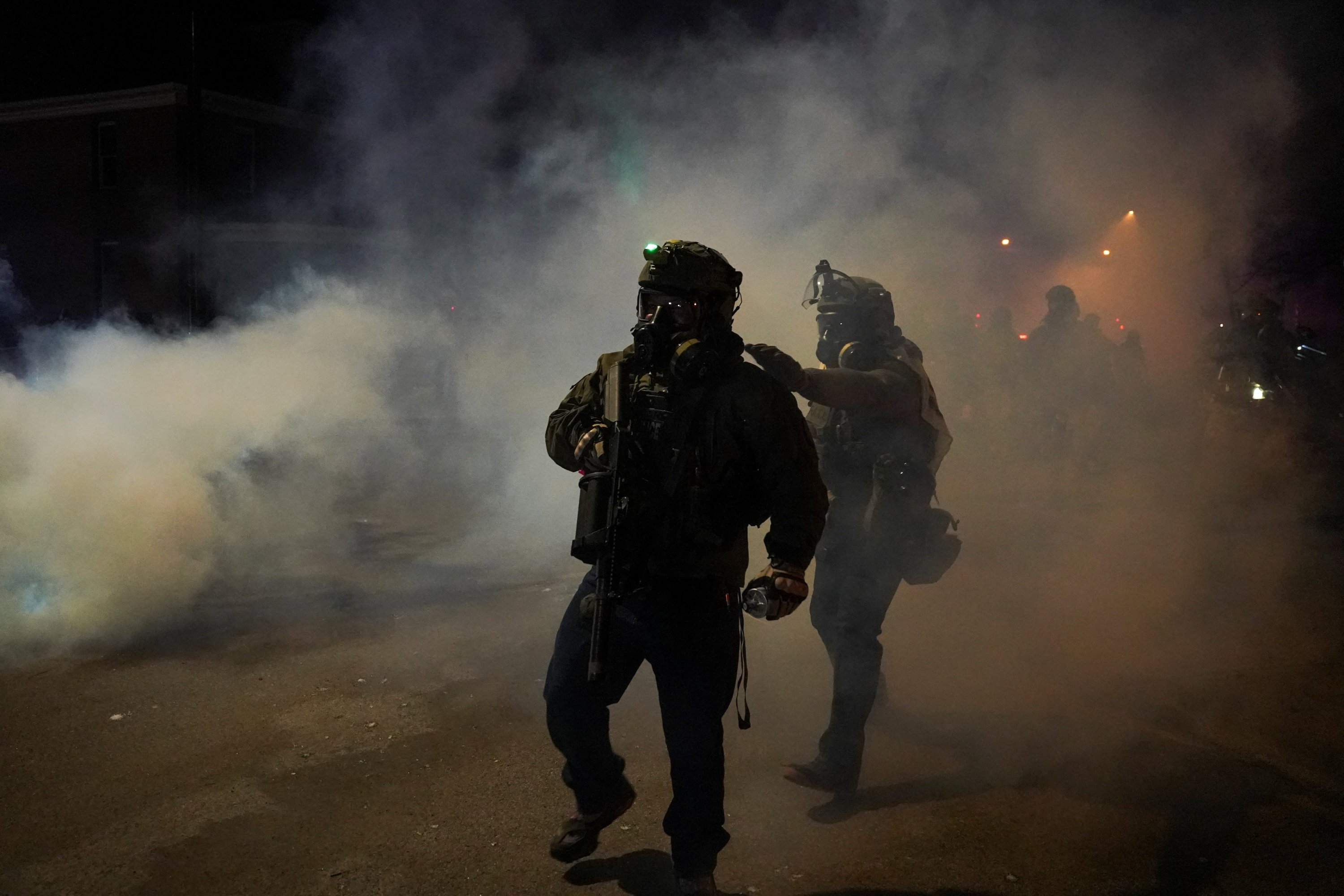
Protests directed against the U.S. Immigration and Customs Enforcement (ICE) may appear, on the surface, to be a debate over immigration policy. In reality, however, they carry a far deeper political and international significance. These protests are not merely objections concerning the status of undocumented migrants. They constitute part of a broader struggle over the relationship between security and the state, human rights norms and America’s claim to global leadership. Rather than viewing these protests solely as reactions confined to U.S. domestic politics, they should also be read as symptoms reflecting the transformation of the global order.
As the second Trump administration approaches the end of its first year, it is evident that collective anxiety, fear and frustration regarding the increasingly authoritarian trajectory of Washington are intensifying.
At the core of the protests lies the question of how rights are defined. The primary dynamic here consists of allegations of human rights violations. Conditions in detention centers, the separation of children from their families and limited access to legal procedures create an explicit contradiction with the liberal norms that the U.S. itself claims to uphold. Yet criticism of ICE practices is directed not only at the severity of procedures but also at the linkage of rights to citizenship status. The exclusion of migrants from full legal processes produces a practice that effectively suspends the idea of the universality of rights.
The second fundamental dynamic is the politicization of identity. The concentration of ICE practices on specific ethnic and geographical groups transforms immigration policy from a technical security issue into a debate over social hierarchy. Inequalities based on race, ethnicity and class are reproduced through the immigration regime. Although the protesters’ reaction is directed at a specific institution, it is, in essence, a response to the state’s systematic coding of certain bodies as permanently “suspect,” “temporary” or “undesirable.”
The third, and often overlooked, dimension concerns the global origins of inequality. Evaluating ICE protests solely as a crisis occurring within U.S. borders obscures the structural conditions that give rise to migration. A significant portion of migrants are on the move due to factors such as instability, economic deprivation and violence – factors that are often the product of global power relations, interventionist policies and unjust economic orders. The protests question a security-centered approach that focuses only on the final link of this chain. Viewed more deeply, it is not difficult to recognize that these protests also reflect a reaction to the U.S.’ globally interventionist and destabilizing policies. The emphasis on Venezuela and Iran by certain groups stems precisely from this perspective.
One of the most visible effects of this process is the questioning of the extent to which the expansion of state authority justified by security concerns aligns with social consent. Reactions to ICE practices are directed not only at deportation or detention itself but also at the political logic through which these practices are legitimized. The more dominant security discourse becomes in the public sphere, the stronger the perception that democratic oversight mechanisms are being weakened.
Another critical dimension for democracy is the renewed debate over freedom of expression. Anti-ICE demonstrations render visible both the boundaries of the right to protest and the state’s approach to this right. In some cases, harsh police interventions or the criminalization of protests undermine society’s sense of security while simultaneously forcing the system to reassert its legitimacy.
In this context, tensions between the federal structure and local governments acquire particular significance. “Sanctuary city” practices have raised the question of whether immigration policy should be treated as a centralized security issue or as part of local social order. Officials in the states of Minnesota and Illinois filed two separate lawsuits in federal court against the federal government, arguing that the deployment of thousands of immigration officers in metropolitan areas violated states’ rights under the Tenth Amendment of the U.S. Constitution. The Tenth Amendment reserves to the states the right to protect the health, safety and welfare of their residents. This challenge, pursued both through protest and legal channels, also reveals the flexibility and multilayered nature of American federalism. The protests serve as a reminder that this multilayered structure constitutes not a site of conflict, but a space for negotiation.
ICE protests have also brought the issue of institutional accountability back onto the agenda. Reports concerning detention centers, problems of access to judicial processes, and the lack of transparency raise serious questions regarding oversight of the executive branch. The protests remind both the legislative and judicial branches of their roles in this area, emphasizing that the separation of powers is not merely a constitutional principle but a living political practice. Moreover, the U.S. government’s failure to effectively oversee the actions of ICE agents and the arbitrariness of enforcement practices have led courts to abandon the presumption of accuracy traditionally granted to government-provided information.
The most enduring impact of protests against ICE is observed not only in the domestic political balance of the U.S. but also in the erosion of its legitimacy at the global level. If the U.S. has long been able to exert influence beyond its military and economic capacity, this has largely stemmed from its ability to present its own values as universal norms. However, harsh practices surrounding the immigration regime and the protests they have triggered are increasingly calling this normative claim into question.
One of the fundamental pillars of U.S. foreign policy has been the relative consistency between principles defended domestically and behaviors demanded internationally. Human rights, the rule of law and individual freedoms occupy a central place in this discourse. Yet debates surrounding ICE practices reinforce the perception that the U.S. applies these principles conditionally, even within its own borders. As protests render this conditionality visible, the U.S. capacity to function as a global “model” correspondingly weakens.
This weakening manifests not so much as a loss of power in the classical sense, but as an erosion of the ability to persuade. States are effective not only through coercive means but also to the extent that they can generate the consent of others. The international resonance of ICE protests demonstrates that U.S. criticism of other countries on migration and human rights issues is no longer perceived as convincing as it once was. Concerns are growing that regimes exhibiting authoritarian tendencies may exploit these contradictions in the U.S. to legitimize their own practices.
When the contribution of U.S. economic, political and at times military interventions to the structural conditions driving migration is recalled, harsh border policies are perceived not merely as security measures but as an evasion of responsibility. This perception quietly yet profoundly erodes the U.S. claim to regional leadership. To compensate for this erosion, Washington may feel compelled to demonstrate even greater power, potentially including the use of force.
For this reason, the “erosion of normative power” should be treated not as a temporary image problem but as a strategic issue. ICE protests serve as a reminder to the U.S.: defending the values of the global order does not legitimize abandoning those values within one’s own borders. Otherwise, claims to leadership quietly but decisively slip away.