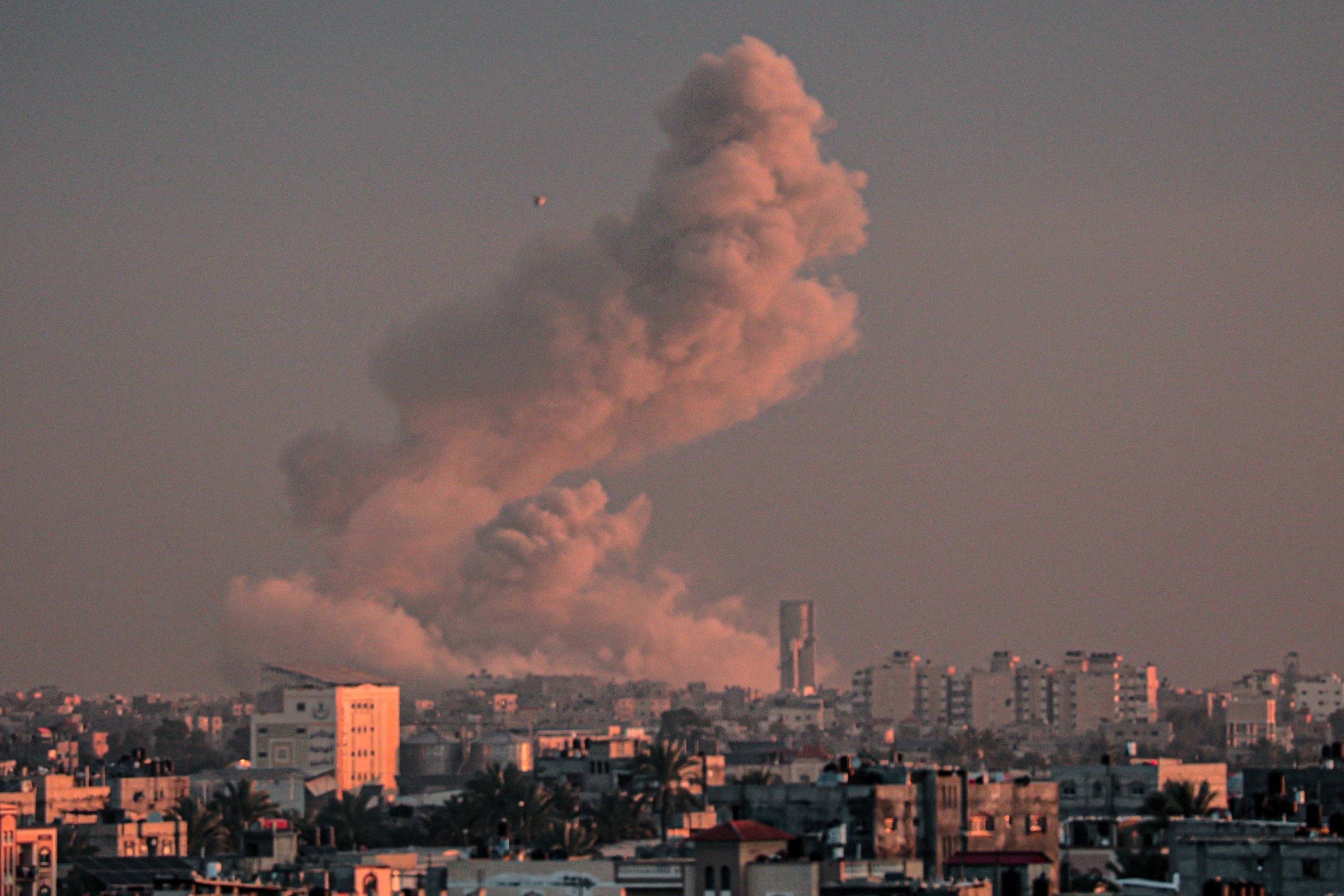
For more than 100 days, much of the world has been on a quest against Israel's brutal actions in the Gaza Strip. The international community, especially the United Nations, suddenly faced the realities of an international system limited in legal and humanitarian terms. South Africa's application to the International Court of Justice (ICJ) created a glimmer of hope on the issue. Okay, but why? As it is known, the ICJ was established within the United Nations after World War II to prevent the recurrence of war-time inhumane acts. Genocide is characterized by the deliberate commission of acts with the intention of annihilating, either wholly or partially, a national, ethnic, racial or religious community.
Therefore, the current situation of all the steps taken to prevent this action has unfortunately revealed that there is not much change in the world of the 21st century. This step within the scope of the ICJ is vital for South Africa, which was exposed to racist practices during the apartheid regime. This decision taken by the ICJ is not the first in recent history. In the case filed by Bosnia-Herzegovina against Serbia in 1993, alleging that the Genocide Convention was violated, an interim injunction decision was given because there was a severe risk that acts constituting genocide would be committed.
The ICJ consists of 15 judges, and within the scope of the case, a panel of 17 people was formed, with one judge from each of the Israeli and South African sides. Within the scope of the ICJ Convention on the Prevention and Punishment of the Crime of Genocide dated 1948, South Africa's application was found sufficient on "reasonable" grounds, based on the evidence presented concerning Articles 2 and 3. However, what does this finding sufficiently mean?
First of all, it is necessary to remember this. South Africa requested nine interim injunctions during the litigation process. Each of these is about Israel's actions; either committing or can commit. These situations are covered under Article 2 and Article 3 of the Genocide Convention. The highlights among the nine precautionary decisions are immediate cessation of military operations in Gaza, not taking steps that would further any military operation in Gaza, requiring Israel to refrain from any action falling within the scope of Article 2 of the Genocide Convention, ensuring that the displaced return to their homes and provide adequate food, water, fuel, medical and sanitary facilities, ensuring access to humanitarian aid, including supplies, shelter and clothing, and submitting regular reports to the court.
It is imperative to point out that the decision made by the court in question, although significant, should be considered interim and not final. It is important to take precautionary measures to mitigate the potential danger and threat of genocide until the final decision-making process is carried out. Hence, the problems that will arise in the face of the possible danger and threat of genocide should be seen as precautions that must be taken until the final decision process in the case. In this respect, even if the result is not a cease-fire, it can be said that a cease-fire will be put in place internationally due to the implementation of the precautionary measures.
Nearly 28,000 civilians have so far lost their lives as a result of Israel's inhumane actions in Gaza, which have continued since Oct. 7. We have to remember what Israeli Defense Minister Yoav Gallant said about people who live in Gaza: "We are fighting against human animals." Although international public opinion constantly takes anti-Israel actions, the change in the state's policies supporting Israel has not been very rapid. In this context, today's process and the ICJ decision have essentially reintroduced the ghosts of 1948. Unfortunately, inhumane approaches and discourses regarding human life, which should be protected internationally, still continue. The most important thing to remember within the scope of the decision is that this process is only the beginning. All responsibility for the issue falls on the states that are parties to the convention in the international arena.
Moreover, it is not about the understanding of the East and the wrong actions but its implementation. The fact that there is no cease-fire decision within the scope of the interim ruling does not mean that this will not be realized with the pressure of international public opinion and states. A cease-fire will come with the necessary measures and situations that will constitute genocide will be ended. The lives of civilians, especially the next generation, will not end. In this respect, although the ICJ decision is not final, it has been a light for many people that international law and the system will proceed correctly. States need to take the following steps for action and stop the ongoing process. Otherwise, Israel's practices, which follow a policy of dehumanization, will be questioned.