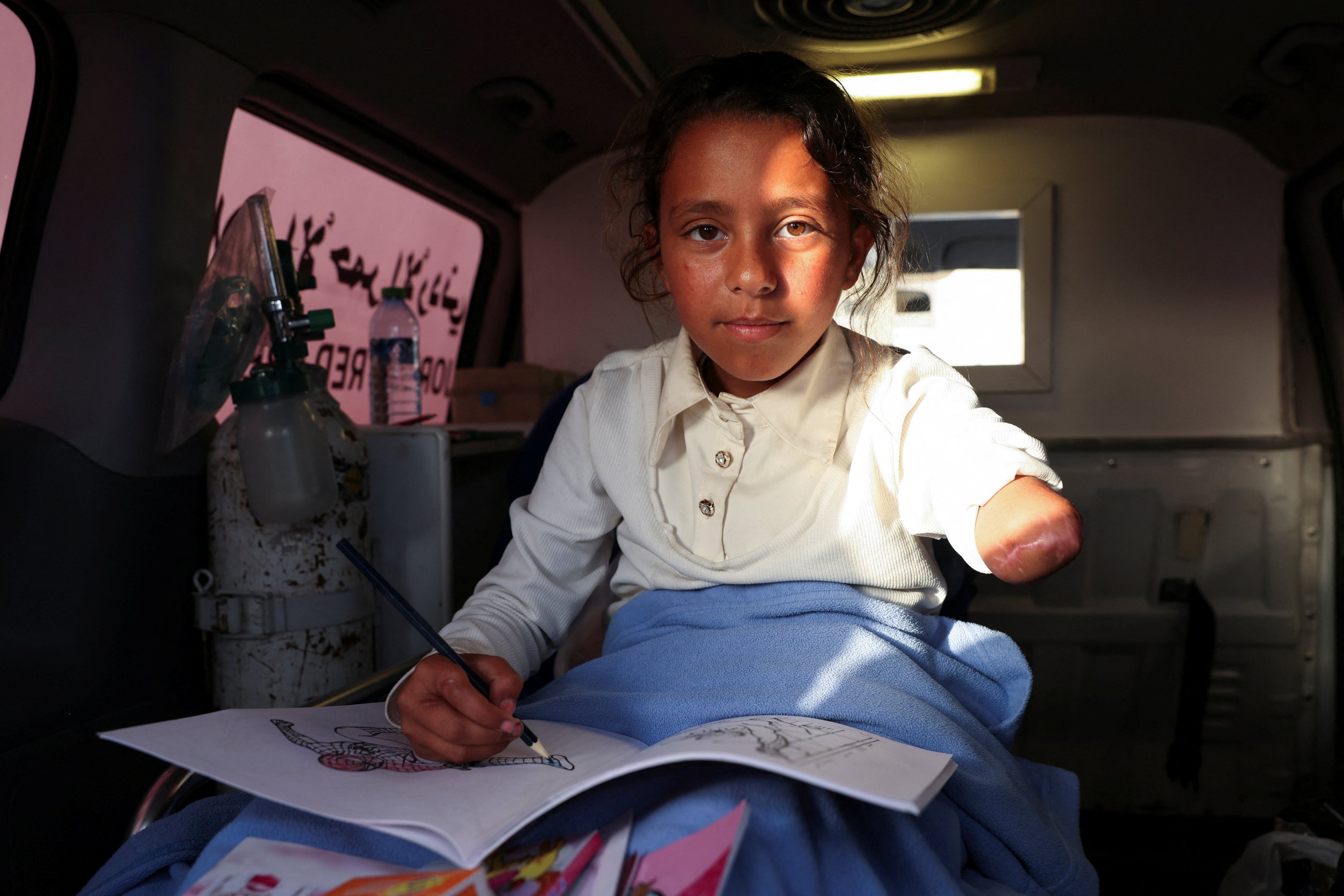
In crisis settings, we continue to act as if education can wait until schools reopen, systems stabilize and life resumes. But for children living through war and displacement, waiting is not an option. Education is already happening. The question is whether we recognize it and whether we invest in it.
What we often overlook is that education in these contexts is doing something far more urgent than delivering academic content: It is shaping how children understand themselves, relate to others and respond to a fractured world. In other words, it is doing the work of peacebuilding.
This does not happen through formal curricula or policy frameworks, but through everyday moments: when a child learns to pause instead of react, to name an emotion instead of suppress it or to see someone different from them as a peer rather than a threat. These are not peripheral outcomes. They are the foundations of more peaceful societies, and they begin long before any formal “peace education” lesson is introduced.
In the occupied Palestinian territory, Palestinians continue to face a complex and deeply challenging environment shaped by ongoing tensions, where movement restrictions, economic hardship and periodic violence have placed significant strain on civilian life, giving rise to the critical support provided by the International Rescue Committee, with support from “Education Above All” under the “Hope for Tomorrow” initiative.
Some of the most meaningful moments emerged not from structured lessons but from simple everyday interactions between caregivers and their children. During the “Daily Routine,” caregivers in the West Bank help children name feelings, choose calming strategies and talk about their day, small practices woven into play and conversation that strengthen confidence, emotional expression and curiosity. As the program adapted across the region, one powerful addition in the occupied territory was short wellbeing messages for caregivers at the end of each session. These acknowledgements of their stress and effort help caregivers feel seen, supported and more emotionally connected to their children.
In Gaza, and in partnership with the Teacher Creativity Center (TCC), the mobile play and learning spaces offer children and caregivers something they rarely experience: a moment to breathe. In these small, bright spaces, children learn through playing, singing, performing in groups, tasks that help them understand each other’s thoughts and feelings, and express feelings they often hold inside, slowly rebuilding confidence and a sense of normalcy and safety. Through gentle routines and storytelling, they begin to heal in ways words alone cannot capture. Caregivers sit beside them, sharing in the calm and receiving brief wellbeing messages that remind them they matter too. For many, these moments restore hope, dignity, and connection amid profound uncertainty.
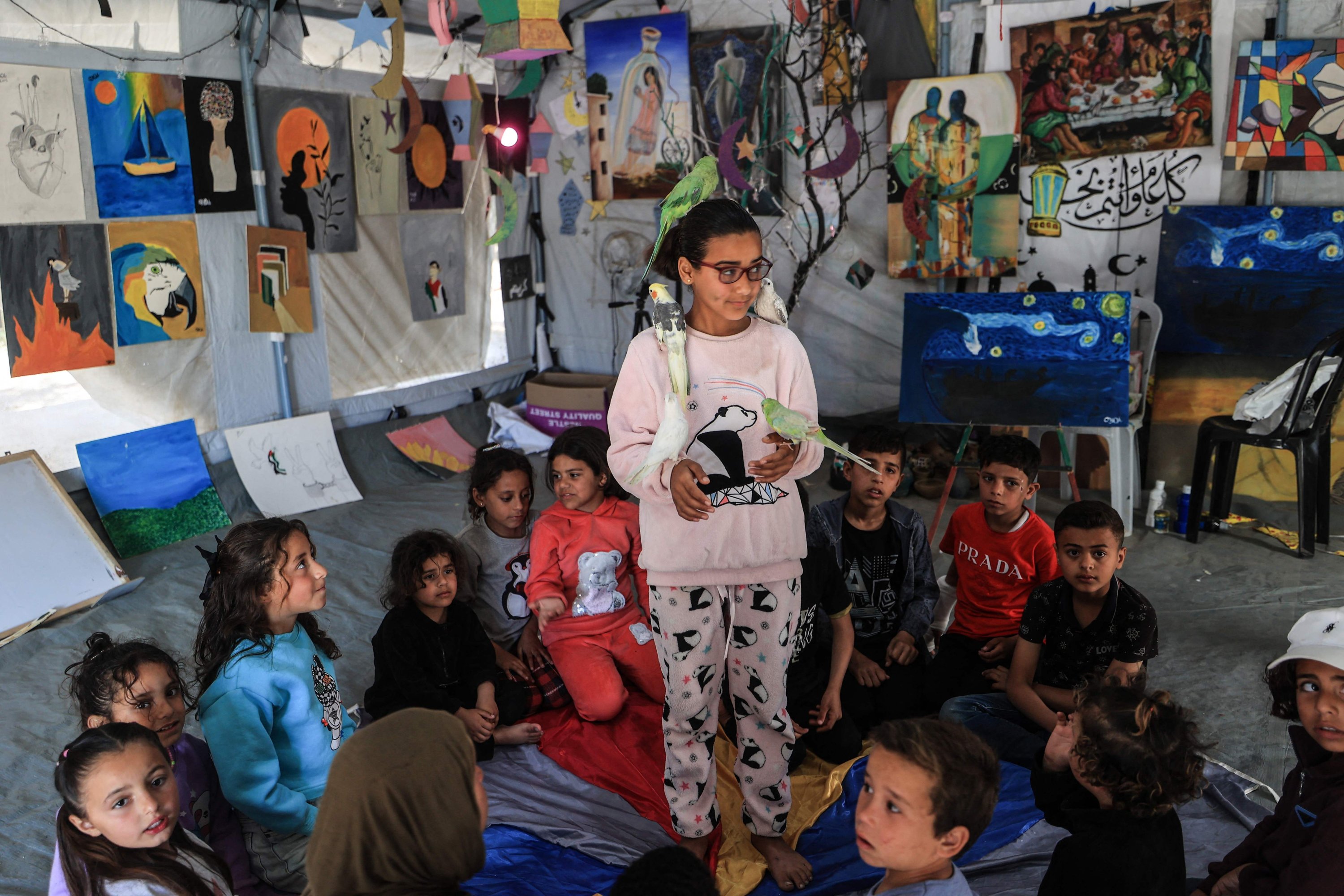
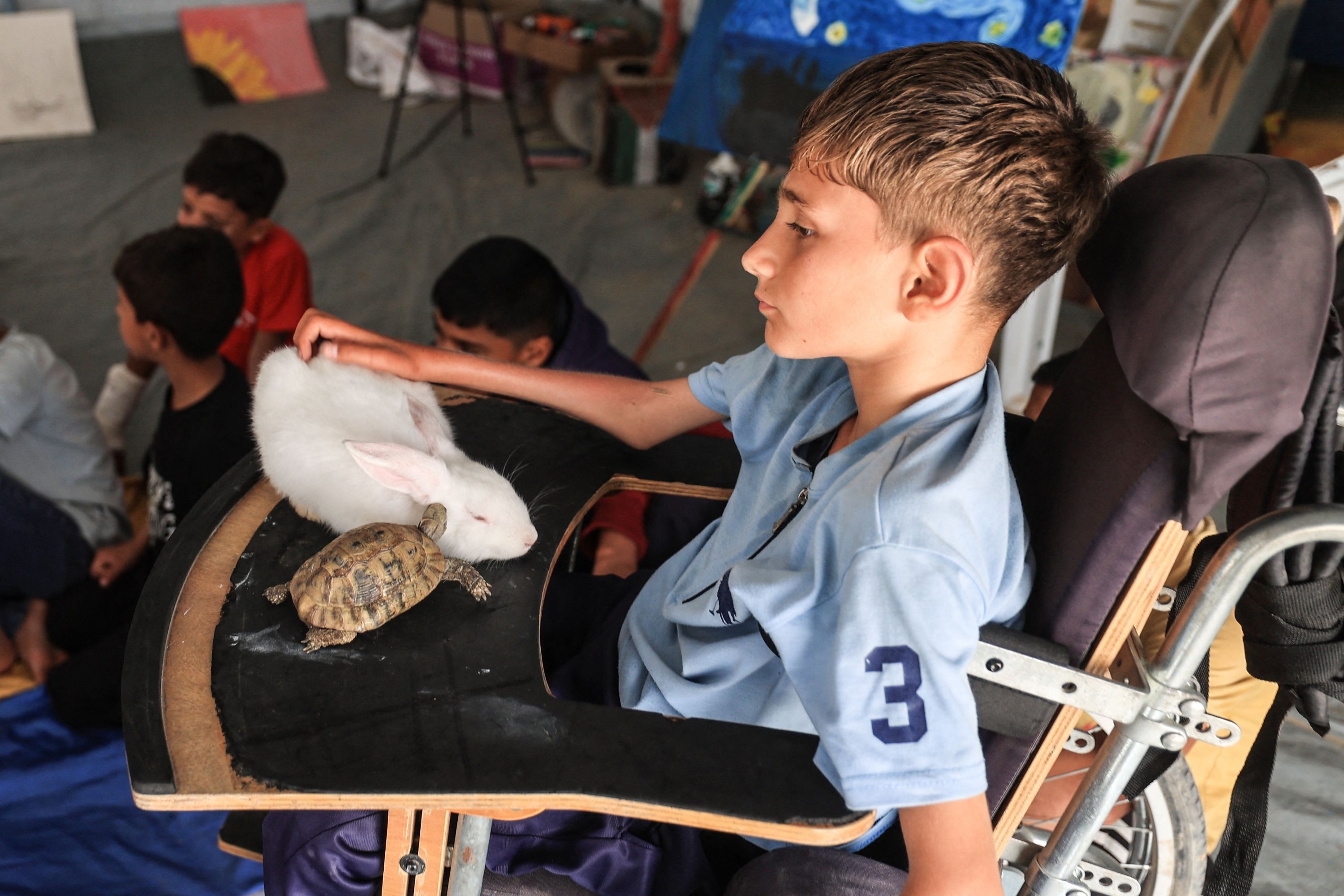
Too often, social and emotional learning, storytelling and caregiver engagement are treated as secondary to “real learning.” In crisis contexts, they are in fact what sustains learning, wellbeing and social cohesion.
When schools close, education does not stop; it shifts into homes, relationships and stories.
Caregivers are children’s most constant educators, especially in crisis settings where learning shifts into the home. With simple routines and emotional support, they help children name and express feelings, stay regulated and make sense of their experiences, which are essential skills for learning and social cohesion. Under the "Hope for Tomorrow" initiative, caregivers in the occupied Palestinian territory turn everyday moments into growth through stories, songs and conversation. When supported, children stay anchored and ready to learn.
Storytelling further amplifies this process. Through stories, children can see characters navigating challenges similar to their own, name and process emotions, and imagine alternative ways of responding to conflict. Stories create a shared language for understanding difference, empathy and cooperation, particularly in contexts where children’s real-world experiences are marked by division.
In contexts where infrastructure is destroyed and access is limited, media becomes a primary learning space. Radio, audio and digital content are not just delivery channels; they are spaces where children learn, cope and connect.
In Gaza and the West Bank, Youm Jadeed (“A New Day”), an educational audio drama produced by Lapis with the support of Education Above All Foundation, uses media both to significantly increase reach to kids out of school but also as a powerful tool to allow kids to process experiences and reconnect with others.
Delivered through radio, simple audio files and group listening, the program reached over 160,000 children, many in low-resource and disrupted environments, where classrooms may be inaccessible, but stories can still travel. As the popularity of the program grew, we worked with partners to bring content to more in-person educational settings as well, like temporary learning spaces and community centers.
In one case, a community facilitator played an episode featuring one of the main characters, Eyad, who was struggling to focus. The lesson became an animated conversation, with the children expressing their feelings and experiences with a common problem in crises that now had a name for them. Disruption, displacement, explosions – all these things were making it hard for the kids to focus. By acknowledging that, letting the kids know others felt it too, and providing some simple tools to learn focus, Youm Jadeed made an impact on the students and educators.
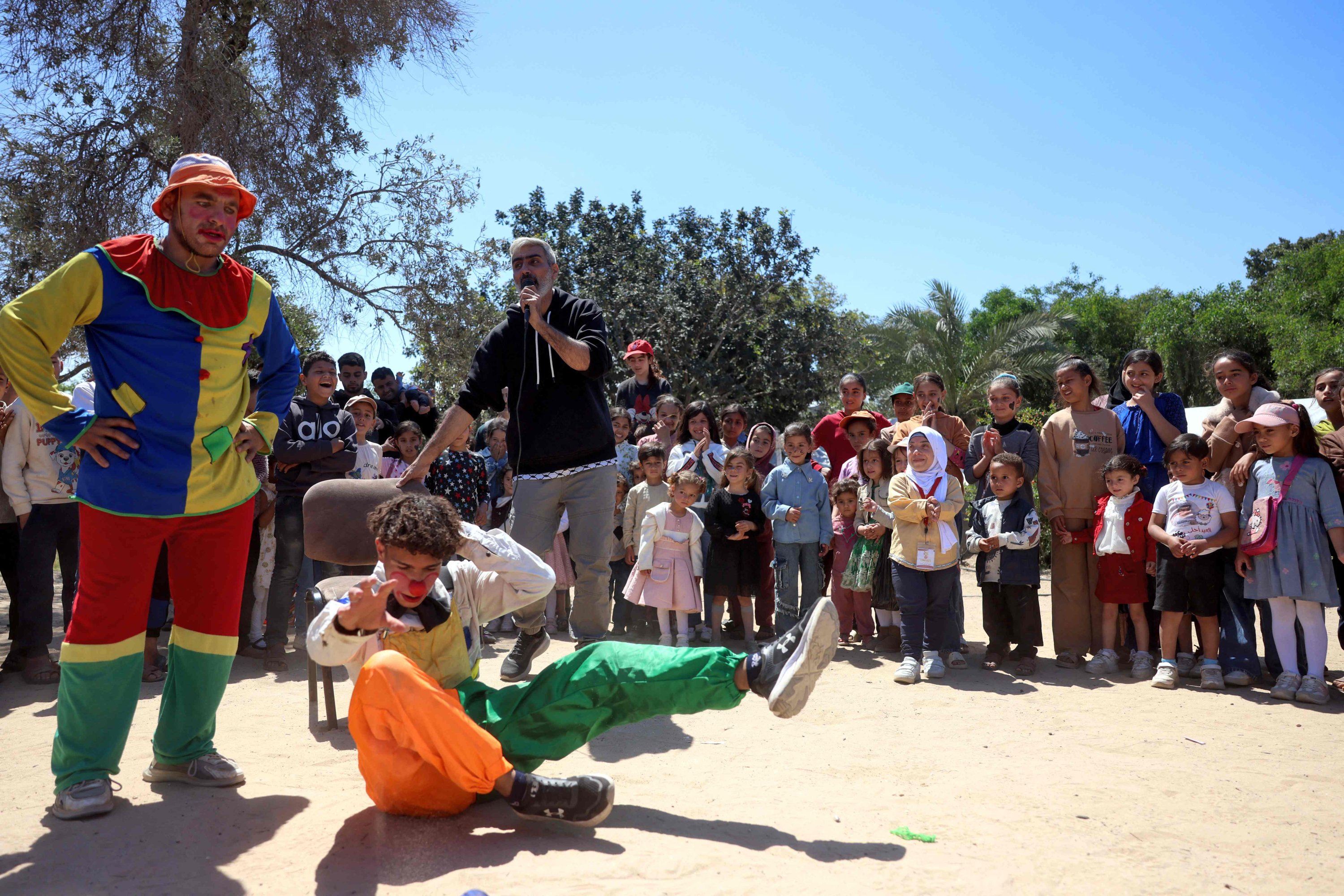
With well-drawn and relatable characters, Youm Jadeed has created a sense of consistency and companionship for kids during upheaval. This program was created fresh by and for Palestinians and has a deeply local feel with music, stories and community icons that draw in the children, while building a vision of a “new day.”
For some, the characters feel like companions, offering reassurance and sparking imagination. As one girl explained, “Sometimes I feel like the characters are protecting me ... they remind me that I am not alone.”
Across these approaches, a common thread emerges: education systems and financing models often undervalue what matters most in crisis contexts. Social and emotional learning (SEL), caregiver engagement and educational media are still treated as complementary, nice to have, but not essential. Yet in many crisis settings, they are the very elements that make learning possible.
If we continue to define education narrowly, as content delivery within formal systems, we risk overlooking where learning is actually happening and what children need most to navigate their realities.
Recognizing these approaches as core infrastructure requires a shift not only in programming, but in how we design, fund and evaluate education in emergencies.
Peacebuilding begins in the smallest, most human moments, when a child feels safe enough to express themselves, to trust others, and to imagine a future that is not defined by violence. Whether through a caregiver’s voice, a story that reshapes how difference is understood or a radio broadcast that reaches children where no school can, these moments are already happening.
The question is no longer whether education can contribute to peacebuilding. It is whether we are willing to recognise where that work is already taking place and invest in it accordingly.
*Education specialist at the Education Above All Foundation
**Emergency Education and Early Childhood Development Coordinator with the International Rescue Committee (IRC)