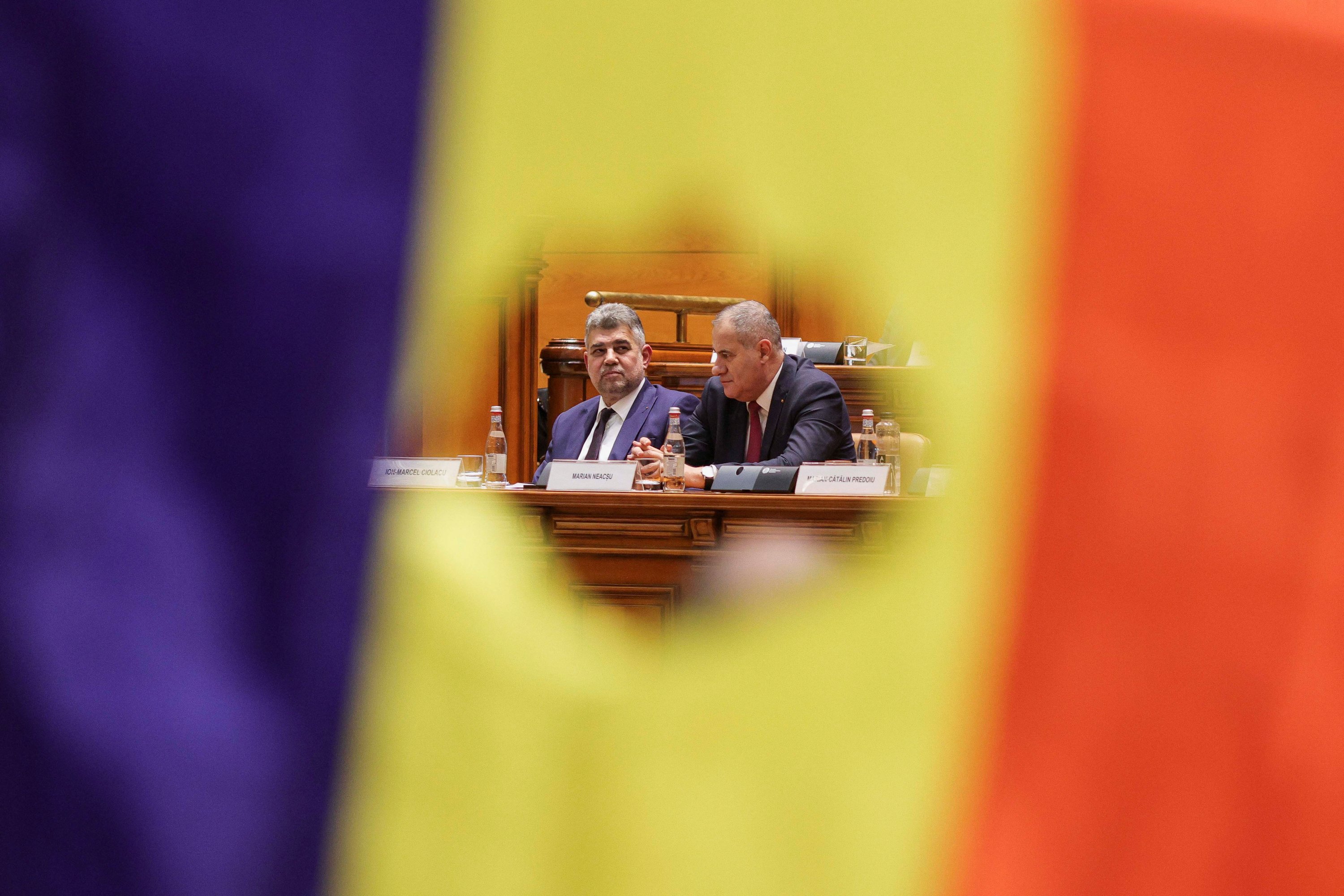
Since Dec. 20, 2024, Romania has experienced significant political and economic upheaval. The Constitutional Court's unprecedented decision to annul the first round of the presidential election on Dec. 6, 2024, due to claimed evidence of Russian interference in favor of far-right candidate Călin Georgescu, sparked a political crisis. This was followed by challenges in forming a new government, with the Social Democratic Party withdrawing from pro-European coalition talks on Dec. 19.
In response to these challenges, Romania's new coalition government approved a series of economic measures on Dec. 30, 2024. These measures included tax hikes, caps on public sector wages and pensions and the elimination of various tax exemptions, with the goal of saving up to 130 billion lei ($26.93 billion).
Amid these domestic challenges, Romania achieved a significant milestone in its international relations by becoming a full member of the Schengen Zone on Jan. 1, 2025, along with Bulgaria. However, the country continues to grapple with economic concerns, including a government deficit forecast to reach 8% of gross domestic product (GDP) in 2024 and ongoing political uncertainty following the election annulment. As Romania navigates these complex issues in early 2025, the situation highlights a period of significant change and challenge for the country.
Romania's strategic importance in the Balkans has made it a focal point for major powers seeking to influence the region's geopolitical landscape. The country's critical role in the Ukraine war, its position in the Black Sea region and its involvement in the Three Seas Initiative have attracted the attention of global actors like the United States, the European Union and Russia. These powers often employ strategies of destabilization followed by restabilization to advance their interests in Romania. While the United States and the EU strive to maintain Romania's Western orientation through increased military presence and economic initiatives, Russia seeks to disrupt this alignment through information warfare, political interference and the exploitation of internal divisions. This complex interplay of external influences further complicates Romania's efforts to navigate its current political and economic challenges.
Meanwhile, reformist politicians like Nicușor Dan and Elena Lasconi have demanded clear explanations for the election annulment before setting new dates, emphasizing the need for transparency to maintain public trust in democratic institutions.
Ongoing investigations into the circumstances leading to the annulment have revealed evidence of voting manipulation through social media platforms, illegal campaign financing and suspected Russian interference. The government is reportedly considering new presidential election dates for spring 2025, while the international community watches closely, concerned about the stability of Romania's democratic processes and the potential for foreign interference in European elections. As of Jan. 7, 2025, Romania continues to navigate this complex political situation, with the exact date for new presidential elections yet to be announced.
The annulment of Romania's presidential elections on Dec. 6, 2024, has significantly eroded public trust in the country's democratic institutions and processes. A survey conducted in early January 2025 revealed that 62% of Romanians disapproved of the Constitutional Court's decision to cancel the elections, indicating widespread dissatisfaction with this unprecedented action. This erosion of confidence is further exemplified by Elena Calistru's statement that "trust in Romania's democratic process hangs by a thread," reflecting growing skepticism about the integrity of the electoral system. The situation has also deepened societal divisions, with far-right movements framing the annulment as evidence of a "deep state" conspiracy, potentially fueling further polarization and legitimizing populist rhetoric.
The crisis has led to increased demands for transparency and accountability from key institutions, with reformist politicians calling for clear explanations before setting new election dates. This comes against a backdrop of already low confidence in political institutions, with a November 2023 survey showing only 19.4% of Romanians expressing confidence in the government. The long-term consequences of this erosion of trust are concerning, potentially making Romania more vulnerable to foreign influence campaigns and reshaping its political landscape. As the country grapples with this crisis of confidence, the stability of its democratic institutions hangs in the balance.
As Romania strides into 2025, it stands at a critical juncture shaped by internal strife and external pressures. The annulment of the presidential election not only raises serious questions about the resilience of Romania's democratic processes but also signals the vulnerability of Eastern European democracies to foreign machinations. In addressing these tumultuous events, Romania must balance urgent economic reforms with the imperative to restore public trust and political legitimacy. The way forward necessitates a transparent and inclusive political process that prioritizes integrity over expediency and fortifies democratic institutions against both internal discord and external interference. The engagement of the European Union and other Western allies in supporting Romania's democratic and economic stability will be pivotal. As Romania integrates further into European structures like the Schengen Zone, its strategic significance underscores the need for a robust, transparent and stable governance framework, capable of steering the nation through this tempest of political and economic challenges.
On the other hand, it is worth noting that the developments in Romania have once again revealed the need to think about the problems that arise when democracies are so open to external interventions. It should be kept in mind that the capacity of democracies to resist and absorb external challenges and interventions is the true yardstick for resilient democracy.