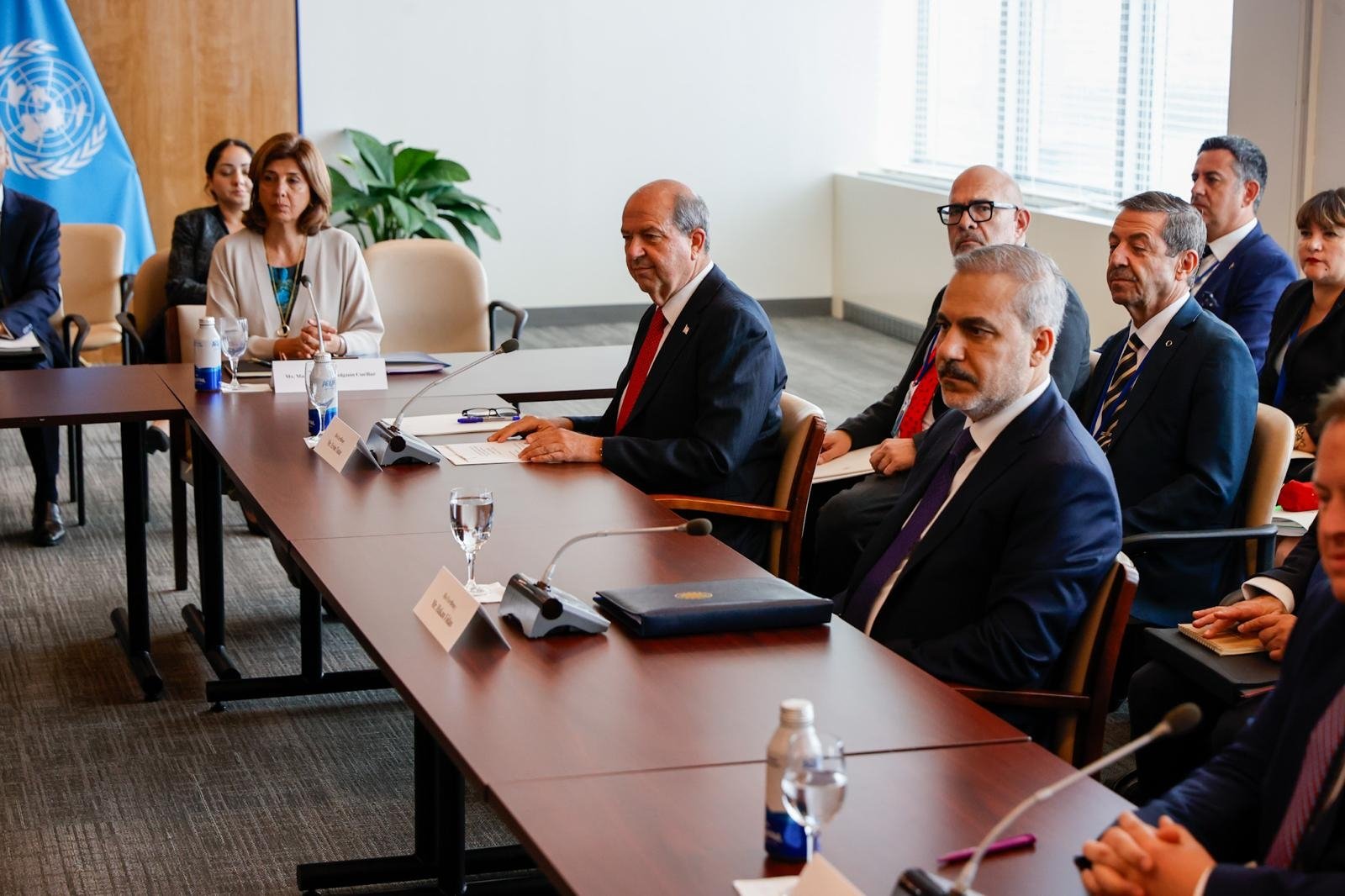
The informal meeting on Cyprus, convened under the auspices of the U.N. secretary-general, took place in New York on July 16-17. Attendees included Turkish Republic of Northern Cyprus (TRNC) President Ersin Tatar, Greek Cypriot leader Nicos Christodoulides and representatives of the three guarantor powers: Foreign Minister Hakan Fidan, Greek Foreign Minister Giorgos Gerapetritis and U.K. Minister of State for Europe and North America Stephen Doughty.
The meeting commenced on the evening of July 16 with a dinner hosted by U.N. Secretary-General Antonio Guterres in the United Nations headquarters. On July 17, the primary day of discussions, all delegations held bilateral meetings with Guterres. This was followed by an informal plenary session, lasting approximately 2.5 hours, during which leaders delivered speeches and exchanged views on key issues. The meeting continued over a working dinner and concluded with a second plenary session involving all delegations. I attended the meeting as the special advisor of the TRNC Presidency on international relations and diplomacy and a member of the negotiation team.
This gathering effectively continued the informal meeting on Cyprus held in Geneva, Switzerland, on March 17-18, 2015. It was convened in New York primarily due to budgetary constraints at the U.N., which, it appears, could only host the meeting at its headquarters.
At the Geneva meeting, both sides agreed to collaborate in six areas. Progress has been made on three of them. A technical committee on youth was established, comprising 32 members – 16 women and 16 men – reflecting gender parity. The committee has already held its inaugural meeting. Likewise, a technical committee on cultural heritage has agreed to restore 15 cemeteries on each side. The technical committee on the environment has begun addressing the potential adverse impacts of climate change, aiming to develop a joint action road map. Regarding the fourth area, demining, both sides have agreed on key principles, and the issue is expected to be finalized once the remaining technical details are resolved.
However, no progress was made on the remaining two critical issues: the opening of new border crossings and the establishment of a photovoltaic park in the buffer zone.
One of the most pressing, yet unresolved, issues brought to New York was the matter of border crossings, which directly affects the daily lives of its citizens. There is a clear and urgent need for a new vehicular crossing point in or near Nicosia. At the Metehan crossing, where 65% of all border movements occur, the Greek Cypriot side has deployed only one officer, in contrast to at least four on the Turkish Cypriot side, resulting in long lines and significant delays. To ease traffic congestion at the Metehan crossing, the Turkish Cypriot side proposed the opening of new crossings at Haspolat and Akıncılar.
However, the Greek Cypriot proposals for Gaziler, Kiracıköy and Erenköy contradicted the core purpose of border crossings, as they sought to establish a South-to-South transit corridor instead of a crossing from one side of the border to the other. A further aim was clearly to expand Greek Cypriot control within the buffer zone. Essentially, Christodoulides proposed a corridor that he must have known would create an impasse and prevent agreement on crossing points.
To resolve this impasse, the Turkish Cypriot side suggested opening Haspolat, Akıncılar and Gaziler-Kiracıköy simultaneously. Christodoulides rejected the proposal, citing concerns for Athienou residents and claiming that “the Greek Cypriots will not feel safe if they pass to the Turkish Cypriot side,” which contradicts the fact that millions of Greek Cypriots cross into the TRNC each year.
Secondly, the initiative to establish a solar power plant in the buffer zone has stalled, due to the Greek Cypriot side's insistence on maintaining full control over the electricity. The Turkish Cypriot side quite reasonably proposed that both communities should receive energy directly. However, Christodoulides insisted that the Greek side should take full receipt of the electricity and distribute it to the Turkish Cypriot side at its discretion. Asserting its role as the “only legal authority” on the island. This is clearly unacceptable.
It is undeniable that, pending a final settlement, practical solutions must be found for the everyday challenges faced by people on both sides of the island. As Tatar highlighted in his speech, the meeting represented an opportunity for cooperation under the motto: “Work together, produce together, progress together.”
Motivated by this spirit, the Turkish Cypriot side arrived in New York with six new proposals, in addition to the existing ones, in the hope of achieving a mutual agreement. These included: a microplastics cleanup and mapping initiative to address health and environmental risks; air quality monitoring in the face of global warming; seismic mapping for earthquake preparedness; a joint fundraising effort by the two leaders for restoring cultural heritage sites and identifying missing persons; co-management of the island’s freshwater resources; and enhanced efforts to combat drug trafficking, as most narcotics entering the TRNC reportedly originate from southern Cyprus. The Turkish Cypriot side emphasized that these proposals are not final and expressed openness to further ideas for cooperation.
Christodoulides accepted only the first two of these proposals, on the condition that two of his own were also accepted, and rejected the rest, claiming Greek Cypriot "sovereignty."
The Turkish Cypriot side has thus once again demonstrated its commitment to resolving issues peacefully through dialogue and diplomacy. It seeks to bridge the present and future by fostering trust between the two communities and cultivating a genuine culture of cooperation, both in word and in deed.
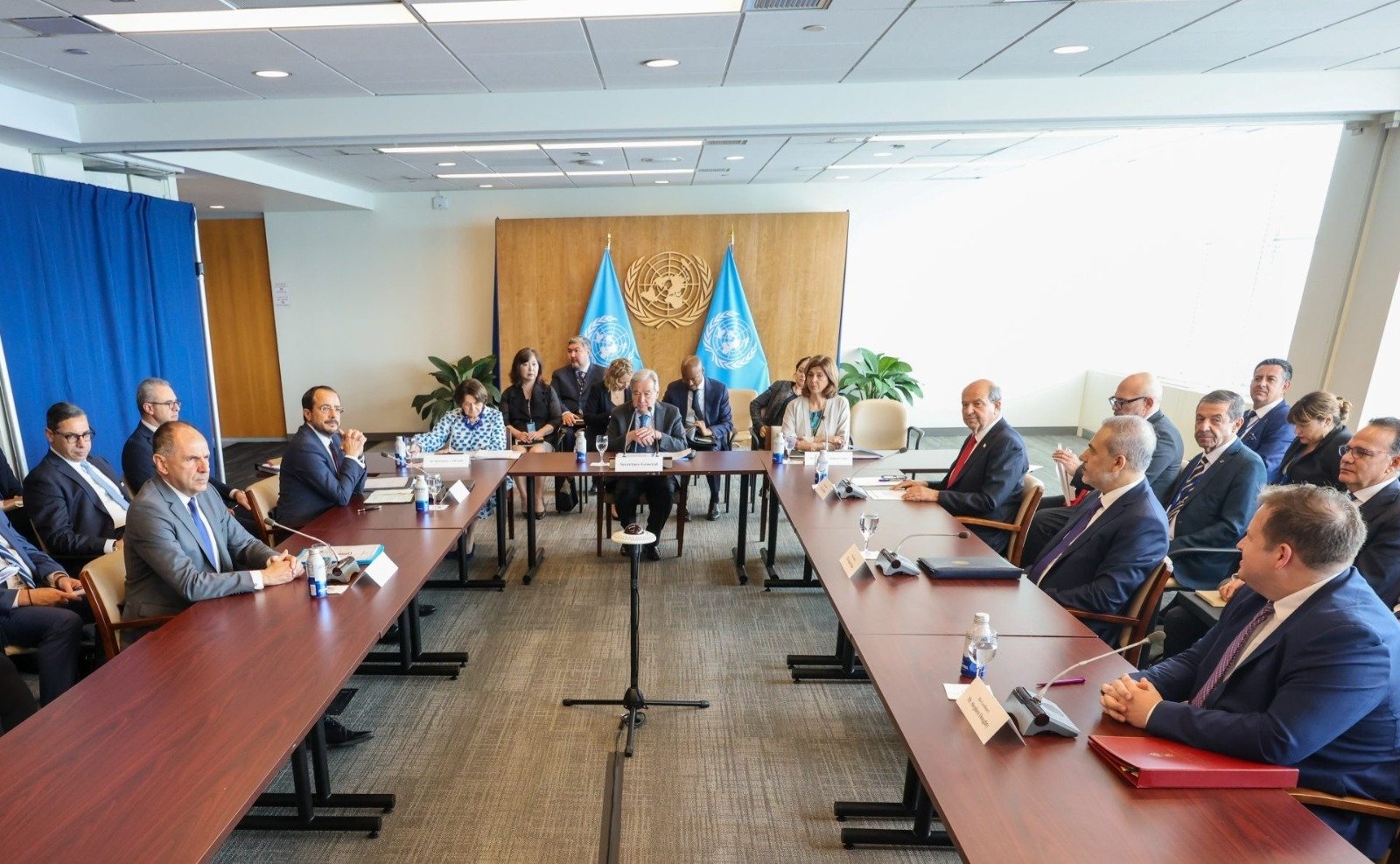
Ultimately, the informal meeting in New York concluded with limited success, if not outright failure. Agreements were reached on the creation of a consultative body for civil society engagement, the exchange of cultural artifacts, improved air quality monitoring and efforts to address microplastic pollution. It was also agreed that Guterres will meet both leaders again during the high-level week of the U.N. General Assembly in September, and that another informal meeting in the same format will be held later this year.
Although the secretary-general stated in his post-meeting press conference that discussions would continue regarding the opening of four new crossing points and the solar energy project in the buffer zone, given the Greek Cypriot leadership’s current mindset, no tangible progress should be expected.
Nevertheless, the Turkish Cypriot side achieved certain diplomatic gains in New York. Firstly, Tatar once again asserted that the unlawful and inhumane isolation imposed on the Turkish Cypriot people, who have been condemned to asymmetric silence on international platforms, must end. Direct flights, trade and contacts, as well as participation in international sporting and cultural events, are matters of fundamental human rights, not just political issues. There are no legal barriers preventing these rights from being realized.
Secondly, Tatar defended the rights of his people by highlighting the Greek Cypriot policy of obstruction, particularly concerning arrests related to property issues. These arrests violate European Court of Justice rulings and infringe on fundamental human rights. They have also created fear among Turkish Cypriots crossing into the south, who worry about detention. Further, Tatar stressed that all TRNC citizens should be able to travel to southern Cyprus freely and without restriction.
Finally, the TRNC was once again represented at the highest level on the international stage. Tatar effectively used this platform to raise the visibility and recognition of the Turkish Cypriot people.
For the Greek Cypriot side, however, the informal meeting in New York represented yet another failure in the long endgame. As with the unofficial meeting in Geneva in March, the attempt to portray this gathering as a step toward the resumption of substantive negotiations on the Cyprus issue proved unsuccessful. No mention was made, either directly or implicitly, of any resumption of formal talks. As a result, the Greek Cypriot leadership once again lost credibility, both among its own public and in the eyes of the international community.
Furthermore, the European Union was not invited, and the EU’s unilaterally appointed so-called "special envoy for Cyprus," Johannes Hahn, was absent. This represented a serious setback for Greek Cypriot diplomatic efforts. Hahn was not even granted a meeting by Tatar, and the Turkish Cypriot side has made it clear that it will never accept an EU-appointed envoy, as the EU is itself a party to the failure of the Cyprus problem.
Finally, the Greek Cypriot leadership, which mistakenly believes that progress in EU-Türkiye relations can be achieved only by securing Greek Cypriot interests, was once again reminded that these are entirely separate matters.
In conclusion, although the Turkish Cypriot side has consistently demonstrated goodwill and a constructive approach in all negotiation efforts, including the 2004 U.N. Annan Plan, which was agreed by Turkish Cypriots but rejected by Greek Cypriots, each process has ultimately ended in failure. The New York meeting is merely the latest example. At the heart of this impasse lies the international community’s continued recognition of the Greek Cypriot leadership as the sole legitimate authority on the island, granting it status far beyond its actual power, sovereignty or jurisdiction. This entrenched position preserves the status quo in Cyprus. Unfortunately, unless this key issue is addressed, the prospect of a just and lasting settlement, as well as meaningful cooperation beneficial to both peoples of the island, remains unlikely.