In July 2017, at the Crans-Montana summit in Switzerland, Cyprus came close (again) to what many had hoped would be a breakthrough. Instead, it broke apart. Another diplomatic round collapsed into the familiar dust of history. But this time, the reason may have been more candidly revealed than ever before.
In a recent televised interview, former president of the Turkish Republic of Northern Cyprus (TRNC), Mehmet Ali Talat, revealed that former Greek Cypriot leader Nikos Anastasiadis abruptly walked away from the table after receiving a phone call from Israeli Prime Minister Benjamin Netanyahu. The message was blunt: “Are you crazy? Why are you bringing Turkish Cypriots into government? You already govern Cyprus and represent it internationally. What business do they have there?”
That moment, if indeed true, tells us less about foreign interference than it does about the entrenched mindset of the Greek Cypriot leadership: a vision of Cyprus as an exclusively Greek polity, where Turkish Cypriots are, at best, junior partners. More accurately, they are expected to remain invisible.
This is not a new problem. The Greek Cypriot side has rejected every major federal framework since 1968. The most significant was the 2004 Annan Plan, which was supported by 65% of Turkish Cypriots but overwhelmingly rejected by 76% of Greek Cypriots. When even the most internationally endorsed peace proposal is discarded so decisively, it becomes harder to maintain the illusion that federation is a shared goal.
Today, Nikos Christodoulides, Anastasiadis’s former foreign minister, is the president. His approach, like that of his predecessor, remains unchanged: reject genuine power-sharing while enjoying exclusive international recognition.
And yet, certain Turkish Cypriot politicians still advocate returning to the negotiation table, as if nothing has changed.
As an advisor on Eastern Mediterranean affairs, I recently visited the southern part of the island. I spoke with Greek Cypriot locals across different age groups and communities. Their message was surprisingly consistent: They no longer support reunification. The differences in culture, politics and even psychology are too vast.
Many acknowledged the historical pain and division, but few believed that a shared state was realistic, let alone desirable. “It would just lead to more conflict,” one middle-aged resident told me. Another noted, “We’ve built separate lives now. We govern differently, we think differently.”
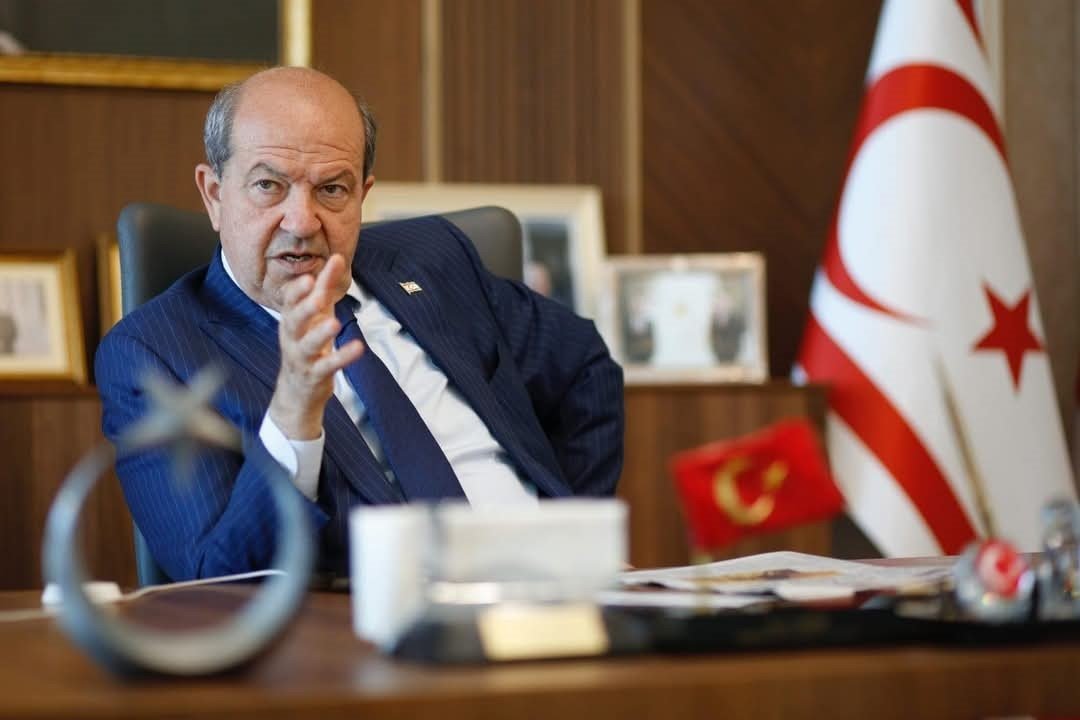
The same is true in the TRNC. Turkish Cypriots made their view clear in the 2020 presidential election, where Ersin Tatar was elected on a platform of sovereign equality and a two-state solution. His message was not one of isolationism, but of realism: Peace cannot be built on a fantasy that has already failed for five decades.
Recent events have also highlighted the enduring nature of this hostility. When Greek Cypriot YouTuber and member of the European Parliament Fidias Panayiotou interviewed President Tatar, he and his fiancee were threatened verbally and physically. The “crime”? Speaking to the other side.
Fidias made clear he didn’t agree with much of what Tatar said. But he defended the right to dialogue, only to face public harassment and online death threats. If this is the cost of mere conversation, what does that say about the social climate beneath the surface?
Can anyone honestly believe that Turkish Cypriots would be safe, politically or culturally, within a federal structure dominated by such sentiments?
Supporters of a federal solution often invoke lofty principles, such as power-sharing, European values and peaceful coexistence. But how can any of these ideals take root in a society where even conversation is met with violence?
The global community continues to push for a reunified Cyprus based on a bi-zonal, bi-communal federation. But this vision, however idealistic, is no longer rooted in reality. Turkish Cypriots are not a minority group. They are a people with their own institutions, democratic will and identity. They co-founded the republic in 1960 and were later forced out through violence, not choice.
Rauf Raif Denktaş, the founding president of the TRNC, long argued that the only path to lasting peace is one of mutual recognition and friendly coexistence, like Switzerland and its EU neighbors. Sovereign states can share an island, as long as they respect each other’s borders and autonomy.
It’s not unity that ensures peace, it’s equality. And equality begins with recognition.
Federation is not simply dead; it was never born. The idea was kept alive by well-meaning diplomats and fatigued mediators, but it has long been divorced from the will of the people on both sides.
The path forward is not more summits, more illusions, more heartbreak. It is a clear-eyed reassessment: a negotiated, peaceful two-state solution that secures freedom, dignity and security for both communities.
Cyprus was not frozen in 1974. It is evolving. The international community must also evolve, or it risks becoming the last illusion standing in the way of real peace, in a region already stretched thin by division and global uncertainty.