Daily Sabah logo

Politics
Diplomacy Legislation War On Terror EU Affairs Elections News Analysis
TÜRKİYE
Istanbul Education Investigations Minorities Expat Corner Diaspora
World
Mid-East Europe Americas Asia Pacific Africa Syrian Crisis Islamophobia
Business
Automotive Economy Energy Finance Tourism Tech Defense Transportation News Analysis
Lifestyle
Health Environment Travel Food Fashion Science Religion History Feature Expat Corner
Arts
Cinema Music Events Portrait Reviews Performing Arts
Sports
Football Basketball Motorsports Tennis
Opinion
Columns Op-Ed Reader's Corner Editorial
PHOTO GALLERY
JOBS ABOUT US RSS PRIVACY CONTACT US
© Turkuvaz Haberleşme ve Yayıncılık 2026

Daily Sabah - Latest & Breaking News from Turkey | Istanbul

  • Politics
    • Diplomacy
    • Legislation
    • War On Terror
    • EU Affairs
    • Elections
    • News Analysis
  • TÜRKİYE
    • Istanbul
    • Education
    • Investigations
    • Minorities
    • Expat Corner
    • Diaspora
  • World
    • Mid-East
    • Europe
    • Americas
    • Asia Pacific
    • Africa
    • Syrian Crisis
    • Islamophobia
  • Business
    • Automotive
    • Economy
    • Energy
    • Finance
    • Tourism
    • Tech
    • Defense
    • Transportation
    • News Analysis
  • Lifestyle
    • Health
    • Environment
    • Travel
    • Food
    • Fashion
    • Science
    • Religion
    • History
    • Feature
    • Expat Corner
  • Arts
    • Cinema
    • Music
    • Events
    • Portrait
    • Reviews
    • Performing Arts
  • Sports
    • Football
    • Basketball
    • Motorsports
    • Tennis
  • Gallery
  • Opinion
    • Columns
    • Op-Ed
    • Reader's Corner
    • Editorial
  • TV
  • Opinion
  • Columns
  • Op-Ed
  • Reader's Corner
  • Editorial

Iran does not fight to win, but to endure

by Orhan Sali

Mar 16, 2026 - 11:55 am GMT+3
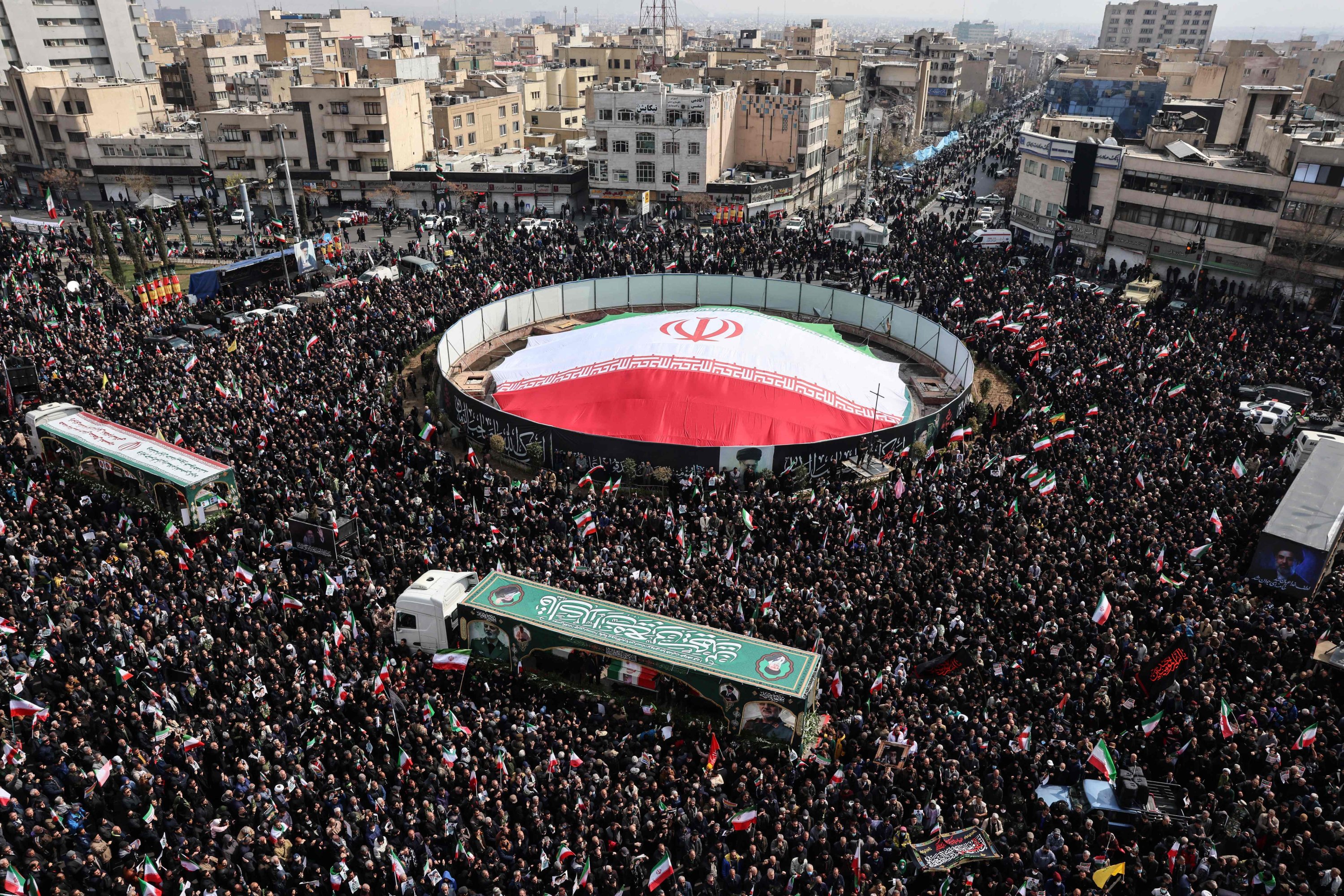
Iranians attend the funeral of Iran's Revolutionary Guards Corps (IRGC) commanders, army commanders and others killed in the early days of the U.S. and Israeli strikes on Iran, Enghelab Square, Tehran, Iran, March 11, 2026. (AFP Photo)
by Orhan Sali Mar 16, 2026 11:55 am

After witnessing Iraq's invasion in 2003, Iran built a system designed to endure shocks rather than win wars

Washington expected a fast collapse, hitting the center, breaking the chain of command and watching the system fall apart. The plan worked in Iraq before. But Iran is a different country. The collapse never came because Tehran did not panic.

Following that, Iran played its hardest card: the Strait of Hormuz. That was not just a military move but strategic leverage, a message to the world: “If you choose to fight us, the global economy will falter.”

So where did the United States miscalculate?

To understand that, we need to go back to 2003, when the U.S. dismantled Saddam Hussein’s centralized military command in only three weeks. The leadership was removed, and the army disintegrated.

While all this happened, Iran was watching closely, and one of the officers paying attention was Mohammad Ali Jafari. Jafari understood something fundamental that centralized armies die when their head is cut off. So Iran redesigned its structure.

After 2007, the Islamic Revolutionary Guard Corps (IRGC) reorganized the country into 31 provincial commands, and each province developed its own operational capacity: missiles, drones, fast-attack boats and local militia integration.

Authority was partially delegated and contingency orders were prepared in advance. The doctrine was built around a single scenario: What if the supreme leader dies?

Article 110 of Iran’s Constitution vests full military command exclusively in the supreme leader. Ali Khamenei held that authority and issued pre-delegated directives.

After his death, his son, Mojtaba Khamenei, was named successor, yet he has not publicly consolidated command, and no clear, verifiable nationwide military directive has reset the system.

In such a structure, if pre-authorized operational autonomy exists, the machine continues to run, not because commanders are rebelling but because they are following standing orders.

The U.S. assumed that decapitating leadership would paralyze the system, but Iran had already adapted to that model of warfare. There is no single headquarters whose destruction ends the campaign, no single switch that turns everything off.

Iran’s military doctrine is perhaps not designed for a swift victory, but it prevents collapse. While winning a war quickly requires centralized shock, enduring requires distributed command.

Secondly, Iran knows that the Strait of Hormuz is one of the world’s energy arteries and closing it would transform a bilateral conflict into a global economic crisis. Therefore, Iran uses it to escalate tension strategically without entering into total war, which can be interpreted as a deterrence policy through disruption.

By doing so, Iran gives Washington two choices: either escalate further or search for an exit.

What both powers aimed for and how they strategized have contrasted from the beginning. While America sought a short war and targeted the center, Iran prepared for a long one and diluted the center. Thus, we can say that what we are witnessing is not improvisation but the result of lessons learned in 2003.

As Iran watched how Saddam’s army collapsed in three weeks, it decided never to collapse that way.

Starting a war can be swift; ending one built for endurance is something else entirely.

About the author
Journalist based in Istanbul, editorial coordinator of A News
The views and opinions expressed in this article are solely those of the author. They do not necessarily reflect the editorial stance, values or position of Daily Sabah. The newspaper provides space for diverse perspectives as part of its commitment to open and informed public discussion.
  • shortlink copied
  • KEYWORDS
    iran us-israel-iran war us-iraq war iran-iraq relations
    The Daily Sabah Newsletter
    Keep up to date with what’s happening in Turkey, it’s region and the world.
    You can unsubscribe at any time. By signing up you are agreeing to our Terms of Use and Privacy Policy. This site is protected by reCAPTCHA and the Google Privacy Policy and Terms of Service apply.
    No Image
    Israel strikes Gaza as tensions rise again
    PHOTOGALLERY
    • POLITICS
    • Diplomacy
    • Legislation
    • War On Terror
    • EU Affairs
    • News Analysis
    • TÜRKİYE
    • Istanbul
    • Education
    • Investigations
    • Minorities
    • Diaspora
    • World
    • Mid-East
    • Europe
    • Americas
    • Asia Pacific
    • Africa
    • Syrian Crisis
    • İslamophobia
    • Business
    • Automotive
    • Economy
    • Energy
    • Finance
    • Tourism
    • Tech
    • Defense
    • Transportation
    • News Analysis
    • Lifestyle
    • Health
    • Environment
    • Travel
    • Food
    • Fashion
    • Science
    • Religion
    • History
    • Feature
    • Expat Corner
    • Arts
    • Cinema
    • Music
    • Events
    • Portrait
    • Performing Arts
    • Reviews
    • Sports
    • Football
    • Basketball
    • Motorsports
    • Tennis
    • Opinion
    • Columns
    • Op-Ed
    • Reader's Corner
    • Editorial
    • Photo gallery
    • DS TV
    • Jobs
    • privacy
    • about us
    • contact us
    • RSS
    © Turkuvaz Haberleşme ve Yayıncılık 2021