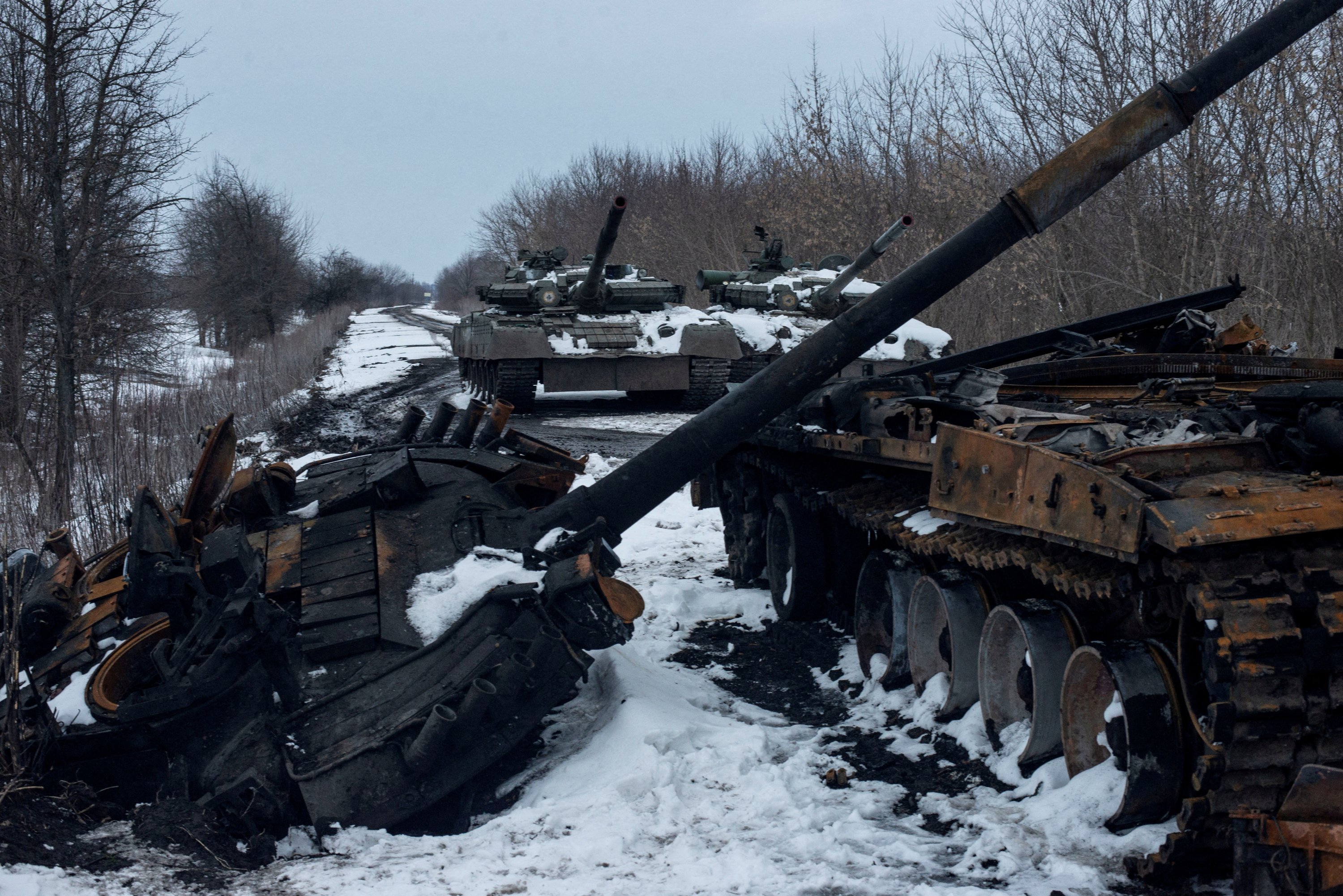
After Russia launched a military assault on Ukraine, the concern over the impact of the war on global peace and security has heightened – particularly when everyone is grappling with the COVID-19 pandemic. Moreover, given that the world's largest economies are involved in the war directly or indirectly, gloomy days in terms of economy and security are expected.
According to some estimates, there could be a global gross domestic product (GDP) decline of nearly $1 trillion by 2023. The contraction will mainly stem from the increase in fuel prices, disruptions in the supply chain and shortages in agricultural products. The European Union – mostly exposed to the threats of the war – maintains strong relations with Africa. Besides the trade exchange and direct investment, it also offers direct financial support to the governments through grants and loans. Consequently, Africa will be among the places affected by the conflict.
Russia's relations with Africa date back to the Cold War era as numerous African states were attached to the eastern bloc led by then the Soviet Union in opposition to those aligned with Western powers led by the U.S. When the Soviet Union's engagement with Africa stopped at the end of the Cold War and the U.S. emerged as the dominant player in the unipolar world order, the new Russia was working on revamping its position in global politics and restructuring its relations with the continent. Russia's post-Soviet engagement in Africa has been at odds with the conventional bilateral relations between states that aim to bolster mutually beneficial sectors; thus, Russia has been inclined to prop up abruptly selected elites to realize its interests. Therefore, human rights and civil society organizations have criticized Russia's presence in Africa because it undermines efforts of stabilization and strengthening good governance.
Since 2014, when Russia annexed Crimea and the subsequent sanctions imposed by the West, Moscow further strengthened its relations with Africa as a part of a diversification strategy. The main lucrative export of Russia to Africa is military equipment. According to the Stockholm International Peace Research Institute (SIPRI), 18% of Russia's arms exports went to Africa in the years between 2016 and 2020. Also, Russia has signed an agreement with several African countries on natural resource exploitation, military training and cooperating on counterterrorism.
As the Russia-Ukraine war intensifies, Africa will have its share of difficulties and disruptions with the rest of the world. The record-high fuel prices in March that reached $150 per barrel will have a devastating effect on the livelihoods of millions of poor people, particularly for those living in non-oil-producing countries. Also, the continent heavily relies on food imports from Russia and Ukraine. As per some statistics, African countries imported agricultural products worth $4 billion in 2020 from Russia, while they imported nearly $3 billion from Ukraine in the same year. The vast majority of the imports from Russia and Ukraine are mainly wheat and some necessary fertilizers for the productive agricultural sector. A vivid example of this is Egypt, which imports more than 80% of its wheat from Russia and Ukraine. Considering that the two countries together cover nearly 30% of global wheat exports, a prolonged war with Western sanctions on Russia could possibly cause a global food shortage.
It's worth mentioning that this coincides with some African countries' decision to cut subsidies on fuel and some basic commodities as part of an economic adjustment demanded by the International Monetary Fund (IMF) in exchange for getting debt relief. However, with the expected high food prices, any austerity measurements will be met with tremendous public discontent.
On the other hand, there are African countries, especially, oil and gas producing countries, benefitting from the war. The skyrocketing fuel prices and urgent need for surplus to plug the gap in the global market means a substantial return to their treasury. Nigeria, Angola, Tanzania and Senegal are among the countries sensing long-term opportunities from the ongoing conflict in which they will try to increase production or explore new untapped fields of oil or gas and find profitable markets for the precious metals necessary for electronics chips.
Russia has a military presence in Africa but does not stand out during peaceful times in the form of economic or technological partnerships; however, the presence is revealed during moments of turbulence as a way of pressuring Western powers. The militaristic tendency of Russia appeared with the eruption of Libya's civil war in 2014, where Russia sided with warlord Gen. Khalifa Haftar, who led an assault on the capital Tripoli, by offering him weapons and mercenaries. Haftar's coup attempt failed due to the defiance of the Libyan people and its leadership and the significant support that Turkey offered. Recently, with the military coups in some West African countries, Russia sent military equipment and mercenaries as support to the military junta.
The future status of Russia's presence in Africa depends on the results of the war in Ukraine – if Russia wins the war, certainly, its role in Africa will be more effective and robust. Russia's victory means a huge relief for the despotic leaders in the continent.
Surely, Russia's war on Ukraine diverts attention from the crises in Africa that require immediate international attention. As all eyes turn to the war, the troubles in Africa will remain secondary. Currently, several countries experiencing civil war need international pressure toward consensus through political negotiations, while some are on the brink of civil war and need to be supported to overcome the hurdles with less cost. In fact, the EU and the U.S. – now embroiled the ongoing war – have been financing the peacekeeping missions in the continent either under the umbrella of the U.N. or the African Union (AU). Already, some missions such as the African Mission in Somalia (AMISOM) have been underfunded for the last few years and now the prospect of further support reduction from the West is on the table more than any time before.
Finally, to shield the continent from global turbulence, leaders of the continent should develop a contingent plan that tackles the immediate impact of the ongoing war. In addition, the continent should increase domestic interdependence by increasing security and trade relations and promoting its multilateral institutions such as the AU and other significant regional blocks. Likewise, the continent should strongly advocate for multilateral organizations at the international level and principles based on international systems where military might shouldn't be used to solve disagreements.