In international relations, the pursuit of power and security often triggers a dynamic that fosters mutual distrust rather than cooperation. This pattern can be clearly observed in Turkish-Greek relations. In this respect, the steps taken and the achievements made by Türkiye in the field of defense industry are perceived as a threat by Greece. This emerging threat perception, in turn, pushes Athens toward armament, military fortification and the search for alliances. Similarly, Greece’s efforts to strengthen its defense capacity and expand its external alliances are perceived by Ankara as a security risk, giving rise to a process that reinforces mutual distrust and tension between the two countries.
As long as this cycle persists, every step taken in the Aegean and the Eastern Mediterranean can be interpreted through a zero-sum game logic, whereby one side’s gain is assessed as the other’s loss. However, breaking out of this spiral requires moving beyond a sole focus on military competition and instead prioritizing confidence-building measures, the institutionalization of dialogue channels and the development of cooperation models based on shared interests. Otherwise, competition risks turning into a costly and enduring deadlock for both parties. Therefore, a paradigm shift aimed primarily at overcoming deeply entrenched mistrust is urgently needed.
Türkiye and Greece are two democratic states and NATO allies. Liberal theorists argue that democracies and allied states tend to prefer cooperation over conflict. Therefore, both countries are expected to prioritize cooperation rather than confrontation. Strengthening commercial and economic ties and enhancing cultural relations would make the costs of conflict unbearable for both sides, thereby encouraging peaceful relations between Athens and Ankara.
In this context, the articulation of a target of $10 billion in trade volume between Türkiye and Greece, along with the prospect of potential partnerships in the energy sector, particularly in renewable energy and natural gas pipelines, constitutes a solid starting point for a positive agenda. Indeed, steps taken in this direction would align with the general expectations of both societies. Within this framework, strengthening good neighborly relations and prioritizing cooperation over confrontational rhetoric could lay the foundation for lasting stability.
Moreover, Turkish foreign policy has recently been shaped around the principles of “regional ownership,” “peaceful diplomacy” and “economic integration” in light of developments at the regional level. In this framework, Ankara, on the one hand, advocates that regional problems should be resolved by regional actors themselves, while on the other hand embraces diplomacy as the most appropriate method for managing and resolving crises. In addition, as evidenced in the cases of Syria, Libya, Sudan and Somalia, defending the territorial integrity and political unity of neighboring countries constitutes a core priority of Turkish foreign policy.
As is well known, tensions between Türkiye and Greece are largely fueled by mutually constructed “enemy” identities. The persistence of the image of an “eternal enemy” produces little more than economic and political harm for both countries. Replacing this perception with a sense of being “neighbors and partners” would therefore constitute a far more rational approach. Indeed, the annual tourism flows between the two countries, reaching more than 2.5 million people, clearly demonstrate that confrontational rhetoric does not resonate strongly with their societies. For this reason, political leaders temporarily freezing chronic disputes and instead turning toward cooperation in “low-politics” areas, such as trade, tourism, environmental protection and disaster management, could further expand the scope of cooperation between the two countries.
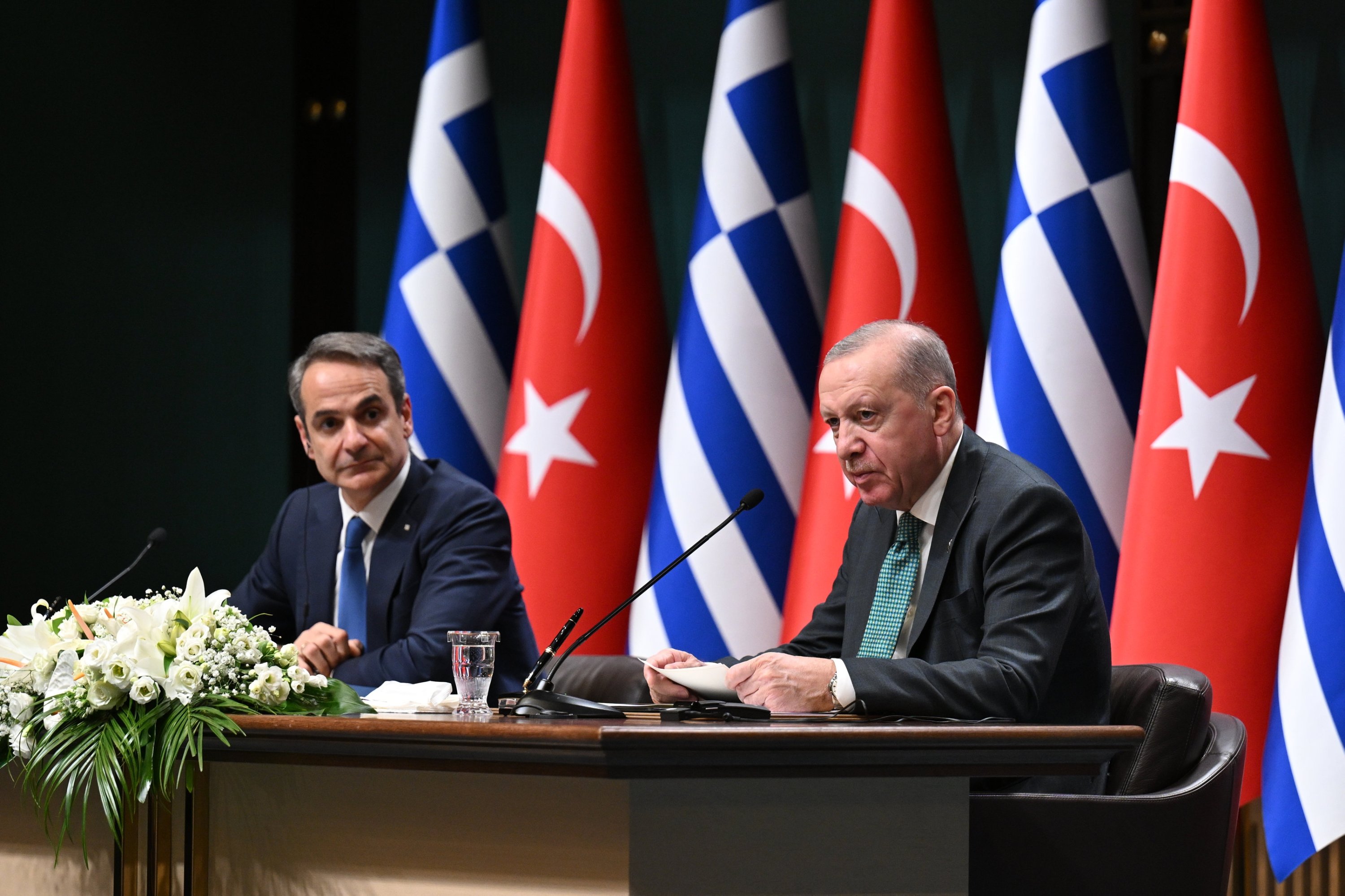
President Recep Tayyip Erdoğan’s visit to Greece at the end of 2023, within the framework of the 5th High-Level Cooperation Council Meeting, followed by Greek Prime Minister Kyriakos Mitsotakis’s visit to Türkiye in 2024, marked a critical turning point in terms of restoring the functionality of dialogue channels in Turkish-Greek relations. The discussions held during these meetings on cooperation opportunities in areas such as trade, health and culture demonstrated a concrete political will to move relations beyond a narrowly security-centered framework.
In this relatively moderate atmosphere observed between the parties in recent years, Mitsotakis’s visit to Türkiye on Feb. 11, and the 6th High-Level Cooperation Council Meeting within this framework are significant not only for ensuring the continuity of diplomatic engagement but also for aiming at the institutionalization of a positive agenda. This process carries strategic importance in that it demonstrates the possibility of constructing a relationship model in which communication is not disrupted, and cooperation remains feasible, even if chronic issues are not fully resolved.
According to the discipline of international relations, states may engage in rational cooperation in the face of a common external threat or to safeguard their own survival. In today’s geopolitical landscape shaped by the Russia-Ukraine war, both countries have become strategic partners for Europe’s energy security. Before the definitive delimitation of maritime jurisdiction areas, the joint exploration and exploitation of hydrocarbon resources or renewable energy sources (such as wind and solar) would constitute a peaceful and pragmatic model.
Unlike fossil fuels, renewable energy does not directly trigger sovereignty disputes, making it a more feasible starting point for cooperation. Joint platforms and infrastructure projects to be established in the energy sector could function as a “peace catalyst” by interlinking the two countries and reducing the risk of conflict. Acting together in energy transmission and supply could also transform Türkiye and Greece into indispensable “energy security assets” for the European Union.
This approach could enable Greece to be positioned not merely as a consumer or a competitor, but as a strategic partner alongside Türkiye in ensuring Europe’s energy supply security. Establishing energy cooperation among littoral states would reduce geopolitical and security risks in the region, thereby lowering the costs of investment projects. This, in turn, would pave the way for more sustainable and financially viable energy projects for the Greek economy.
For a long time, Greece employed diplomacy as a tool to exclude Türkiye from the regional energy equation and to “otherize” it by forging anti-Türkiye alignments with countries such as Israel and the Greek Cypriot administration. However, the flagship of this strategy, the EastMed pipeline project, lost its economic feasibility due to technical challenges and extremely high construction costs and effectively collapsed following the withdrawal of U.S. support. These developments have once again confirmed that Athens’ exclusionary policies toward Türkiye are not sustainable in the face of geopolitical realities.
In transporting Eastern Mediterranean natural gas to the European market, Türkiye, owing to its geographical advantages, constitutes the most cost-effective and secure route. Within this framework, Greece stands to benefit by opting for cooperation rather than confrontation. Indeed, interconnectivity and mutual interdependence to be established in the energy sector could bring relations to a point of stability and strengthen the normalization process between the two countries. Cooperation initiated in a technical field such as energy is likely, over time, to spill over into other political issue areas, thereby serving as a leverage mechanism for resolving long-standing political disputes between the two states.
In conclusion, the two states currently frame their relations within a “zero-sum game” logic, whereby one side’s gain is perceived as the other’s loss. However, as rational actors, a shift toward cooperation, rather than conflictual choices driven by mutual mistrust (defection), would enable both countries to move into a “positive-sum game” phase capable of generating significantly higher returns. Failure to realize this transformation would leave the parties trapped in an unsustainable spiral of competition marked by rising economic and strategic costs.