An old Ottoman Turkish political term still survives among intellectual circles in Türkiye: "kaht-ı rical," a shortage of capable statesmen. It is not a shortage of offices or institutions. The shortage is of people who can lead and leave a lasting mark.
Many years ago in Washington, D.C., this old term unexpectedly came to my mind, at a time when it was becoming difficult to ignore that both Democrats and Republicans were searching for a new generation of leaders, a subject then increasingly discussed not only across Washington's influential think tanks and policy circles but also in the media.
The American political system produces governors, senators, Cabinet members and policy experts. Every election brings new names into public life. Yet when discussions turn to the next generation of national leaders, the list often becomes much shorter than many people expect.
We can now start talking about Vice President JD Vance more.
His story is already familiar to many Americans. He grew up in difficult circumstances in Ohio, served in the U.S. Marine Corps, one of America's most respected military institutions, graduated from Yale Law School and became nationally known through his 2016 memoir, Hillbilly Elegy. What made his path unusual was the order of events. His book made him famous before he entered politics.
His rise was not simple. Before becoming one of President Donald Trump's closest political allies, Vance openly criticized him. Later, with support from entrepreneur and conservative political activist Peter Thiel, and backing from parts of Silicon Valley that had grown frustrated with the traditional Republican establishment, he entered a new stage of his political career. Supporters and critics continue to disagree about what that transformation means.
A former diplomat had once remarked during a private conversation that the most interesting politicians are not always the people holding power today. They are often the people whom others quietly expect to hold power tomorrow. Vance increasingly belongs in that group.
Why?
Part of the answer goes beyond his personal story. The question is not whether he can win elections. He already has. The more important question is what kind of Republican Party will emerge once the Trump era becomes part of American political history.
The legal side of this discussion is often overlooked. Under the U.S. Constitution, the vice president holds a unique position. The office brings visibility but limited formal authority. At the same time, modern American politics has given vice presidents far more influence than many citizens realize. The Twenty-Fifth Amendment, adopted in 1967, strengthened the constitutional importance of the office by clarifying presidential succession and incapacity. Discussions about a vice president are therefore never simply discussions about a deputy.
International law approaches matters differently. States deal with institutions rather than individuals. Treaties remain in force regardless of elections. Yet diplomacy rarely functions in such a technical way. Political leaders shape priorities and influence how alliances operate. European governments, Middle Eastern capitals and Asian partners, therefore, pay attention not only to presidents but also to those who may one day replace them.
This helps explain the growing interest in Vance's views on Europe, international organizations and American foreign policy. His approach often appears more skeptical of multinational institutions and more comfortable with direct negotiations between governments.
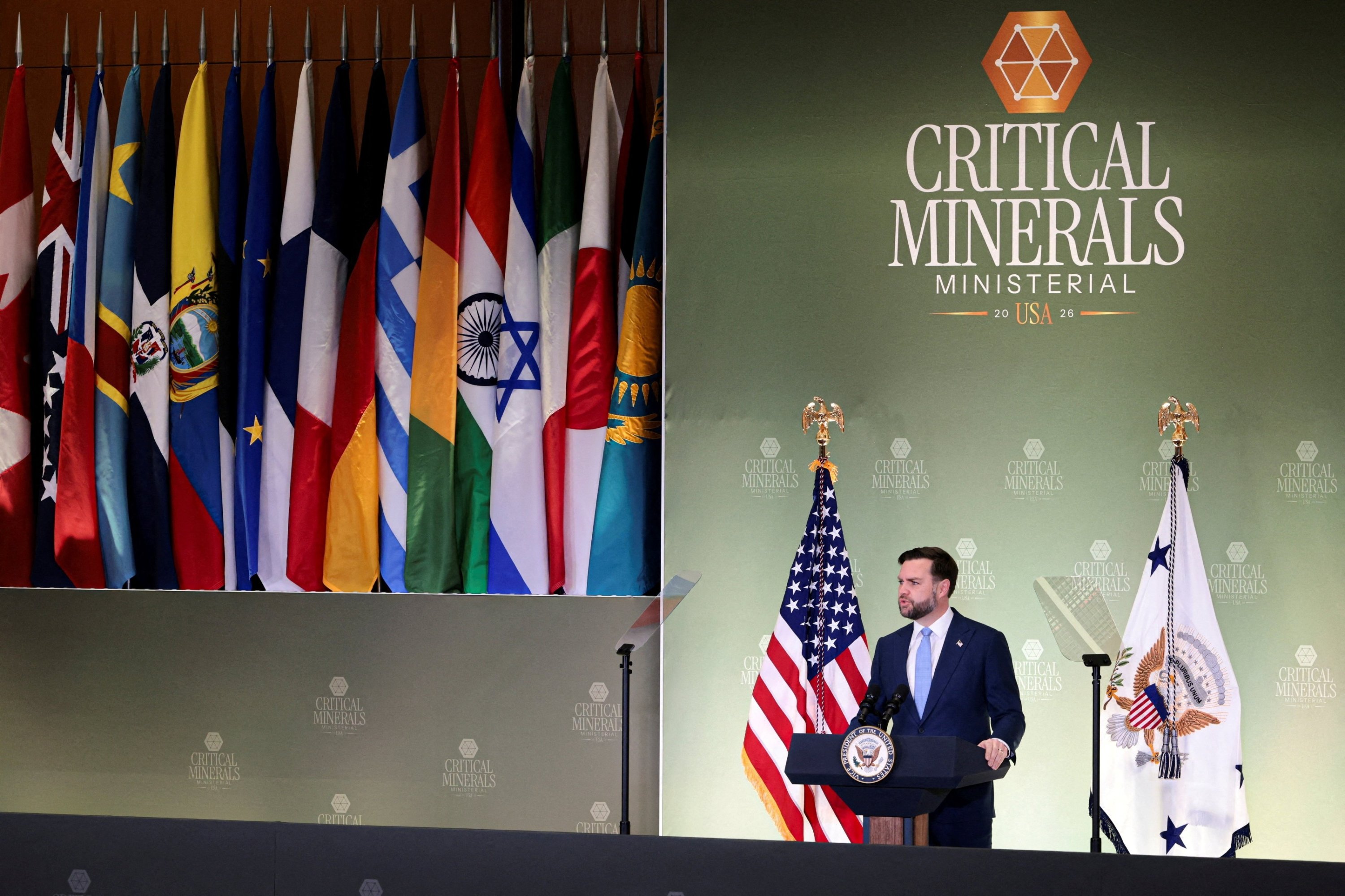
Recent months have offered another reason to watch him carefully. Vance became increasingly visible in foreign policy, most notably through his role in negotiations with Iran. As head of the U.S. delegation, he participated in high-level talks aimed at addressing disputes between Washington and Tehran. Although the initial talks did not produce a final agreement, they placed him at the center of a significant diplomatic effort.
Subsequent developments only added to that profile. During negotiations over a preliminary U.S.-Iran framework agreement, Vance stepped up as the administration's main public voice, walking through the structure and goals of the proposed deal with an ease that signaled growing confidence. For a vice president, it was a notable shift deeper into the foreign policy arena.
His visits to Europe had also attracted attention. Many governments are trying to understand not only the current administration but also the figures who may shape Washington's future policies. For a politician first known through domestic debates and cultural issues, this has been a notable development.
The larger issue, however, brings us back to that old Ottoman Turkish term of "kaht-ı rical."
A political system can continue functioning effectively while producing fewer figures who are widely seen as future national leaders. Elections and governments may continue. Institutions can keep working. Yet the circle of people seriously discussed as future leaders becomes smaller.
Still, when conversations turn to the future leadership of the United States, JD Vance's name appears far more often than it did only a few years ago. That alone explains why so many people, in Washington and beyond, continue to watch the 50th vice president of the U.S. closely.
While the term "kaht-ı rical" is back to mind, there is another question waiting in the background. Is Europe really doing any better? Perhaps that is a subject for another day, for another piece.