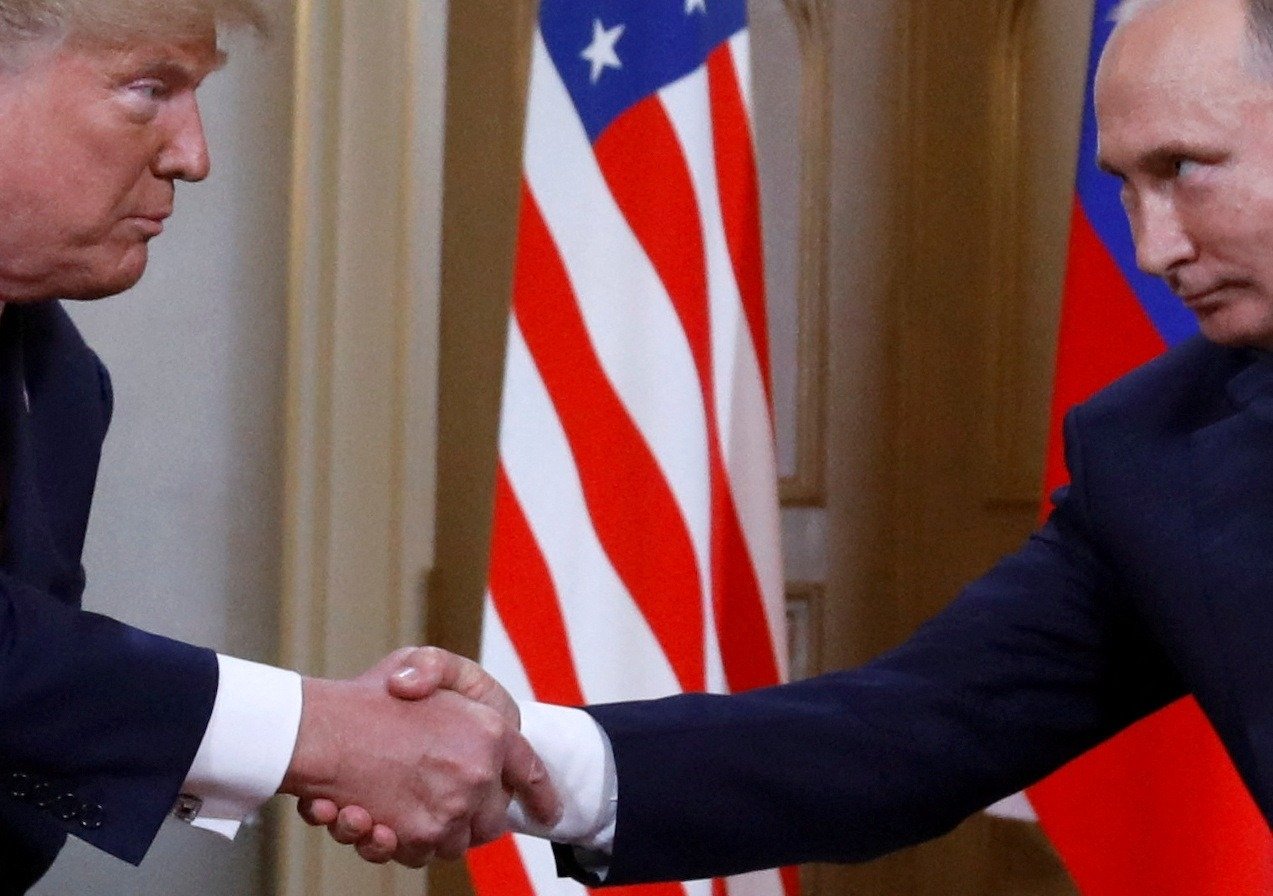
U.S. President Donald Trump’s promise to end the war in Ukraine within 24 hours has given way to growing pressure on Kyiv and sanctions relief for Moscow. His diesel deal with Russia seeks to ease fuel prices ahead of the U.S. midterm elections, but risks helping finance Russia’s war.
The war with Iran adds another dimension. Rising oil prices and pressure on U.S. weapons stockpiles could be shifting Washington’s priorities, leaving Ukraine to bear the consequences of a conflict elsewhere. The war, which many believe Israeli Prime Minister Benjamin Netanyahu drew Washington into, has increased pressure on energy markets, prompting decisions that benefit Russian exports.
The diesel agreement between Trump and the Russian president raises questions about the consistency of Washington’s sanctions policy. If the agreement facilitates Russian fuel exports despite existing restrictions, it risks weakening the economic pressure those sanctions were intended to impose. According to Russian President Vladimir Putin, Ukrainian strikes on oil refineries cost Russia's economy 1% of gross domestic product, which is around $26.6 billion.
Trump announced an immediate supply of more than 300,000 metric tons of Russian diesel, equivalent to approximately 2.25 million barrels. For comparison, U.S. transport-sector consumption is around 2.94 million barrels a day, making the announced volume smaller than one day’s consumption in that sector alone.
The contradiction is significant. Sanctions are supposed to restrict Russia’s access to revenue and increase the cost of continuing the war. Easing restrictions on its energy exports can work in the opposite direction, allowing Moscow to earn money while reducing the pressure to compromise. Washington cannot assume that relief granted for one purpose will have no consequences for its objectives in Ukraine.
Electoral calculations and growing Trump’s voters’ concern may help explain this approach. High fuel prices could damage Republicans’ prospects in the midterm elections, giving the administration an incentive to increase supply and bring prices down. From that perspective, easing restrictions on Russian oil may offer a politically convenient response to an immediate domestic problem.
Yet that convenience comes with a strategic cost. Measures intended to ease pressure on American consumers can also ease pressure on the Russian state. The administration may gain some relief at home while weakening its own negotiating position abroad.
This is where the war with Iran intersects with the war in Ukraine. The conflict, which Netanyahu is widely seen as having drawn Washington into, has strained energy markets and encouraged policy decisions that favor Russian exports.
Ukraine is therefore being asked to absorb consequences of a war in which its own interests are secondary to Washington’s immediate concerns.
Reported reductions in Starlink performance raise a separate concern. For Ukraine, reliable communications are part of its ability to coordinate military operations. Any disruption affecting those communications could make an already difficult battlefield situation more dangerous. The restriction on the military Starshield service affected connectivity when drones exceeded approximately 160 kilometers per hour, which is quite common.
Responsibility for the reported slowdown still needs to be established; neither the government nor Musk takes responsibility. Its consequences, however, should be assessed separately from the dispute over who is to blame. If Ukrainian forces cannot rely on the service when they need it, their operational capacity may suffer regardless of whether the disruption results from a political decision, a technical limitation or another cause.
Ukraine’s reported shortage of Patriot interceptor missiles presents another urgent problem. If American deliveries are being delayed because the war with Iran has reduced available U.S. stocks, Kyiv’s air defenses are bearing the consequences of competing military priorities.
The timing matters. A delivery that arrives later does not provide protection during the period in which it is needed. Delays therefore have an immediate significance for Ukraine, even when Washington continues to describe its support as an ongoing commitment.
Taken together, these developments create an imbalance. Easing restrictions on Russian energy exports can give Moscow greater financial room to continue the war, while delays and disruptions in assistance can narrow Ukraine’s ability to resist.
That imbalance also matters for negotiations. Ukraine’s bargaining position depends partly on its ability to sustain its defence. If that capacity weakens while Russia gains additional revenue, pressure for concessions is likely to fall more heavily on Kyiv.
This does not, by itself, establish that every decision is part of a coordinated attempt to force Ukraine into capitulation. It does raise a question about the cumulative effect of U.S. policy. Conflicting priorities can produce an outcome similar to deliberate pressure, even when individual decisions are justified on different grounds.
Trump’s promise should ultimately be judged against the peace his policies make possible. If Washington gives Moscow economic breathing room while leaving Ukraine with fewer defensive options, it risks creating conditions for a settlement shaped by Ukrainian vulnerability. For Kyiv, that would turn the promise of peace into pressure to accept terms it would otherwise reject.
To sum up, Trump pledged to end the war in Ukraine within 24 hours, yet his policies increasingly appear to put pressure on Kyiv while offering Moscow economic relief. His diesel agreement with Russia aims to lower fuel prices before the U.S. midterm elections, but could also boost the revenues sustaining Russia’s war effort. Meanwhile, Starshield restrictions and delayed Patriot shipments threaten Ukraine’s defensive capabilities as the conflict with Iran puts further pressure on missile supplies. These developments could leave Kyiv in a weaker bargaining position and push it towards accepting less favourable peace terms.