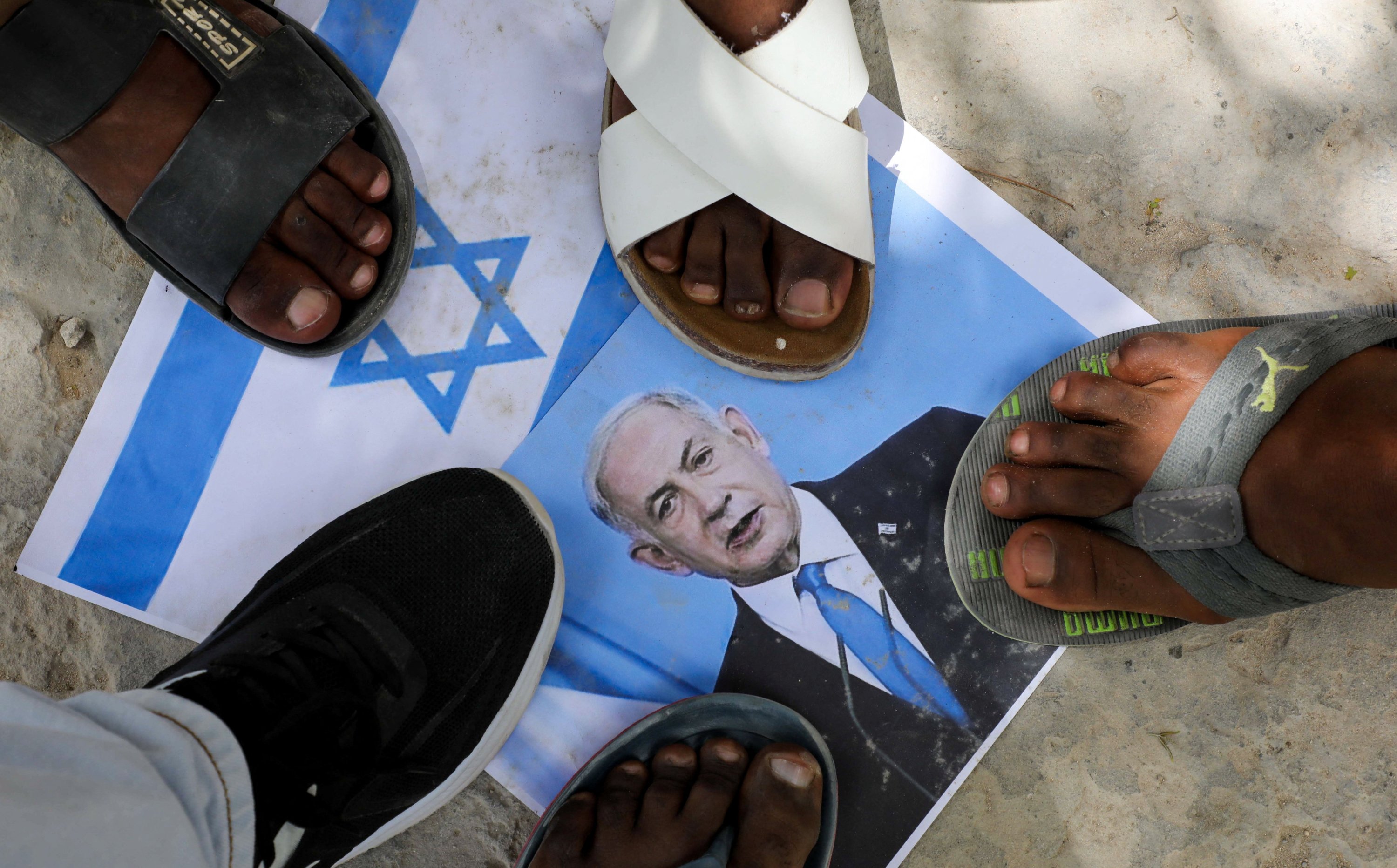
The end of 2025 came with an unpleasant surprise. Israel decided to formally recognize Somaliland, the breakaway region from Somalia. Experts underline that the region covering the Red Sea, the Gulf of Aden and the Horn of Africa should be accepted as a regional security complex. Therefore, whatever happened in Somalia in terms of integrity, sovereignty and the fight against terrorism may affect the broader region, lying between the Indian Ocean and the Mediterranean. In this area, the stability has depended on a fragile balance among the embedded regional actors, which have records of both cooperation and rivalry. In the context of Somalia, Israel’s move may destabilize Ethiopia-Somali, Eritrea-Somali, Djibouti-Somali, and, of course, Egypt-Ethiopia relations and may create complexities for the relations between the United Arab Emirates (UAE) and Türkiye, the two most engaged actors of interest in Mogadishu. Long story short, Israel is poking the hornet’s nest in the Horn of Africa.
Despite the obvious dangers, Israel’s recent decision seems to be a calculated move from which Tel Aviv expects certain geopolitical benefits. First of all, engaging Somaliland through diplomatic recognition can be seen as an extension of the old Israeli strategy (namely the periphery strategy), which is seeking partners in the unstable, fragmented regions by claiming access, intelligence and security partnership to broaden Tel Aviv’s strategic depth without deploying large conventional forces. In this regard, Somaliland offers Israel geopolitical proximity to one of the world’s most important and busy maritime corridors, the Bab al-Mandeb, linking the Red Sea to the Indian Ocean. Israel wants to design a keystone role for itself in the India-Middle East-Europe Economic Corridor (IMEC) project by casting its role as the main security provider of this corridor and the connectivity between East and West via the Red Sea-Mediterranean linkage.
By having strategic reach to Somaliland via partnership, which may or may not cover visible defense and security deals or basing rights, Tel Aviv can also have eyes on Yemen. Until recently, Yemen represented a hostile area controlled by Houthis, whose military, especially missile capacity, was built by Iran. The Houthi threat and use of force in the Red Sea have affected shipping traffic there and created questions about Israel's capacity to control the Red Sea passage. In this context, if Israel succeeds in deepening strategic relations with Somaliland, Tel Aviv may have a chance to use this area as an observation and operation center against any hostile and rival actor with a foot in Yemen. Besides encouraging the geopolitical fault lines as well as instability in Somalia and the Horn of Africa, Israel hopes to present Tel Aviv as a first choice for regional actors who may have trouble in this de-stabilized, conflict-ridden region and seek a security partner. As a result, the strategic access of other regional security providers, Saudi Arabia, Qatar and Türkiye, may be restrained. That is why, after the Somaliland decision, Netanyahu announced Israel’s desire to expand the Abraham Accords to the Horn of Africa.
Somaliland offers Israel the opportunity to tout the merits of the Abraham Accords by using the precedent of Tel Aviv's relations with the UAE. The major aim of this partnership is to achieve area control and area denial bubbles in the region. Until now, the UAE-Israel cooperation neither secured control nor achieved total denial. As long as they continue to have access in this highly strategic area, however, Abu Dhabi and Tel Aviv continue to have dreams to establish anti-access/area denial (or A2/AD) zones in the region. Accordingly, via the Somaliland decision, Tel Aviv wants to assure Abu Dhabi continues to support the Rapid Support Forces (RSF) in Sudan. By supporting the UAE and Abu Dhabi networks and assets in Somalia, Somaliland, Ethiopia, Eritrea and Sudan, Tel Aviv hopes to gain a chance to pressure Egypt and Saudi Arabia.
Israel’s Somaliland decision has also been interpreted as an act of constraint against Türkiye. Since 2011, Ankara has invested heavily in the security and well-being of Mogadishu and has projected itself as the main provider and partner of Somalia. This partnership involved cooperation in many strategic issue areas, ranging from port projects to military training and elite-building, from space technology cooperation to joint drillings. In this context, recognition of a breakaway region undermines not only the authority of the Somali federal government, the main partner of Ankara, but also challenges Türkiye’s partnership model in the Horn of Africa. This model is based on Türkiye’s vision supporting strong, centralized, friendly sovereign states, which are capable of acting independently and joining to win-win deals with Ankara.
The jury is still out regarding the consequences of Israel’s Somaliland decision. Ongoing conflicts in Sudan and Yemen, and the connection between Sudan, southern Yemen and the Somaliland crisis, increase the fear of escalation. However, Israel’s decision also carries certain risks for Tel Aviv. The escalation of rivalry between the UAE and Saudi Arabia may cause Abu Dhabi to hesitate. Cairo, Riyadh, Doha and Ankara may get closer – as we have witnessed during the last couple of days – in counter-balancing acts. This may affect the situation not only in Somalia, but also in Yemen, Libya and Sudan.
Poking the hornet’s nest is easy, but the consequences may not please Tel Aviv.