It was customary for Israel to assassinate political leaders of the Palestinian resistance in Gaza or in specific locations outside Gaza, such as Lebanon, Iran and Syria. However, Israel's attempt to assassinate Hamas leaders and its negotiating delegation in Qatar, which is considered an ally of the United States and the main mediator in the cease-fire negotiations, was a turning point and an unprecedented event.
The positions of the Hamas negotiating delegation were very smart, as they were consistent, clear and simple: an end to the war, the withdrawal of the Israeli occupation from Gaza, a prisoner exchange deal and the entry of relief supplies for the Palestinian people. The Palestinian resistance showed great flexibility in dealing with the terms of the negotiations, while Israeli Prime Minister Benjamin Netanyahu tried to sabotage every opportunity to reach a cease-fire agreement. This embarrassed Netanyahu on more than one occasion, especially after Aug. 18, 2025, when Hamas agreed to U.S. special envoy Steve Witkoff's proposal and Netanyahu refused even to discuss it within the Israeli occupation government's mini-security council.
Despite all the pressure and threats, the Palestinian resistance delegation did not agree to any offer that involved surrender, handing over weapons or the resistance leaving Gaza. It remained steadfast in its basic demands. Therefore, just as the flexibility of the Hamas negotiating delegation posed a problem and a crisis for Netanyahu, the delegation's steadfastness and firmness also posed a problem for the success of Netanyahu's plans such as Operation Gideon 2, which aims to displace the population of Gaza, as well as all plans for the Israeli occupation forces to remain in Gaza in the event of an end to the war.
Therefore, by combining flexibility and toughness in the negotiations, Hamas successfully countered all of Netanyahu's tactics, and Netanyahu decided to eliminate the Hamas negotiating delegation to overcome his failure.
But why did the Israeli occupation specifically target Qatar? The answer here relates to several factors. First, the leaders of the Israeli occupation are convinced that to restore the deterrence they lost on Oct. 7, they must terrorize all countries in the region and bomb more than one place and that the Israeli occupation has no red lines and is even capable of bombing the territory of a country, even if it is considered an ally of the U.S.
Second, the Israeli occupation state wants to remove Qatar from the mediation process because Qatar is playing an impartial role in reaching a cease-fire and is in direct contact with the U.S. and Hamas, which enables it to expose the Israeli occupation state's tactics and even facilitate direct communication between Hamas and the U.S.
Another perspective is about the disturbance Qatar's Al-Jazeera channel causes for Israel. Al-Jazeera has been conducting an open media campaign since Oct. 7, broadcasting events from Gaza live to the whole world. Suppose we recall the assassination of several Al-Jazeera correspondents and photographers, the latest of whom was Anas al-Sharif. In that case, we can be sure that Israel is disturbed by the role of the Qatari channel, which is broadcasting images of Israeli crimes and atrocities to the whole world.
From a fourth perspective, there is significant criticism of Netanyahu, within Israel, for allowing Qatari funds to enter Gaza, which Hamas has used to increase its military strength within Gaza. Netanyahu's critics believe that these funds helped Hamas prepare for Operation Al-Aqsa Flood on Oct. 7, 2023. For this reason, Netanyahu may have wanted to strike Qatar as atonement for his guilt over allowing Qatari funds to enter, so that the hardline Zionist right would not continue to rebuke him for allowing Qatar to bring money into Gaza.
Israel also wanted to send a message to several actors, first to countries that are making sincere efforts to support mediation in the Palestinian issue or even provide political support to the Palestinian resistance, such as Egypt and Türkiye. Israel is pressuring these countries to urge them to abandon the Palestinian resistance completely.
Moreover, Israel wants to send a message to the political leadership of Hamas and its negotiating delegation that it will kill anyone who continues to insist on conditions that the Israeli occupation state does not want, and that it will get rid of all leaders who insist on the rights of the Palestinian people.
Lastly, Israel is sending a message to the entire international community that it is capable of targeting its opponents anywhere it wants, even in the presence of diplomatic immunity, even if the targeted country is playing a mediating role, even if it is an ally of the U.S. and has a U.S. military base. Thus, it wants to send a message of intimidation to all countries in the region and beyond.
At the level of Qatar, despite expectations that mediation efforts will be negatively affected, Qatar has so far announced that it will continue its role in mediation efforts. However, the dynamics of mediation are expected to change, and Qatar will work to punish Israel for its aggression in various ways, including legal proceedings against Israel and media campaigns against it. Qatar's position will be stronger with the U.S. administration because the latter allowed Qatar's sovereignty to be targeted and did not intervene to protect its Qatari ally from its Israeli ally. Israel must be held responsible for the incident, and amid growing criticism of Israel, Israel's international isolation is increasing, which may open the way for more pressure on it to move toward a cease-fire.
As for Israel's relations with the Arab Gulf region, Israel had hoped to normalize relations with it, especially Saudi Arabia, in addition to the relations established in 2018 with the United Arab Emirates and Bahrain. However, the issue of normalizing relations between Israel and the Gulf will be reconsidered in light of Israel's emergence as a destabilizing factor for the security of the Gulf region.
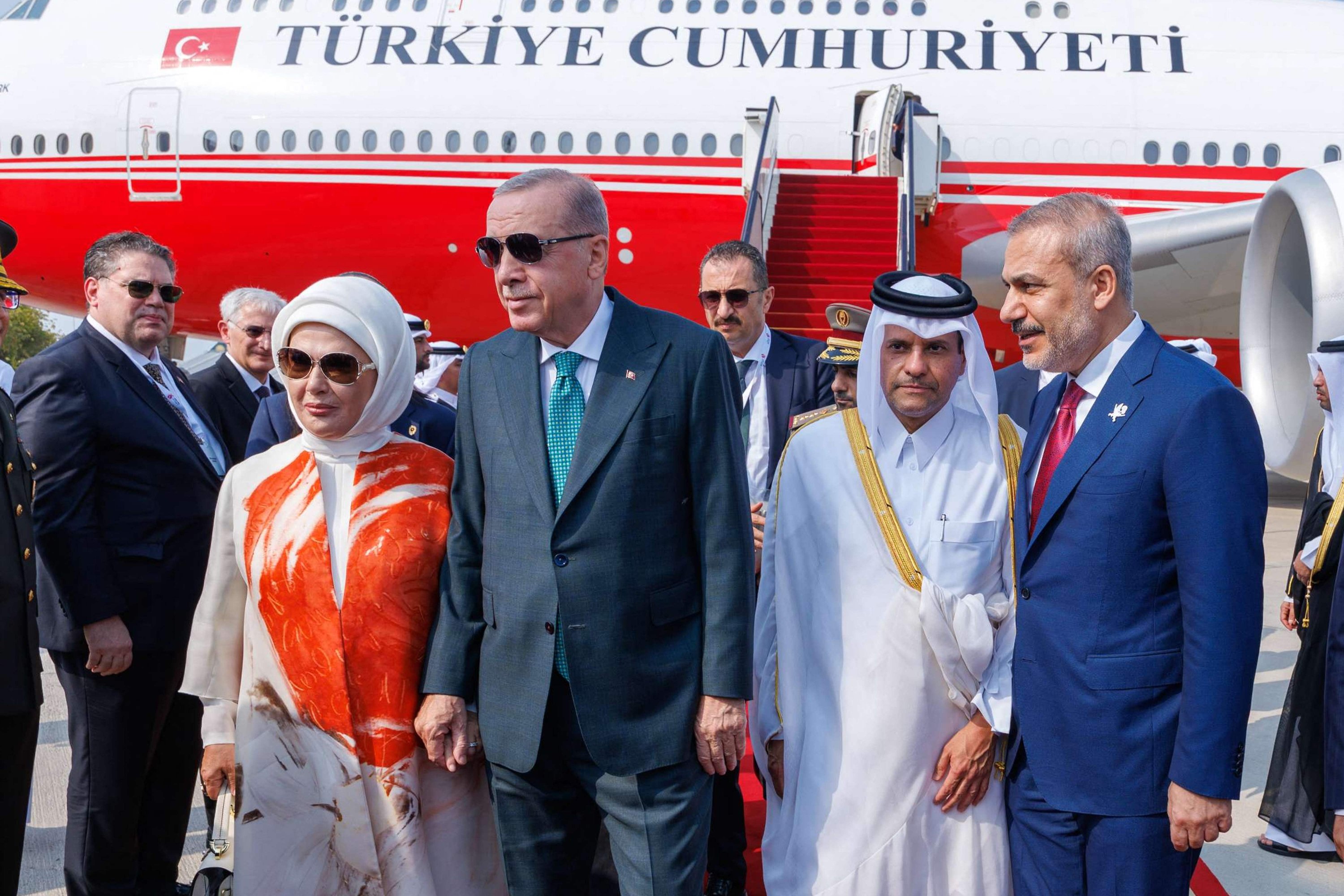
Arab and Islamic countries met at the Doha summit, and Türkiye is there as one of Qatar's closest allies in the region, represented by President Recep Tayyip Erdoğan. Türkiye and several other countries have announced their full support for Qatar, presenting an opportunity for Qatar to showcase the strength of its regional and international network of relations and send a strong message to Israel through the decisions of these summits.
In terms of security and defense in the region, new concepts will emerge, especially in countries that have American systems such as Patriot, which did not activate in the face of Israeli missiles that struck Doha. This confirms the correctness of Türkiye's decisions, whether to rely on local defense industries or to purchase the Russian S-400 system. Security and military relations between Türkiye and Qatar, as well as between Türkiye and the rest of the Gulf states, are expected to increase in light of Trump's shake-up of the security protection that he had provided to the Gulf region.
There are differences between Türkiye and Israel in Syria and the Israelis are talking intensively about the idea of confrontation with Türkiye. Therefore, it is good for Türkiye to strongly support Qatar, which is expected to send a strong message to Israel. This may be addressed in Erdoğan's speech in the coming days.