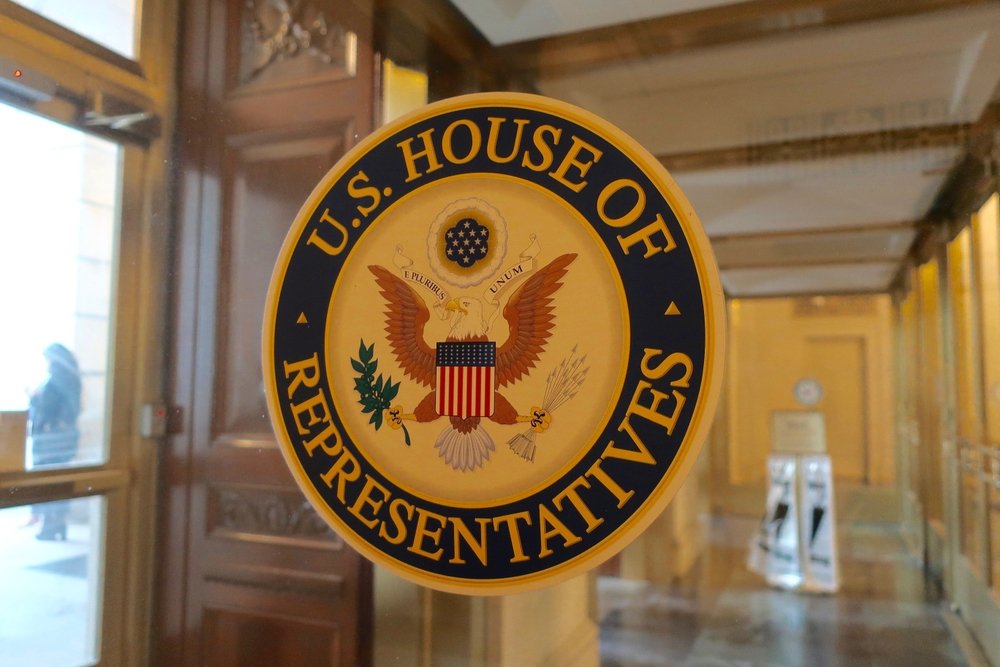
On July 22, the House of Representatives passed the National Defense Authorization Act (NDAA) for fiscal year 2027. Although the 2027 defense authorization bill should have been a routine piece of legislation, it faced backlash, particularly from Democratic circles due to provisions allocating additional defense funding needed by the government amid the ongoing war with Iran, as well as election-related provisions added to the bill and a provision that would further deepen defense ties between the United States and Israel.
Furthermore, unusual support of the six Democratic representatives for the bill has also drawn attention. Although it is well known that the Democrats opposed Trump’s decision to go to war with Iran without congressional approval and restricted his powers to prevent the war from continuing, people have wondered what motivated these six Democratic representatives to vote the way they did.
However, the fact that the bill passed the House of Representatives by a razor-thin margin of 216 to 212 intensified debate over its content and whether it would pass the Senate. Therefore, it is important to clarify the content of the FY2027 NDAA and explain Section 219, which addresses defense and technology cooperation between the U.S. and Israel.
In fact, as its name suggests, the law provides a framework for determining how much of the budget will go to the U.S. Department of Defense in fiscal year 2027 and how it will be distributed. Following House negotiations, the Department of Defense was allocated $1.15 trillion for 2027. Provisions added to this section set U.S. military personnel pay raises at 5-7% and officially designate the Department of Defense as the “U.S. War Department,” reflecting its de facto use of the name.
In addition, a separate $95 billion package covering defense and agricultural aid has been established. This package includes a $10 billion allocation over 10 years for proposals to incorporate provisions similar to those in the Safeguard American Voter Eligibility (SAVE America) Act.
One of the issues sparking debate over this year’s law is the provisions added to the SAVE America Act, which regulates federal elections in a manner we are not at all accustomed to – requiring voters to present a citizenship certificate (DPOC) for voter registration and to have it recorded, as well as making it mandatory to present a photo ID to election officials to vote. Furthermore, election officials who register voters without a DPOC face up to five years in prison. Consequently, the era of unregistered and unidentified voters seen in previous elections is coming to an end.
As of the debates regarding Section 219, none of the defense authorization bills drafted and passed in previous years included a section specifically dedicated to Israel. Section 219, which is the first of its kind, mandates the establishment of an executive committee to synchronize cooperation efforts between the U.S. and Israel to accelerate bilateral cooperation.
These efforts are intended to cover a wide range of areas, including the integration of Israeli technologies into U.S. weapons systems and supply chains; joint research, development and procurement programs; licensing agreements and production partnerships with Israeli defense companies; and joint exercises and information sharing with the Israeli government.
The strongest criticism of Section 219 has come from Josh Paul, former director of the State Department’s Counterterrorism Bureau. Paul argues that, if adopted, the section could allow Israel to influence U.S. defense and foreign policy decisions. This is because integrating the U.S. and Israeli defense industrial bases in this manner would expose sensitive U.S. technologies to a country with a documented history of industrial espionage and make the U.S. dependent on Israel’s supply chain.
Ben Freeman, a writer for the U.S. based news platform Responsible Statecraft, also warns that if the section is adopted, it could extend Israel’s influence in the U.S. beyond the military sphere, allowing the Israeli government to increase employment, which is one of the most powerful tools of influence in U.S. politics. The Israeli government could argue that it is creating jobs on U.S. soil by expanding existing joint production facilities in Mississippi and Arkansas or establishing new ones. By doing so, it could win over members of Congress representing the regions where these jobs are located, and thereby gain new allies in the U.S. legislative and executive branches, where it is already highly influential.
In an analysis published on the Institute for Middle East Understanding (IMEU) website, it was pointed out that Israel has lured the U.S. into a trap and drawn it into war with Iran. It is argued that adopting Section 219 would further increase Israel’s influence over the U.S., potentially placing Washington under Israel’s near-total control.
Objections to the section have also come from within Congress, Democrat Thomas Massie, who represents Kentucky’s 4th District, in a social media post said that, “While Americans are focused on other issues, such as how to make ends meet in the face of rapidly rising living costs, the House of Representatives is set to vote on integrating our military technology and supply chains with those of Israel. If our Founding Fathers knew what Congress is doing right now, they would truly be horrified.”
Another politician who, along with Massie, opposed the section was Democratic California Congressman Ro Khanna. Although Khanna and Massie proposed an amendment to remove Section 219 during the committee process, they were unsuccessful.
One reason Section 219 has faced such strong criticism is Israeli Prime Minister Netanyahu’s statements regarding the process. On the one hand, Netanyahu stated that Israel no longer wished to receive U.S. military aid and intended to conduct U.S.-Israel relations on an equal footing. On the other hand, he referred to the legislative proposal aimed at achieving exactly that, with Section 219 included, in a letter to Republican Indiana Rep. Marlin A. Stutzman as “my plan.”
Consequently, it has become clear just how justified those – particularly some Democratic representatives – who believe that Israel has latched onto the U.S. like a parasite and that American resources are being used for Israel’s interests are in their criticism of this law.
While all Democratic representatives were expected to vote against it, the six with close ties to the American Israel Public Affairs Committee (AIPAC) and other pro-Israel lobbying groups, and who are known to be funded by them, voted in favor. It is clear that they are working primarily in Israel’s interest rather than that of their own country. However, it is not expected that this bill will pass the Senate without difficulty.
While the White House has not commented, U.S. President Donald Trump appears unlikely to alter Section 219, fearing it could jeopardize the defense budget, election-law amendments, and support from pro-Israel lawmakers, potentially triggering a government shutdown. It appears that the Trump administration will turn a blind eye to the “Trojan horse” that Israel is trying to insert into the NDAA and to infiltrate the U.S. defense ecosystem.