Although Israel lured the U.S. into a war with Iran by promising a quick and decisive victory, the failure to achieve that has, on the one hand, set in motion internal dynamics within both Israel and the U.S., and on the other hand, begun to strain the relationship between the two countries, which had been described as unshakable.
One of the most concrete indications of this was U.S. President Donald Trump’s signing of a memorandum of understanding (MoU) aimed at ending the war with Iran, despite Israel’s opposition, and, in this context, his demand that Israel withdraw from Lebanon.
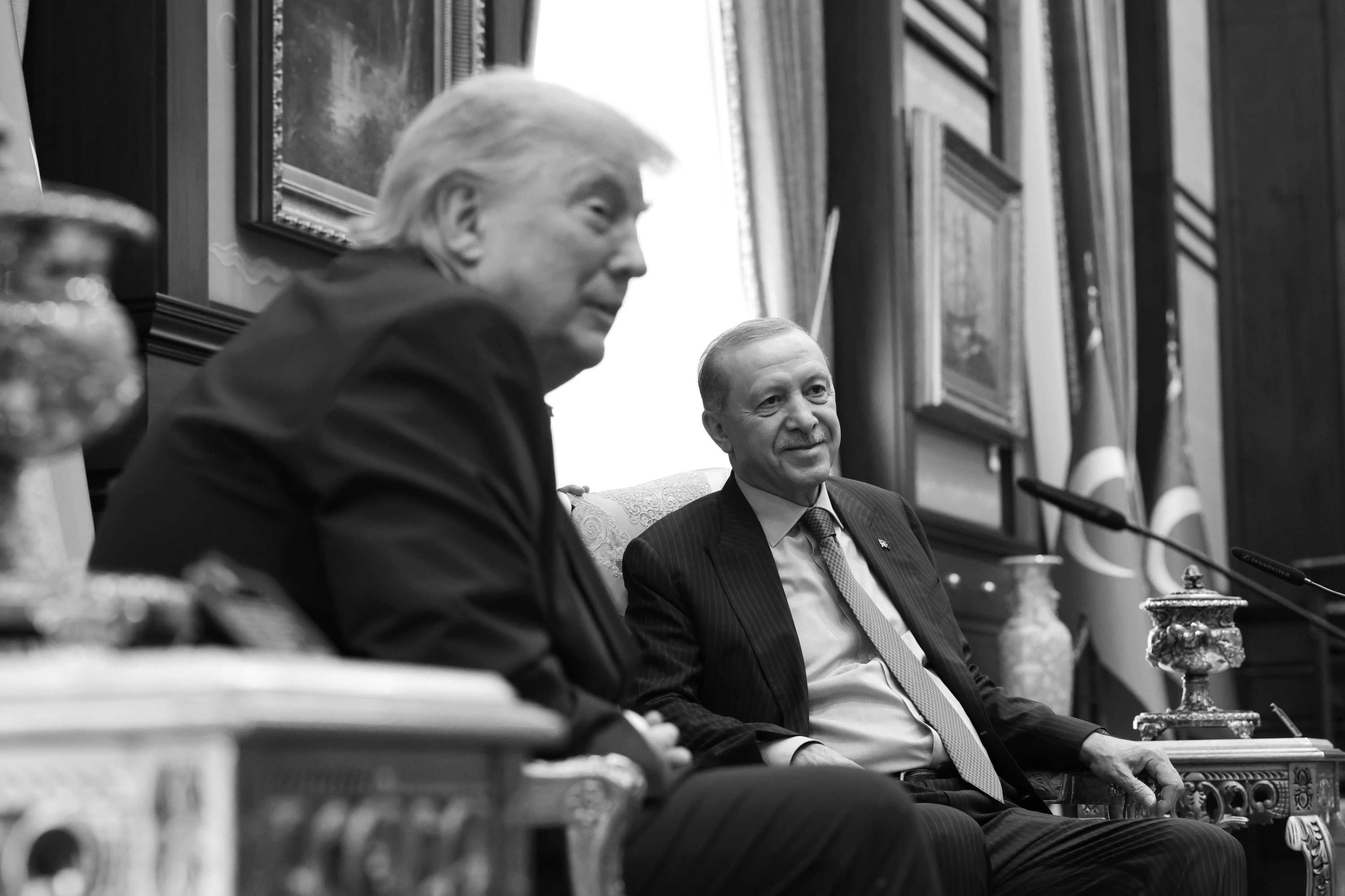
Another indication was Trump's statements at last week's NATO summit in Ankara that the CAATSA sanctions, which had been imposed on Türkiye during his previous term, would be lifted and that F-35 fighter jets could be sold to Türkiye.
Trump’s statements on this matter have so thoroughly unsettled the entire Israeli political establishment and the Jewish lobby that an intense and irrational campaign has been launched to prevent the U.S. from lifting sanctions against Türkiye and to block the sale of F-35s and F-110 jet engines.
As you may recall, during former U.S. President Barack Obama’s final term, Türkiye sought to purchase the Patriot air defense system from the U.S. Due to the U.S. administration’s reluctance and unacceptable conditions, Türkiye turned to Russia and acquired the S-400 air defense systems.
In response to this development, Israel’s Jewish lobby in the U.S. sprang into action, claiming that if F-35 fighter jets were delivered to Türkiye, the Russians would intercept the F-35s’ frequencies and the aircraft’s stealth capability would be compromised. It was a baseless and entirely fabricated justification for a campaign launched to prevent Türkiye from receiving the F-35s.
Ultimately, it proved effective: not only was Türkiye removed from the F-35 program in 2019, but in 2020, the CAATSA sanctions, which are typically imposed on U.S. adversaries, were applied to Türkiye, a NATO ally. In other words, Israel was the primary actor responsible for both Türkiye’s removal from the F-35 project and the implementation of sanctions against Türkiye.
Because the U.S. administration has committed to preserving Israel’s qualitative military edge in the region, the U.S. must either secure Israel’s consent or provide Israel with more advanced versions of the weapons systems it wants to sell to any country in the region. In the past, particularly when it comes to the sale of F-35 fighter jets to Gulf countries, the U.S. faced resistance from Israel, and plans to sell them to Saudi Arabia, the UAE, and Qatar have not materialized.
Türkiye has been excluded from the F-35 program, of which it was a partner, and the U.S. administration, unable to directly cite Israel’s objections as grounds, has been forced to hide behind the so-called technical justifications put forward by Israel. Thus, by sometimes directly and sometimes indirectly blocking U.S. sales of F-35s to countries in the region, Israel has maintained its military superiority and aims to sustain this advantage in the new situation that has emerged following the war with Iran.
In fact, Israel’s attempts to marginalize Türkiye are not a new phenomenon. Indeed, through the Eastern Mediterranean Gas Forum (EMGF), established under Israel’s leadership in 2019, Türkiye was sought to be excluded from the balance of power in the Eastern Mediterranean. However, Türkiye thwarted Israel’s plan by signing an agreement with Libya to delimit their maritime zones, and the EMGF became defunct in 2021 when the United States withdrew its support.
Another area of confrontation between Israel and Türkiye was the Syrian theater. Türkiye’s influence in Syria had increased significantly, particularly after the revolution on Dec. 8, 2024, when opposition forces supported by Türkiye took control. Israel, seeking to counter Türkiye’s influence, played the Druze card by collaborating with the PKK/YPG terrorist organization in an effort to prevent Syrian President Ahmed al-Shaara from ensuring Syria’s territorial integrity and to ensure that the threat Türkiye perceived from Syria would continue.
However, with Trump’s return to office, the status quo in the region, particularly in Syria, has begun to shift in Türkiye’s favor. Given Trump’s close ties to Israel and Israeli Prime Minister Benjamin Netanyahu, the latter's repeated complaints about Türkiye at every opportunity have failed to achieve their intended goal, which has made him increasingly aggressive.
Türkiye’s significant role in brokering the ceasefire in Gaza and its inclusion in the Board of Peace established by Trump have been viewed by some Israeli analysts as a defeat for Netanyahu. However, his insistence prevented Türkiye from joining the stabilization force in Gaza. Yet Türkiye offset this setback by securing the acceptance of an integration agreement by opposition forces in Syria, thereby dashing Israel’s hopes.
Türkiye, which has played a stabilizing and balancing role for regional countries in the war against Iran, has not only prevented Israel from spreading the conflict to the region but has also blocked the possibility of a civil war breaking out in Iran by playing the “Kurdish card.” In fact, together with Pakistan and Qatar, Türkiye engaged in intensive mediation efforts with both the U.S. and Iran, facilitating the declaration of a ceasefire between the U.S. and Iran and ultimately leading to the signing of a memorandum of understanding.
Türkiye’s efforts to ensure that Israel and Israeli officials are tried and receive the necessary punishment by taking an anti-Israel stance in international courts over Israel’s crimes of genocide in Gaza, its calls for a boycott of Israel, and its support for Lebanon and Syria, whose territories Israel continues to occupy, are also keeping Israel awake at night. Türkiye’s pressure on Israel in these matters and its disruption of Israel’s game plan will completely undermine Israel’s plans for regional domination and lead to the collapse of the empire of fear that Israel has established. This is precisely why Israel is behaving in such an obsessive and hostile manner toward Türkiye, striving to push Türkiye out of the equation as much as possible.
Netanyahu, who went into a frenzy following Trump’s statements, has all but declared a state of mobilization. In this context, while on one hand he tried to reach out directly to Trump to dictate that CAATSA not be lifted and that F-35s not be delivered to Türkiye, on the other hand he appeared on all U.S. media outlets to denigrate Türkiye by claiming it was not a good partner or ally, thereby attempting to pressure Trump.
This madness in Israel is not limited to Netanyahu alone. Officials ranging from President Isaac Herzog to Defense Minister Israel Katz and Foreign Minister Gideon Sa’ar, as well as the Jewish lobby in the U.S. and U.S. members of Congress who have become its tools, have also begun to parrot the same refrain.
In this regard, a group of media outlets led by the newspaper Israel Hayom, owned by Miriam Adelson, Trump’s largest donor and a staunch supporter of Netanyahu, played an active role. Through the false and biased news stories they circulated, they sought to smear Türkiye and President Recep Tayyip Erdoğan, thereby attempting to prevent the repeal of CAATSA and block the sale of F-35s. The U.S. media, controlled by Jewish capital, has also contributed to Israel’s cause by publishing these false reports from Israeli media sources without any scrutiny.
Organizations of the Jewish lobby, such as the Foundation for Defense of Democracies (FDD) and the Anti-Defamation League (ADL), have also sought to drive a wedge between Türkiye and the U.S. by giving a platform to anyone they could find, including Gülenist Terror Group (FETÖ) members, to speak out against Türkiye, while simultaneously publishing the views of die-hard Türkiye-haters like Michael Rubin, who is no longer taken seriously by anyone, on their websites.
As part of this effort, American Israel Public Affairs Committee (AIPAC)-funded members of Congress were also mobilized and tasked with blocking Trump’s plan to sell F-35s to Türkiye in Congress. In fact, the Armenian National Committee of America (ANCA), the umbrella organization for the Armenian lobby in the U.S., as well as the Greek and Cypriot lobbies, also played an active role in this effort, working collectively to try to get Trump to reverse his decision.
These anti-Türkiye initiatives, centered on Israel, have not been limited to the political arena; an Evangelical group based in the U.S. called Christians United for Israel (CUFI) has also sought to influence U.S. public opinion by echoing Israel’s claims, thereby attempting to exert pressure on Trump. However, statements made by CUFI leader Sandra Hagee, in which she claimed that the group played a role in Türkiye’s exclusion from the F-35 program and the subsequent application of CAATSA, were viewed as both an admission and a revelation.
Israel’s multipronged anti-Türkiye campaign has not yet succeeded, and for now, it appears that Trump remains determined to lift CAATSA and deliver the F-35s to Türkiye. Furthermore, there are no longer any obstacles to the sale of the F-110 jet engines requested by Türkiye, and the sale is expected to take place in the near future. The fact that Trump and Netanyahu, whose relationship was already strained due to the failure in the Iran war, are now facing issues over Türkiye has further widened the rift between them personally, as well as between the U.S. and Israel on an institutional level.
In other words, while Netanyahu sought to drive a wedge between the U.S. and Türkiye by resorting to all manner of tricks and lies, he has fallen into the hole he dug for himself and inflicted damage on U.S.-Israel relations that will be very difficult to repair.
Trump’s resolute and pro-Türkiye stance on this issue, despite everything, deserves the highest praise. For a while, it would be impossible for any American president to resist such intense pressure from Israel, the fact that Trump, who faces allegations related to the Epstein case and is therefore alleged to be under Israel’s control, has, at great personal risk, sided with Türkiye and President Erdoğan in the dispute between Türkiye and Israel is a true example of courage.
We hope that he will continue to demonstrate the same resolve he has shown so far and go down in history by helping to put an end to Israel’s dominance both in the region and in American politics.