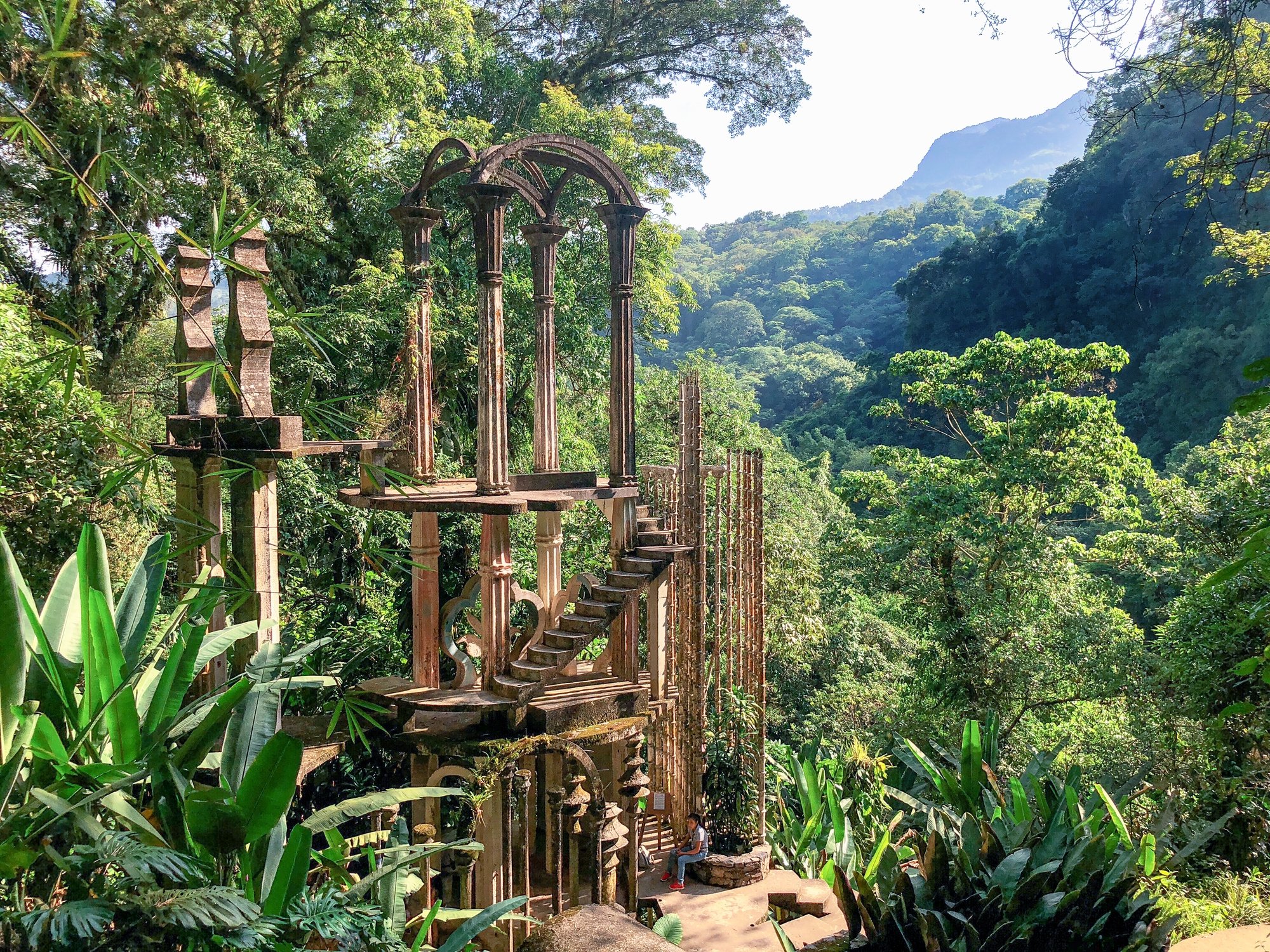
After the end of his tenure, former EU foreign policy chief Josep Borrell came to recognize Israel’s conduct in Gaza as a genocide, stating recently that “stopping the genocide of the Palestinians cannot be conditional.” He is right about this, of course, yet he still seems unable to acknowledge the contradictions within his position, considering his earlier, remarkably demeaning attitude toward the “jungle people.” When he was in office, he described Europe as a “garden” and went on to say that “most of the rest of the world is a jungle, and the jungle could invade the garden.”
Since then, Borrell has apologized for any offense his comments may have caused, and this certainly marked a distinction, as not everyone has been as willing to apologize for that kind of language. Former Israeli Prime Minister Ehud Barak similarly described Israel as a “villa in the jungle,” for example, but no apology was ever offered for that description. That Israel is actually a part of the garden, though unfortunately left alone in the midst of the jungle, has long been treated as the most natural position, one which Israeli poet Yitzhak Laor correctly identified as among the central “myths” of liberal Zionism.
Borrell’s strain of liberalism and its Israeli counterpart have traditionally been natural allies, perhaps not even in this respect alone. The proponents of both are extremely cynical about what the “jungle people” might do if given the chance. “Invaders must be stopped” – a sentiment that appears to have become mainstream across much of the “developed world” today. Even Japan, with Sanae Takaichi set to become the next prime minister, might soon launch a crusade against those uncivilized “jungle people.” And if you were to ask British far-right campaigner Tommy Robinson, Britain is likewise slowly being turned into a jungle by welcoming “invaders” on small boats.
The analogy is doubtless useful. Above everything else, it has the crucial function of conjuring up a pleasant scene in the minds of the public, which in turn reinforces a sense of fear that it could be very easily taken away from them. No one feels safe in the jungle; everyone wants a villa. What is not discussed as frequently, however, is this: To build the villa, you need the wood from the jungle.
Therein lies the genius of the metaphor. The very existence of the garden depends on the continual harvesting of the jungle. It must import its fruit from stolen soil, its peace from externalized aggression. What a liberal like Borrell and a “far-right” figure like Robinson share is not merely a fear of the outside world but really a dependence on it in this sense. The garden quite literally consumes the jungle even as it pretends to defend itself from it. The real fear, hidden deep beneath the surface, is not invasion but exposure, that the gardener might one day be reminded that his garden grew out of the ruins of someone else’s forest.
Perhaps, then, the jungle refers not really to a place, but simply to the archive of everything that the garden has uprooted. It exists in the labor that built the fences, for example, and in the voices that were silenced so the birds in the garden could keep singing their enchanting tunes. The kind of invasion Borrell and his fellow residents of the garden imagine may in fact be the moment when the garden becomes conscious of its own composition. In fact, this is likely why those disloyal residents of the garden, who care a little too much about the “jungle people,” are so readily branded as traitors. For the garden must be protected at all costs, even if that means erasing the history of its very foundation – a necessary preventive measure against those dangerous “jungle people.” The catastrophe, from the gardener’s point of view, is not that the jungle might actually advance, but that the garden might awaken. For memory is contagious; once the garden recognizes what actually nourishes its roots, the fence begins to lose its meaning, and the gardener, his authority.