Of Britain’s recognition of Palestine, U.S. Senator Tom Cotton stated that it was “a transparent attempt to appease Islamists in Europe.” Those "Islamists," if one listened to U.S. President Donald Trump, were trying to "bring Sharia law to London." It appears as though Trump’s perception of Muslims and most notably of London Mayor Sadiq Khan is shaped largely by his engagement with those whose primary concern is the threat of “Islamo-Marxists,” as one commentator, known for his ardent neoconservatism and radical Zionism, recently put it. That commentator is supposed to represent the right wing of U.S. politics, which is probably why he did not prefer the term “Islamo-Nazism” instead, presumably so as not to alienate the “non-Islamic Nazis” in his audience.
In contrast to Labour politicians rushing to support Khan by helpfully clarifying that the mayor was, in fact, not trying to "bring Sharia law to London," some of Trump’s closest allies seem actually very proud of having it as the foundation of their nations. King Salman of Saudi Arabia issued a statement on the occasion of Saudi National Day in which he praised God for Saudi Arabia’s “national unity established on Sharia law.” It would be highly inconvenient if King Salman knew what Trump thought of the founding principles of his nation, especially when Trump and those in his inner circle have always been very fond of how it is governed.
King Salman is wise enough not to take seriously such infantile allegations anyway. Nonetheless, it is becoming increasingly commonplace among prominent neoconservatives and Zionists to point to a perceived influence of Muslims on European politics. They claim to see this influence in the widespread protests across Europe against Israel’s genocide in Gaza, implying, perhaps inadvertently, that without such an influence, no one in Europe would be bothered by the slaughter of thousands of children. Or maybe this is exactly what they intend to convey, that protesting a genocide is not compatible with their vision of the “Western civilization,” which they insist is under threat, apparently from such humanitarian interventions. Is this what former Israeli Prime Minister Naftali Bennett meant when he responded to Britain’s recognition of Palestine by saying, “Palestine today, the United Kingdom tomorrow”?
Indeed, the self-proclaimed guardians of the “Western civilization” in Britain seem to confirm this message. In their view, being moved by the mass slaughter of children under the malicious influence of those sinister Muslims puts Britons at risk of abandoning their values. In this spirit, perhaps the most extreme “far-right” figure in the British Parliament, Rupert Lowe, reacted to the news with immense regret: “Words cannot adequately describe how ashamed I am of this government.”
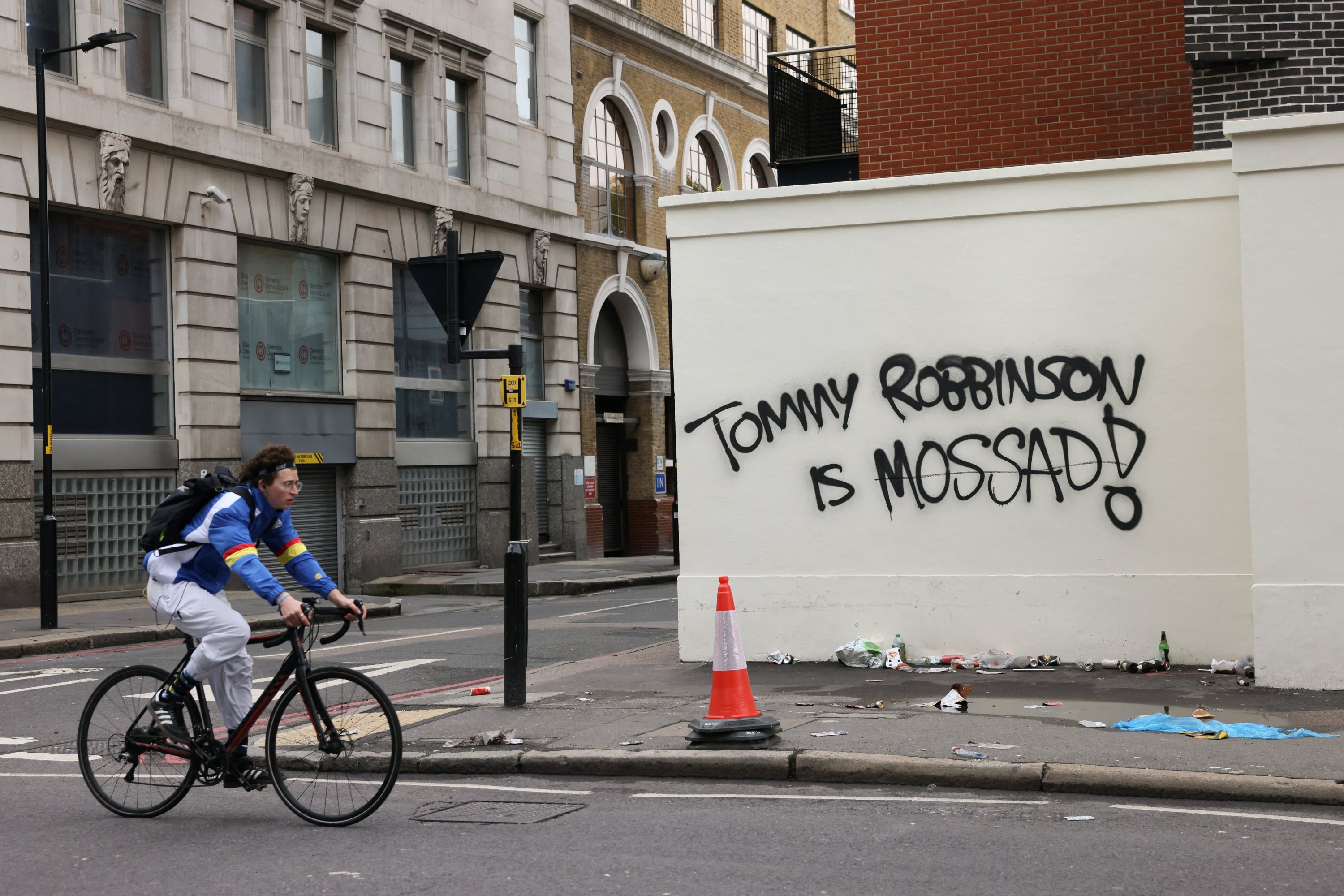
The theme of shame was not unique to Lowe’s reaction, however. Britain’s most popular “far-right activist,” British anti-Islam campaigner Tommy Robinson, who recently managed to gather a crowd of more than a hundred thousand people for his “Unite the Kingdom” rally, accused British Prime Minister Keir Starmer of “bringing shame” on Britain by rewarding “barbaric Islamists” who “slaughtered en masse” innocent Israelis. According to Robinson, Starmer’s decision to recognize a Palestinian state amounted to “bending the knee for the Muslim vote in the most horrific way.” He reposted Israeli Prime Minister Benjamin Netanyahu’s vile response to the latest wave of recognition of Palestine, with evident approval and visible admiration, as shown by his simple comment: “Boss.”
Is it not silly, in these circumstances, to try to explain to these characters, for example, that Muslims are not in charge in Britain, or that Sharia law is not coming to London any time soon? What is there to take seriously? Yet there are those who, despite finding themselves as the ultimate targets of these absurd schemes, still waste time discussing such meaningless theses as “the clash of civilizations.”