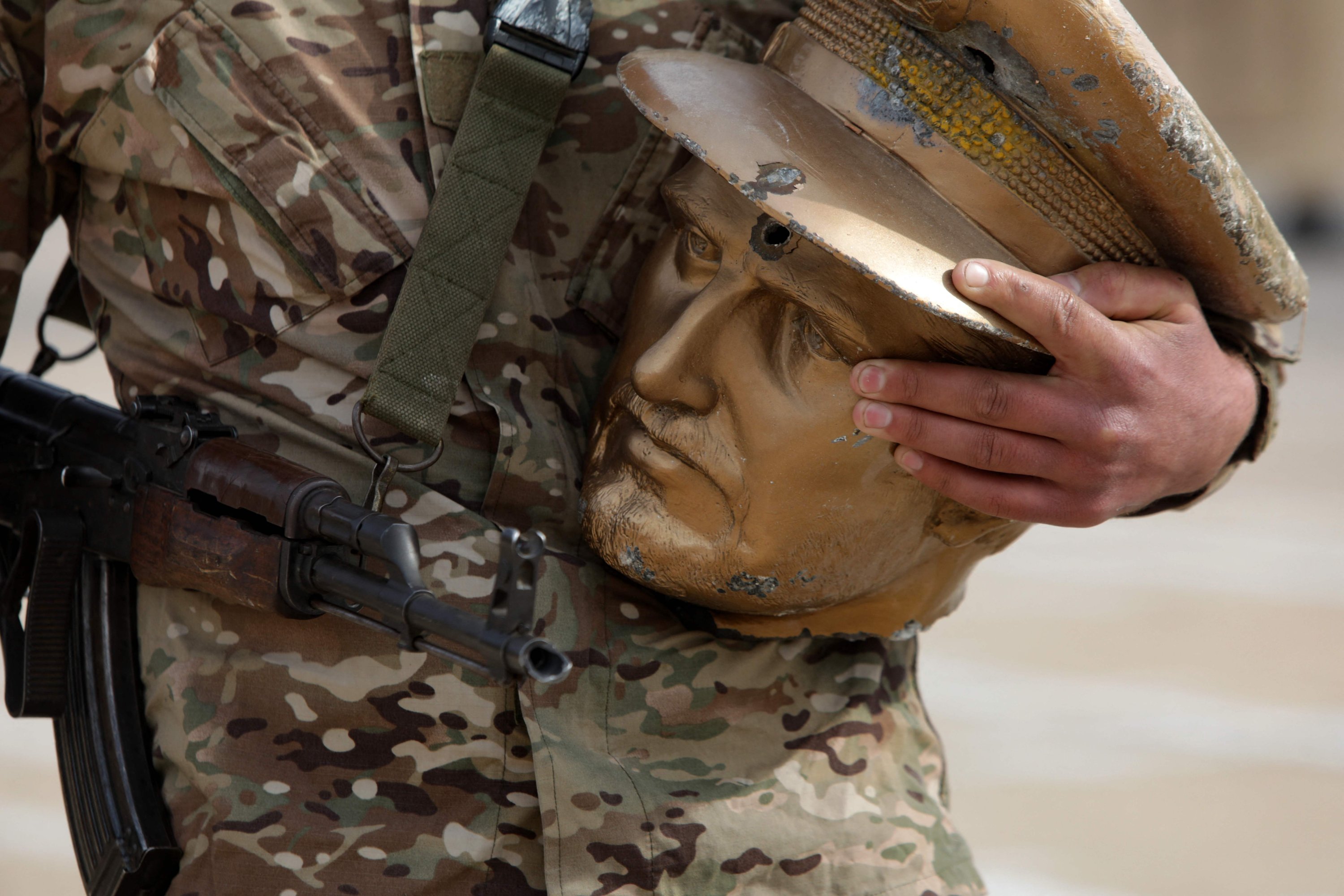
The Treaty of Qasr-e Shirin, signed in 1639, set the borders between Türkiye and Iran. These borders have remained unchanged for centuries, enduring the rise and fall of empires, the chaos of wars and the shifts in regional power. While the geography has stayed the same, their relationship has often changed, sometimes gradually and at other times with great intensity. Now, as Syria moves into a new era after Bashar Assad’s removal, this historic balance faces new and serious challenges.
The rivalry between Türkiye and Iran has been one of the constants of the region, as enduring as the rivers that flow through their lands. This is a story of two empires – the Ottomans and the Safavids – whose ambitions clashed not only on the battlefield but also in the hearts and minds of their people. While the Ottomans looked west, the Safavids struck from the east, driven by their own sectarian and political goals.
However, their shared history does not involve all conflict. Along the Silk Road, merchants carried goods, ideas, and culture between them, building connections that overcame their differences. In cities like Istanbul and Isfahan, poets and scholars drew inspiration from each other’s work, even as their rulers prepared for the next war. This mix of rivalry and exchange still shapes their relationship today, a careful balance of suspicion and interdependence. As the region faces new and complex challenges, the choices these nations make will carry lessons from their shared past.
The removal of Bashar Assad and his Baath regime is a turning point for the region and a significant setback for Iran’s ambitions. Assad had been Iran’s most important ally in the Middle East, giving Tehran access to the Mediterranean and supporting its efforts to expand its influence through proxies like Hezbollah. With Assad gone, Iran’s strategy in Syria is in ruins.
Iran spent enormous resources to keep Assad in power by sending military aid, money and diplomatic support, but still could not save him. Militias backed by Iran, including Hezbollah, fought hard to hold key areas in Syria but ultimately failed. This is not only a strategic loss for Tehran but also a symbolic one. Assad’s fall challenges Iran’s position as a defender of Shiism in a region dominated by Sunni populations.
Iran’s actions in Syria have also brought widespread criticism. Its proxies have been accused of war crimes, such as indiscriminate attacks on civilians, blockades that caused starvation, and the forced displacement of entire communities. These acts, which violate international humanitarian law and the Geneva Conventions, have worsened Syria’s suffering and damaged Iran’s reputation around the world.
With Assad no longer in power, Iran’s influence in the region continues to decline. In Iraq, Tehran-backed militias are increasingly viewed as liabilities rather than assets as local populations grow more resistant to their presence. Beyond Iraq and Syria, the Iranian government must also turn its attention inward, where it faces mounting criticism for wasting resources in Syria while the economy falters and public protests intensify. Moreover, Assad’s removal has revealed the fragility of Iran’s network of proxies, leaving its broader regional strategy in turmoil.
Iran’s difficulties in Syria go beyond losing Assad. The behavior of its proxies raises serious legal issues. Actions such as starvation tactics, sectarian violence and indiscriminate attacks on civilians are considered war crimes under international law.
The Rome Statute of the International Criminal Court (ICC) requires accountability for such acts. However, neither Syria nor Iran is a member of the ICC, making it harder to pursue justice. Referrals to the ICC by the United Nations Security Council are often blocked due to political disagreements. Despite these obstacles, independent organizations have documented these crimes, keeping the possibility of future legal action alive.
Beyond the situation in Syria, Iran’s nuclear program remains a major concern. The Treaty on the Non-Proliferation of Nuclear Weapons (NPT), which Iran has signed, prohibits the development of nuclear weapons. However, reports from the International Atomic Energy Agency (IAEA) suggest that Iran is moving closer to breaking its commitments.
While the NPT allows Iran to use nuclear energy for peaceful purposes, it does not permit the enrichment of uranium to levels near weapons-grade. This raises serious questions about Iran’s intentions. If Iran violates the treaty, it could face stricter international sanctions or coordinated action by the United Nations Security Council.
A nuclear arms race in the Middle East would destabilize an already fragile region and undermine decades of efforts to limit the spread of nuclear weapons.
Centuries ago, a merchant stood on a dusty road near the border between Türkiye and Iran. He paused, torn between memories of past betrayals and hopes for future trade. Cautiously, he decided to move forward. Today, Türkiye and Iran face a similar choice.
For Türkiye, the aftermath of Assad’s removal offers both risks and opportunities. Iran’s declining influence could give Türkiye greater control over regional dynamics. At the same time, instability could spill over into neighboring areas, threatening Türkiye’s interests. Navigating this situation requires careful diplomacy and a strong focus on strategic priorities.
For Iran, the stakes are even higher. Losing Assad has drained its resources and damaged its credibility. Iran now faces a shrinking role in the region, rising domestic unrest, and growing economic struggles. Assad’s fall serves as a clear warning about the risks of overreach and failed strategies.
As Türkiye and Iran stand at this crossroads, the decisions they will make will have far-reaching consequences, not only for their futures but also for the stability of the Middle East. Their history is marked by rivalry and power struggles, with moments of uneasy coexistence shaped more by necessity than trust. Whether the coming years bring heightened tensions or a delicate balance will depend on their capacity to navigate shifting dynamics with a clear-eyed focus on their respective interests.
The road ahead is unclear, but one thing is certain: the decisions made now will leave a lasting mark on the region for generations.