A few years ago, I was caught off guard when my nine-year-old daughter returned home and announced that one of her friends had been “traumatized.” The incident itself was banal – a simple spider bite followed by a moment of fear and pain. What was truly unsettling was not the bite, but the term “trauma” had entered our living room not as a metaphor, but as a concept, complete, authoritative and even moralized. Soon after, she began speaking of “anxiety,” “panic attack” and other clinical terms with the ease of an adult. This was not a case of early maturation, as children have always mimicked adult idioms. The problem was the swift migration of psychological and psychotherapeutic language from clinical contexts into the fabric of ordinary life.
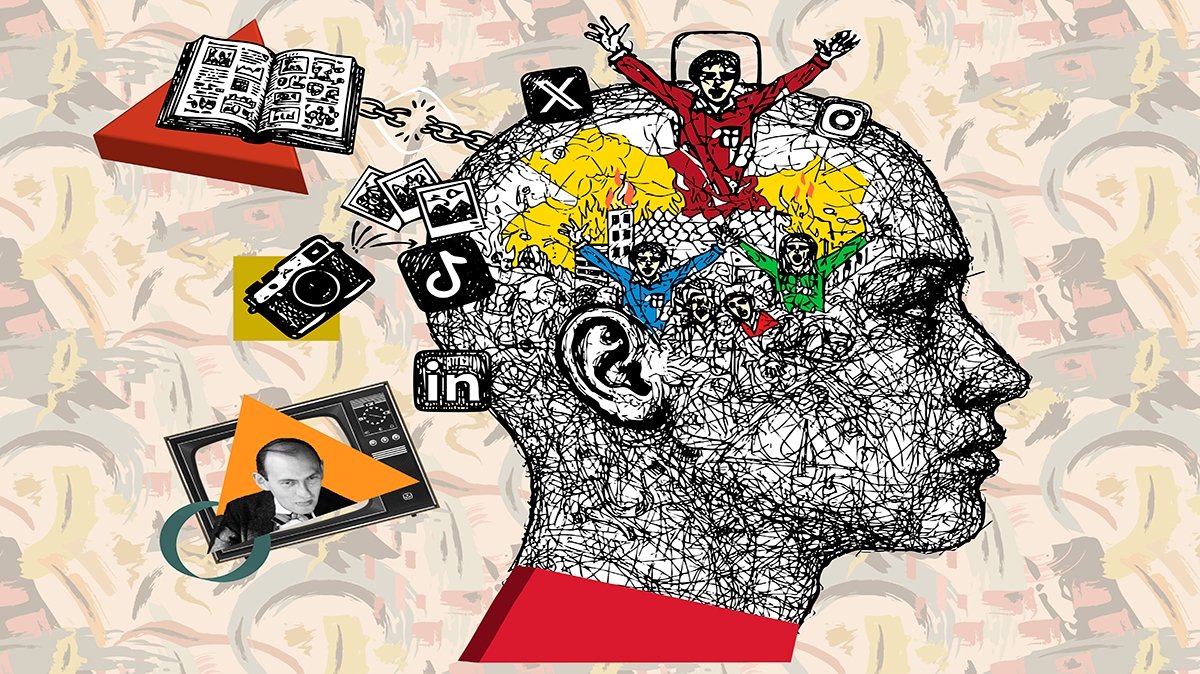
The rise of therapeutic culture and the emergence of the “psychological man” is a global phenomenon, but the Turkish experience has its own character – born in the translation room and embraced first and foremost by urban, educated classes. Accelerated by compressed modernization and the rapid diffusion of global media, the language of psychotherapy has turned into a cultural script increasingly shaping various segments of society. Today, Türkiye’s overall level of psychologization is comparable to many Western societies: career development and parenting self-help books, TV series based on therapeutic culture, motivational quotes, pop-psychology tips and bite-sized therapy advice in social media or conversations peppered with terms like “attachment style” or “childhood trauma.”
Globally speaking, psychologization is not just a free-floating fashion but a profound response to modernity. The weakening of traditional authorities, the privatization of risk and the heavy demand placed on individuals to make sense of life without stable communal bonds. Famously described by Philip Rieff, “the psychological man” has been formed by the erosion of traditional authority and the elevation of the self as the primary object of governmentality. Where we once evaluated conduct through the lenses of ethics, religion or politics, we now translate experience into therapeutic categories such as self-realization or emotional resilience.
In this new setting, the self must be reinvented with a new language and grammar, not only reconsidering how we talk about ourselves but also how we interpret the world. The self has become a project to be monitored and optimized. This is why what might seem like an innocent expansion of vocabulary is, in fact, a fundamental reorganization of how life is experienced: a shift in which the language, logic and techniques of psychology have moved beyond clinical settings to become the dominant framework for daily existence. It is not simply that people learn new words; it is that these words begin to do new work. At their most intense, they do not merely describe reality but they reorganize it.
The late 20th century set the stage for Türkiye’s psychologization of daily life by establishing an indigenous self-help culture heavily inspired by Western psychology. Türkiye’s experience from the 1980s onward can be viewed as part of a global diffusion of psychological culture, albeit on a slight time delay and mediated through translation. The heavy import of American and European psychologization trends into Türkiye illustrates this one-way flow of ideas. As Turkish society opened to global media and consumer culture, psychological solutions to personal problems gained prominence.
By the early 21st century, Türkiye had its own self-help gurus, psychology-themed talk shows and advice columns, marking the normalization of psychological discourse beyond the clinic and classroom. Today, that ecosystem includes not only books but also magazines, websites, television programs and social media content dedicated to psychology and personal development. It became a sector now worth hundreds of millions of dollars.
Nevertheless, Türkiye has a rich tradition of community-based problem-solving with family meetings, counsel from elders or guidance from religious figures like imams. The rise of psychology does not mean those traditional systems vanished overnight; rather, many people in Türkiye navigate between old and new frameworks. The psychologization of Turkish life, while heavily influenced by Western-origin ideas, is being adapted to Türkiye’s social context. Yet pop psychologization dovetails with the idea that individuals must cultivate their own “soft skills” and mental toughness to thrive in a precarious world. This shifts the onus onto individuals to fix themselves, rather than addressing the communal capacity to support its members.
Psychologization, then, does not merely add sensitivity to the culture, it also redistributes authority. The “good person” becomes the self-aware person, and the “healthy relationship” becomes the one managed correctly, with the right boundaries, language and rituals. Social life becomes more legible but also more surveilled, more calibrated and more anxious about correctness. A new form of moral pressure emerges: the obligation to narrate and manage the self in therapeutic terms. Personal achievement is seen not just as a matter of structure or social bond but as something deeply tied to one’s psychological state. This is a considerable burden and it falls disproportionately on the urban, educated classes who have most fully embraced therapeutic culture. Rural and traditionally minded segments took longer to be drawn in, but they, too, are now reached by mass media narratives about mental health.
None of this is an argument against psychology, or against the genuine relief that therapy can bring to those in need. It is, rather, a call for lucidity about what is being lost in translation. When a spider bite becomes trauma, and a difficult week becomes a “trigger,” something more than vocabulary is at stake. We are quietly narrowing the range of experience we are willing to call ordinary. My daughter’s generation will grow up fluent in a language that did not exist for their grandparents. The question worth asking is not whether that language is sophisticated but whether it is making them, making all of us, more capable of living, or merely more capable of narrating our inability to do so.