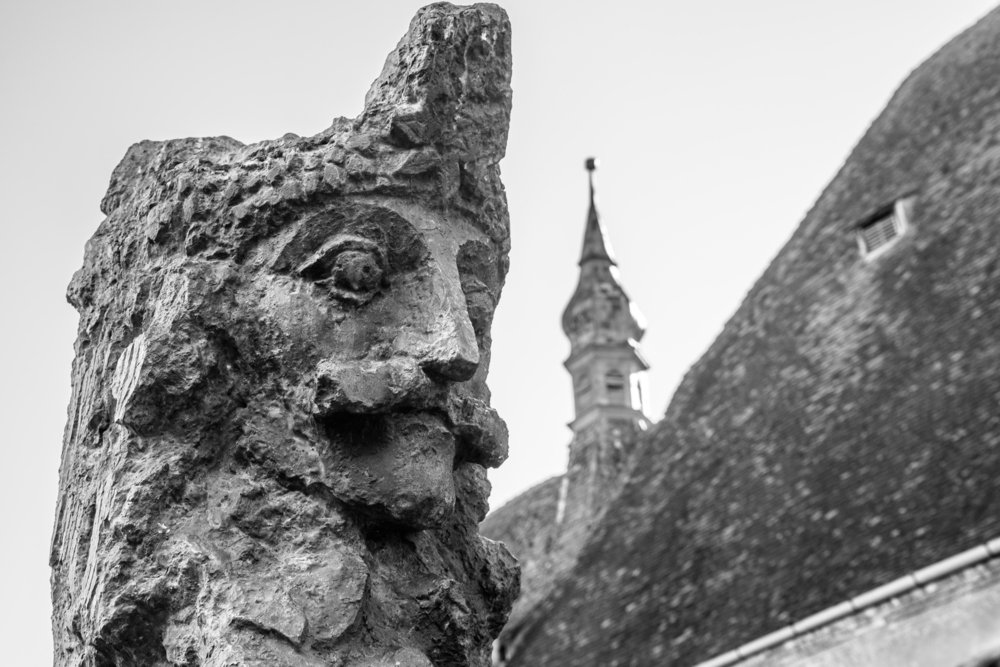
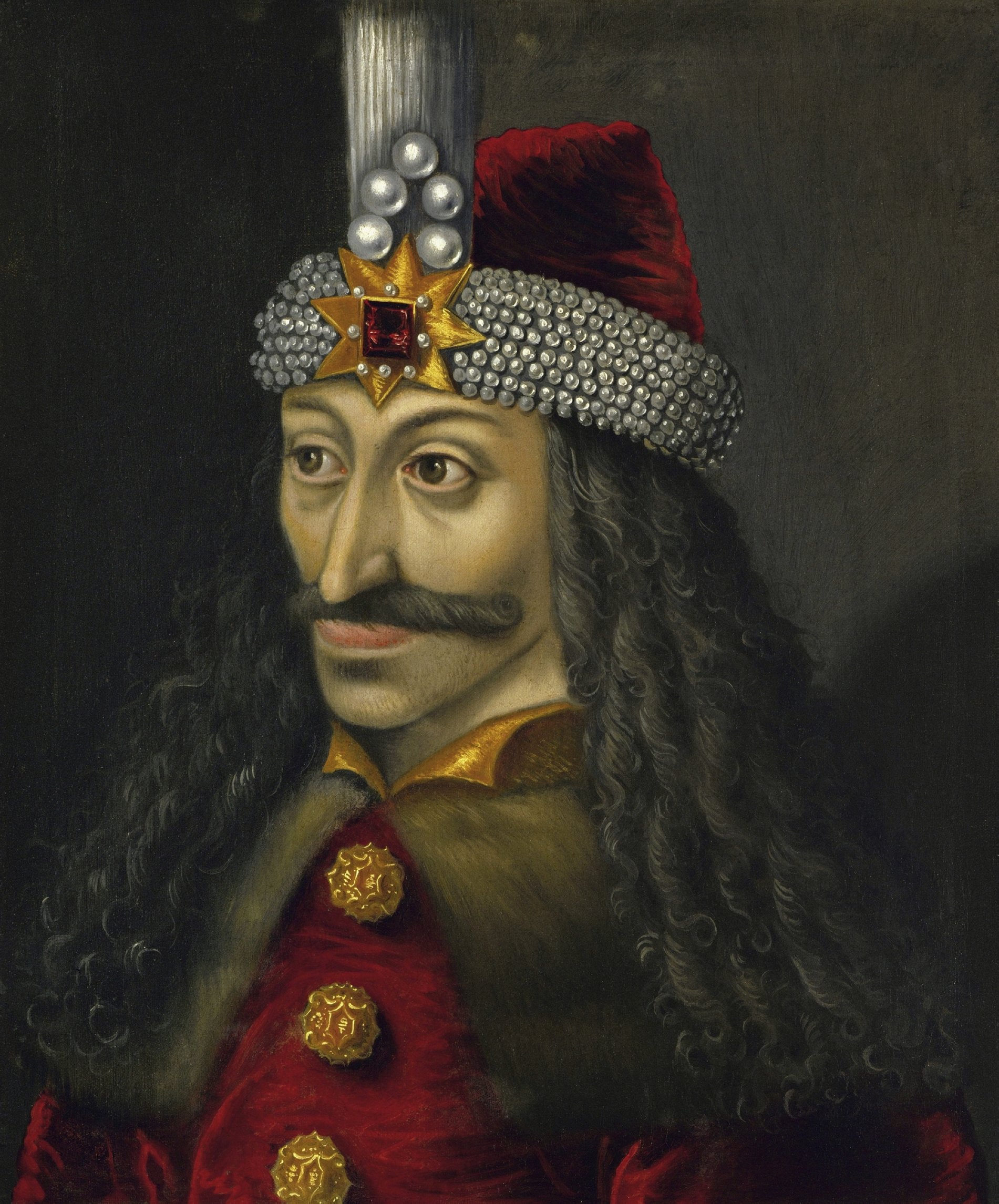
Vlad the Impaler, the infamous Voivode of Wallachia (roughly corresponding to southern Romania today), is widely known in the Western world through Bram Stoker’s "Dracula" and its many film adaptations. Cruel, cunning and relentless, he inspired one of the world’s most enduring vampire myths. Yet beyond the legends, Vlad Tepes (1431-1476) was also one of the fiercest enemies of Mehmed II, commonly known as Mehmed the Conqueror (1432-1481). Suspended between myth and history, the struggle between the Impaler and the conqueror remains one of the most tenacious and dramatic rivalries of the 15th century.
Vlad was the grandson of Mircea the Elder of Wallachia. He owed his title, “Dracula,” to his father’s membership in the Order of the Dragon, a militant chivalric order founded by Sigismund, Holy Roman Emperor, to oppose Ottoman expansion in Europe. When his father became Voivode of Wallachia, the path to the future leadership of the principality opened before him.
At this time, Wallachia had become a battleground for influence between the Ottoman Empire and the Kingdom of Hungary. Although the Ottoman advance into Hungary had been checked by the celebrated Magyar commander John Hunyadi, Vlad’s father remained loyal to the Ottoman sultan Murad II, partly because his two sons, Vlad and Radu, were being held in Ottoman custody. Yet following Hunyadi’s counteroffensive, Vlad’s father changed his allegiance and joined the crusading cause against the Ottomans.
Vlad, who was being held in Ottoman custody, appeared destined to be “butchered for the sake of Christian peace.” Yet despite the obvious betrayal of his father, the comparatively soft-hearted Murad II spared both Vlad and his younger brother Radu. It is plausible that during his years in Ottoman custody, Vlad encountered the young Prince Mehmed, the future conqueror of Constantinople.
Against all odds, the Ottomans managed to halt the crusader onslaught at the Battle of Varna in 1444, a victory that decisively shifted the balance of power in the Balkans in the Ottoman Empire’s favor. Vlad’s father once again acknowledged Ottoman suzerainty, and Vlad and Radu were allowed to return to Wallachia.
However, shortly after, John Hunyadi turned his attention toward Wallachia and invaded the principality. Vlad’s father and his elder brother Mircea were murdered, while Hunyadi installed a puppet ruler on the Wallachian throne. Once again, Vlad was forced to seek refuge in Ottoman lands.
However, when John Hunyadi attempted to avenge his defeat at Varna during the Second Battle of Kosovo in 1448, Wallachia became ripe for Vlad’s return. Backed by an Ottoman force, he returned to Wallachia for the second time and briefly secured the title of voivode for himself.
Yet despite the Ottoman victory over the Hungarians, remnants of the Hungarian army crossed into Wallachia, forcing Vlad to flee once more to Ottoman territory. He eventually settled in Edirne, then one of the principal cities of the Ottoman Empire.
After the death of John Hunyadi in 1456, Vlad could finally succeed in seizing the Wallachian throne. It was evident that he owed much of his rise to Ottoman support. Yet once his rule was secured, Vlad began to forget his debt to the Ottomans and refused to pay homage to his overlords.
While Mehmed the Conqueror was away on his campaign against Trebizond (today's Trabzon in northeastern Türkiye), Vlad began plotting against the Ottoman Empire and entered into negotiations with Matthias Corvinus, the son of Hunyadi and the new king of Hungary. At the same time, he launched a brutal campaign against the Muslim population of the region, becoming infamous for impaling his victims alive.
In response to these atrocities, Mehmed the Conqueror dispatched two envoys to summon Vlad and demand an explanation for his actions. The envoys were executed, and their severed heads were sent to Matthias Corvinus. Vlad then crossed the Danube and carried out devastating raids that resulted in the deaths of more than 20,000 Turks and Bulgarians.

In 1462, following the conquest of Trebizond (modern-day Trabzon in northeast Türkiye), Mehmed the Conqueror launched a campaign to place Vlad’s brother, Radu the Handsome, on the Wallachian throne. Unable to withstand the Ottoman advance in open battle, Vlad adopted a scorched-earth strategy and retreated toward Targoviste, then the capital of Wallachia.
Since Vlad could not defeat the Ottomans in the field, he attempted a daring night attack on the Ottoman camp, hoping to assassinate the sultan himself. However, the Wallachian raiding party missed the sultan’s tent and instead attacked the quarters of the grand vizier, Mahmud Pasha Angelovic. Having failed in his objective, Vlad withdrew from the Ottoman camp before dawn.
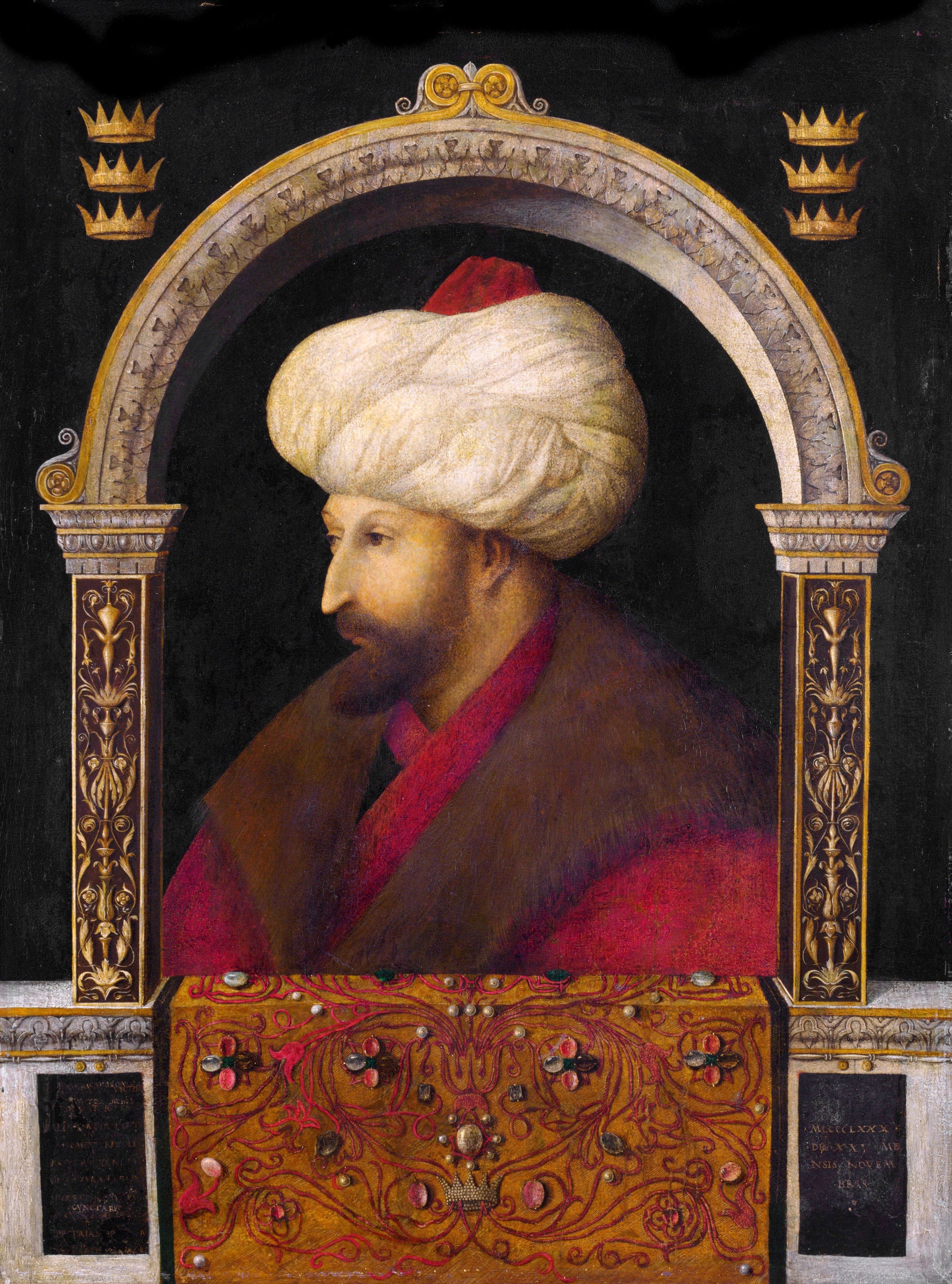
When Mehmed advanced toward Targoviste, he encountered a horrifying spectacle: thousands of impaled bodies displayed by Vlad as a deliberate act of terror. Even so, Mehmed succeeded in installing Radu on the Wallachian throne, while Vlad fled to Matthias Corvinus. However, at that moment, Corvinus was unwilling to jeopardize his peace with the Ottomans and imprisoned Vlad in Transylvania.
The hostility between the two remained short-lived, however, as Matthias employed Vlad as a commander in his campaigns against the Ottomans during the 1470s, particularly in Bosnia. There too, Vlad continued to employ brutal methods, impaling Turkish prisoners and massacring civilians.
With the support of Stephen the Great, he managed to seize the Wallachian throne once again in 1476. Yet this proved to be his final act.
The same year, Basarab Laiota, an Ottoman-backed claimant to the throne, invaded Wallachia and defeated Vlad. He was killed in battle, his body reportedly mutilated, and his severed head was sent to the Ottoman capital, Istanbul. There, according to tradition, it was displayed on a pike in what is now Karaköy, a grim and fitting end to one of the most feared rulers of the age.
In the centuries that followed, Vlad the Impaler would be transformed into a creature of myth, a vampire count haunting the imagination of the Western world. Yet behind the legends stood a very real prince of the Balkan frontier: ruthless, ambitious and shaped by an age of ceaseless war.
His struggle with Mehmed the Conqueror was not merely a clash between two rulers, but between two visions for the future of the Balkans. In the end, Vlad became a legend feared in stories, while Mehmed remained the statesman and conqueror who reshaped the course of history itself.