When we talk about trade, we first look at the map: Which country is near, which is far, and which routes do we trade? Yet today a law drafted in Brussels can lengthen the distance between Ankara and Stuttgart without changing a single kilometer. The Industrial Accelerator Act proposal announced by the European Commission on March 4, 2026, the legal basis of the approach widely known as “Made in Europe,” does exactly that: It turns not geography but rules into a unit of distance.
The proposal introduces EU-origin and low-carbon requirements for public procurement and publicly funded support schemes in strategic sectors such as steel, cement, aluminium and automotive. The commission’s declared goal is to raise manufacturing’s share of EU gross domestic product (GDP) from 14.3% in 2024 to 20% by 2035. Under the proposal, the origin requirement in public procurement would apply from January 2029.
Reading this shift merely as a protectionist reflex would be incomplete. The Net-Zero Industry Act, the Critical Raw Materials Act and the Industrial Accelerator Act can in fact be read as Europe’s response to the 2022 U.S. Inflation Reduction Act and to the Trump tariffs. From climate to the use of raw materials, a wide range of decisions are now on the agenda of a new generation of regulation.
At its core, this is not about tariffs but about a new industrial policy implemented through public procurement. Put simply, the effect is this: The customs union guarantees that goods cross borders duty-free, but it no longer guarantees that those goods will benefit from demand generated in Europe through public support. Moreover, the agreements the EU has signed, particularly the one with India, could erode the cost advantage of Turkish industry.
The key challenge for Türkiye lies in the scope and practical implementation of these rules. Under the proposed framework, industrial content from customs union partners may be treated as equivalent to EU origin in certain support schemes. However, access to public procurement remains subject to specific conditions.
Türkiye’s positioning vis-a-vis the EU’s new industrial and subsidy policies highlights the tension between protectionist tendencies and integrated global supply chains. Ankara can make its case by pointing to both its rights under the customs union and the scale of bilateral economic ties, with trade reaching $233 billion (TL 11.76 trillion) in 2025. The automotive industry illustrates this interdependence particularly well.
Speaking at the Türkiye-EU Business Summit in Brussels in October, Trade Minister Ömer Bolat noted that European manufacturers account for around 75% of automotive production in Türkiye. According to sectoral data, this integrated production chain supports approximately 250,000 jobs across Europe.
Against this backdrop, Bolat warned that “the solution should not be to exclude reliable partners or the customs union.” The argument is that excluding Turkish industry would not only affect Türkiye but could also disrupt European production networks and employment.
The numbers show why the debate matters so much. According to data from the Ministry of Trade, Türkiye exported $273.4 billion worth of goods in 2025 and imported $365.5 billion. The trade deficit stood at approximately $92 billion, while the export-to-import coverage ratio was 75%. Exports to the EU rose by nearly 8% to approximately $120 billion, accounting for more than 40% of Türkiye’s total exports, according to Trade Map data. TurkStat figures show that Germany alone, at $22.2 billion, is our largest market. On the import side, the direction is reversed: China, with $49.6 billion, and Russia, with $42.4 billion, rank first and second.
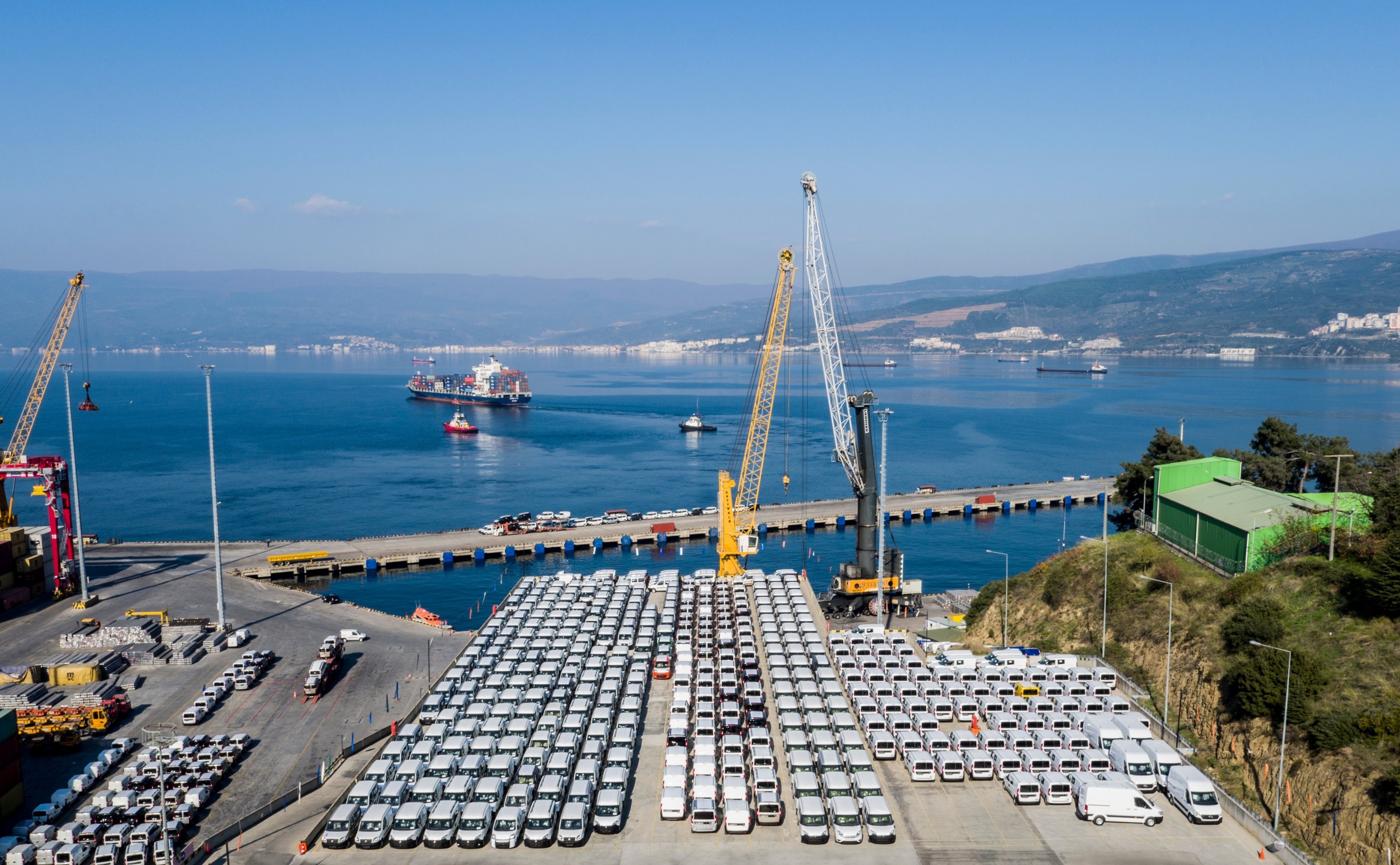
In short, Türkiye is an economy that sources energy and intermediate goods mainly from the East and sells value added to the West. "Made in Europe" touches precisely the “process and sell” link of this chain. To illustrate, the automotive industry is Türkiye’s leading export sector, with exports exceeding $41 billion. According to the Uludağ Automotive Industry Exporters’ Association (OIB), 72.5% of the sector’s exports go to the EU.
This picture becomes even more meaningful when read together with Türkiye’s official export framework. In this context, “Made with Türkiye” could serve as the central thesis for Türkiye’s approach because the EU should recognize Türkiye as an integral part of European industrial value chains.
The 2027-2029 Medium-Term Program announced in September targets raising goods exports to $292 billion in 2027 and $316 billion in 2029. The backbone of this target is to prioritize exports of medium-high and high-technology products with high value added and brand value, and to strengthen firms’ positions in global value chains.
Here I would like to put forward a concept from my own work, about the geopolitics of connectivity. I define connectivity by focusing on the relationship between geographical distance and the economic complexity approach pioneered at Harvard by professor Ricardo Hausmann and Dr. Cesar Hidalgo. The findings carry two messages. As the gap in economic complexity between countries widens, bilateral trade tends to decline, whereas stronger economic connectivity increases it. In other words, countries with similar industrial capabilities and production structures often find it easier to trade with one another. This is because their industries have more compatible production needs and can connect more easily through supply chains.
Therefore, distance alone is not a sufficient explanation of trade patterns. Market diversification is necessary, but it is not always easy in practice. A parts supplier that loses an order in Europe, for example, cannot necessarily find a replacement customer in another country in the short term.
The connectivity findings suggest that new markets are not an “alternative” to Europe, but rather “insurance and leverage.” The emphasis on new markets and corridors in the Medium-Term Programme should be understood in this light: What flows through the Middle Corridor will ultimately depend on the productive capabilities on both sides.
In conclusion, connectivity does not eliminate the effect of distance; it reshapes it. Made in Europe, in contrast, redefines distance through rules. Türkiye’s response should be neither to move away from trade with Europe nor to regard other countries as a magic alternative. While defending our position in European trade through regulatory compliance and cost competitiveness, we need to leverage the same accumulated capabilities to strengthen connectivity with other countries. The map within the map, that is, the map of capabilities, shows that these two fronts are, in fact, one and the same.