The Ukraine war has turned into a prolonged conflict defined by escalation. Both sides appear to have adapted to a dual reality: a grinding war of attrition on the ground, coupled with a tit-for-tat dynamic of continuous escalation. Ordinarily, such a prolonged conflict would pose severe challenges for Kyiv, given the stark asymmetry in military capabilities between Russia and Ukraine. Yet, Western, particularly European, support has compensated for Ukrainian vulnerabilities in the face of conventional Russian power. Crucially, despite repeated Russian use of the nuclear threat, the conflict has remained within conventional bounds.
Early in the war, Moscow endorsed a remarkably strict nuclear doctrine that significantly lowered the threshold for use of nuclear weapons. Yet to date, Russia has exercised notable restraint despite deep strikes executed by Ukrainian forces inside Russian territory. This restraint could be explained by the calculation of Kremlin strategists that the costs of a prolonged campaign were manageable, believing Moscow could sustain a war economy through internal resources and energy exports while securing ultimate victory.
That calculus is now shifting. The prolongation of hostilities introduces mounting strategic risks for the Kremlin, driven by two primary factors. First, Kyiv continues to bolster its operational capabilities through sustained Western assistance and hard-won tactical expertise. Second, the multifaceted economic warfare waged by Ukraine and its allies is severely squeezing Russia’s economic sphere of maneuver.
This economic campaign is broad and aggressive. Ukrainian strikes have targeted Russian commercial assets, such as Wildberries’ warehouses, while Kyiv has actively targeted merchant vessels in the Black Sea suspected of belonging to Moscow’s "shadow fleet." However, because Russia’s economic footprint is global, the most potent lever of this economic campaign remains Western sanctions.
Although the record of U.S. sanctions displays notable inconsistencies, the European Union and the United Kingdom have increasingly assumed economic deterrence against Moscow. On July 23, Brussels unveiled its 21st sanctions package, introducing energy-related price caps, restrictions on Russian oil transactions, and transport bans on Russian liquefied natural gas (LNG). Notably, the package granted an exemption allowing Greek vessels to continue transporting Arctic-sourced Russian LNG, which was widely criticized as a double standard, given the package's explicit aim to curtail shadow fleet operations.
The term "shadow fleet" refers to a network of commercial vessels operating under flags of convenience to facilitate global Russian trade. These ships are typically aged, lack Western insurance, feature complex corporate ownership structures, and carry multinational crews. Ukrainian officials estimate that by 2026, over 1,400 such vessels will be operational, though the exact number remains elusive. Since 2024, European policymakers have treated the shadow fleet as a major strategic concern, integrating targeted measures into successive sanctions regimes. For Brussels, this is not merely an economic issue or an environmental hazard stemming from uninsured old tankers. European intelligence agencies increasingly view these commercial vessels as vectors for hybrid warfare. The 2025 drone incursions in Copenhagen, which Danish authorities suspected were launched from a nearby shadow fleet vessel, served to securitize the issue across European capitals.
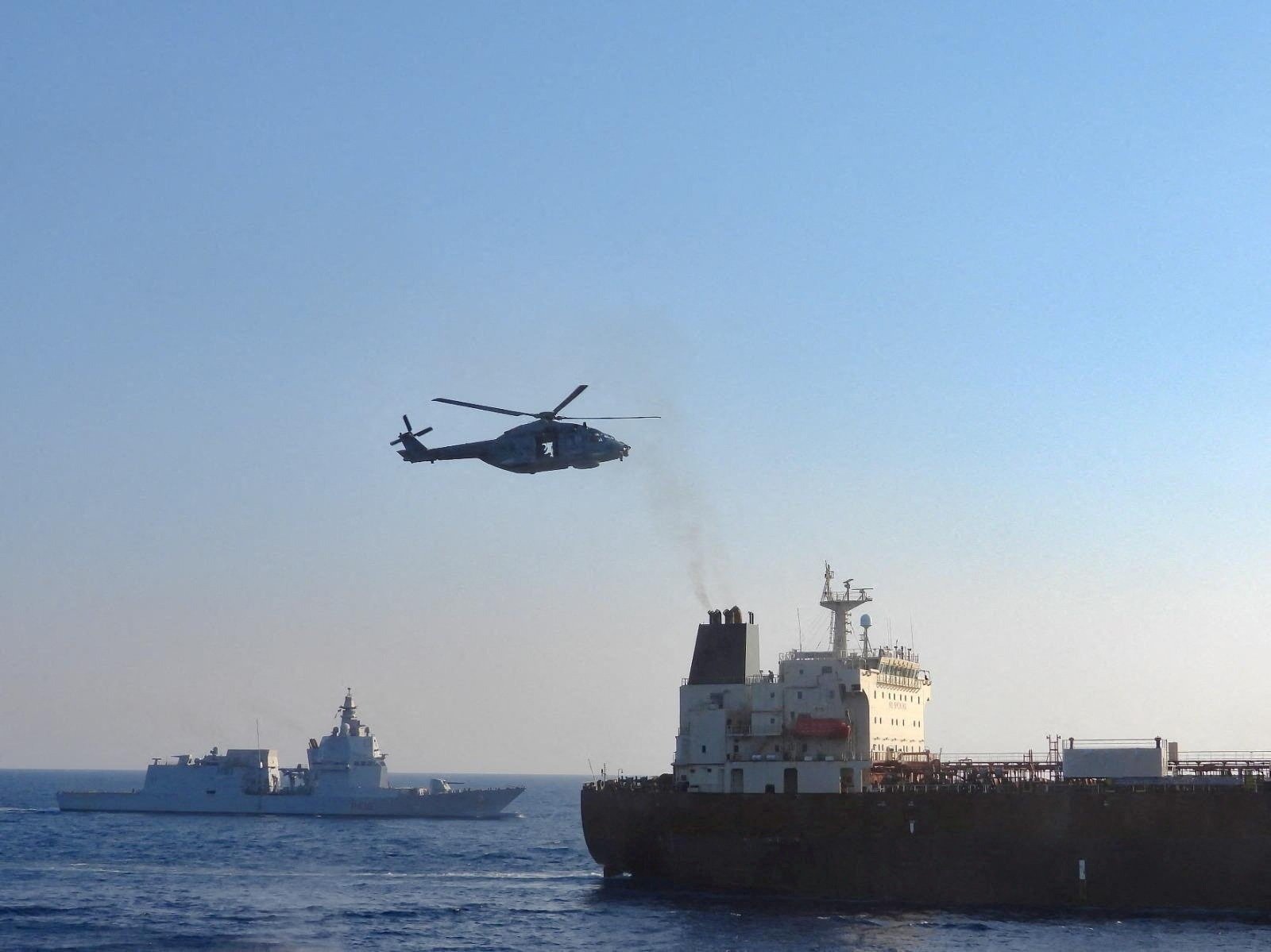
Once an issue is securitized, it often serves to justify a more assertive military posture, which is desired by some European governments. Europeans have increasingly endorsed aggressive maritime enforcement tactics that Moscow denounces as “state piracy” intended to disrupt civilian maritime commerce. By 2026, the boarding and seizure of suspected shadow vessels had become routine. In March, Sweden began intercepting suspected shadow tankers, seizing a vessel flying the Guinean flag; Belgium executed a similar operation that same month. London intercepted its first shadow vessel in June, followed shortly by a French interception in the Mediterranean. In July, the EU expanded its scope under Operation Atalanta to intercept suspected ships in the Indian Ocean. On Aug. 2, the Italian Navy boarded a sanctioned tanker under the auspices of Operation Irini.
These aggressive operations have alarmed Moscow. On Aug. 12, Russian President Vladimir Putin announced that Russia would respond in kind, stating that the Pacific Fleet was prepared to inspect and detain foreign vessels from "hostile" nations. Moscow further warned that retaliation could extend to European-linked vessels operating under flags of convenience anywhere on the high seas.
This maritime tit-for-tat signals a dangerous new frontier of escalation. However, one must evaluate the actual limits of both Russian and European naval capacity before concluding that an inescapable escalation trap has been set. Moscow’s threats are likely intended to deter not only European states, but also Washington, which seized a Russian-flagged tanker in the Atlantic in January 2026.
If the U.S. follows the European assertive pattern, that may definitely create a bigger problem for Russia. Conversely, Western governments and Kyiv are attempting to force Russia to the negotiating table by maximizing economic pressure. The pressure is undeniable, time is working against the Kremlin, and Russian strategists must re-evaluate the compounding risks of a drawn-out war. Yet, Western policymakers must recognize that a re-calculation in Moscow offers no guarantee of a diplomatic settlement; it may instead compel Russia to escalate further.