“Persian Letters” (“Lettres persanes”), written by the French thinker Montesquieu in 1721, is a political and social satirical novel. The work depicts Europe, especially France, through the letters of two Iranian travelers, Uzbek and Rica, who observe the continent from an outsider’s perspective. Through this literary device, Montesquieu not only portrays the peculiarities of 18th-century French society but also offers a subtle critique of the political order, the church, the aristocracy and entrenched social customs. In this respect, the work is considered one of the early and influential examples of Enlightenment thought.
What Montesquieu accomplishes here is to make a system visible that insiders have ceased to question by employing the gaze of a foreign observer. The astonishment expressed by Uzbek and Rica exposes contradictions that French society had come to accept as normal. The arbitrariness of absolute monarchy, religious intolerance, class privilege and the hypocrisy of public life are all addressed through the novel’s satirical force. In this sense, “Persian Letters” is not merely a literary work but also a significant milestone in the development of political thought.
Montesquieu’s work also laid the intellectual groundwork for his later and more systematic study, “The Spirit of the Laws,” published in 1748. In that work, the French thinker argues that the concentration of state power in a single authority poses the greatest threat to liberty and proposes that legislative, executive and judicial powers should be separated.

This approach, which was highly influential in shaping the constitutional order of the United States, eventually became one of the foundational principles of modern constitutional law. It should be noted, however, that Montesquieu did not “create the Anglo-Saxon legal system,” rather, he systematically formulated the theory of the separation of powers inspired by English constitutional practice.
Yet when one examines the practices of many states that today define themselves through the principles of the rule of law, constitutional order and democratic legitimacy, it becomes clear that Montesquieu’s warnings remain relevant. Particularly during periods when executive power is excessively fortified against the judiciary and legislature, constitutional checks and balances weaken, producing serious consequences both within domestic legal systems and in international relations.
The genocide in Gaza following Oct. 7, 2023, has brought this debate to the center of international law. The case filed by South Africa against Israel at the International Court of Justice (ICJ) is based on allegations that Israel violated its obligations under the Genocide Convention. Meanwhile, the International Criminal Court (ICC) issued arrest warrants in November 2024 for Israeli Prime Minister Benjamin Netanyahu and former Israeli Defense Minister Yoav Gallant. These developments indicate that Israel’s military activities have become not only a political matter but also the subject of serious debate under international law.
In recent years, legislative initiatives such as the Basic Law titled Israel as the Nation-State of the Jewish People have also sparked debate. The law seeks to redefine Israel’s fundamental character and shift the balance between its “Jewish and democratic” identity in favor of the Jewish dimension. At the same time, attempts at judicial reform aimed at limiting the authority of the courts have generated serious and prolonged debate regarding the separation of powers and the rule of law.
Netanyahu called on “all Zionist parties” to support the law. During this process, several temporary constitutional amendments were introduced, altering the balance of power in favor of the government. Critics argue that the Netanyahu government, whose authority had significantly weakened, pursued policies that disregarded the separation of powers – ignoring institutions such as the Israeli Supreme Court and the Knesset – while seeking to consolidate political ranks and obscure various corruption cases pending before the court. In this context, some observers claim that Israel carried out actions in Gaza and later in Iran that they argue violate international law.
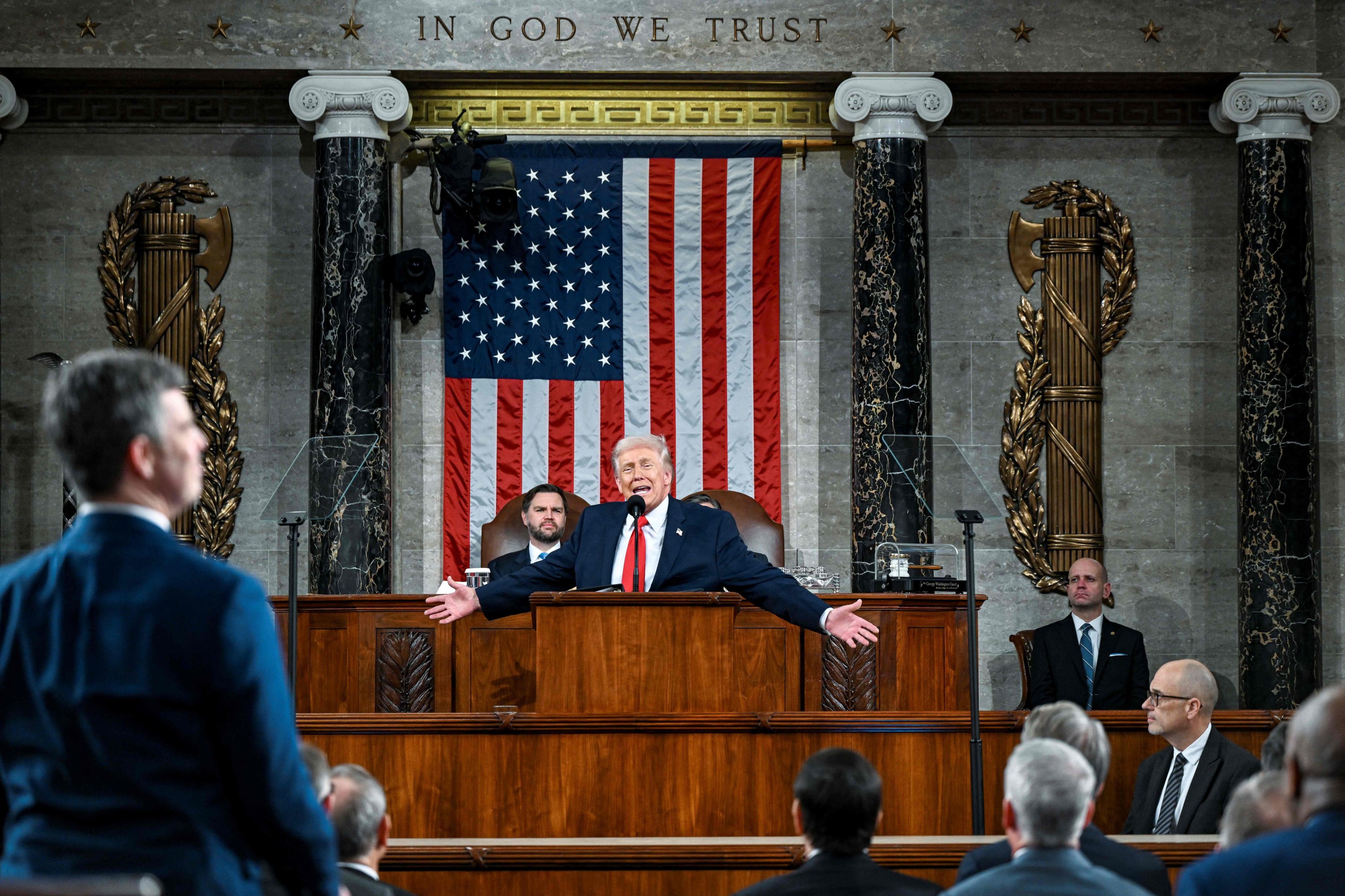
A similar discussion about the separation of powers and constitutional authority has also emerged in the U.S. The critics argue that the Trump administration has likewise acted without respecting the separation of powers, in some cases, in ways that contradict the Constitution by engaging in cross-border military operations against Iran without congressional approval.
While the U.S. Constitution grants Congress the authority to declare war, in the modern era, presidents have often extended the use of military force beyond this classical framework. In the context of military action against Iran, the Senate rejected a war powers initiative intended to limit the authority of U.S. President Donald Trump, as it would have required Trump’s strikes against Iran to receive congressional authorization.
However, the Trump administration's deeds once again highlighted the executive branch’s de facto dominance over external military operations. This situation appears to confirm the fundamental danger Montesquieu warned about centuries ago: Power tends to exceed its limits when it is not effectively checked.
The War Powers Resolution of 1973 requires that the U.S. president notify Congress before initiating hostilities and places limits on unilateral military action. Trump, however, argued that the attacks on Iran had been highly successful and that no approval was necessary. Efforts by Democrats and some Republicans to invoke the War Powers framework to prevent Trump from entering a war with Iran without congressional approval have continued, drawing considerable attention in the U.S.
At the same time, the American public sphere has been shaken by renewed controversy surrounding documents related to convicted sex offender Jeffrey Epstein. The documents reportedly include records of previously unpublished interviews conducted by the Federal Bureau of Investigation (FBI) with a woman whose identity has been withheld. FBI agents held four interviews with the woman between July and October 2019, although earlier disclosures included records only from the first meeting.
Epstein, who faced charges of operating a sexual exploitation network involving dozens of underage children, was found dead in his cell at the Manhattan Metropolitan Correctional Center in New York on Aug. 10, 2019. His associate and former partner Ghislaine Maxwell was convicted in December 2021 for her role in recruiting minors and was sentenced in June 2022 to 20 years in prison.
Various case files released over time have also referenced the names of prominent public figures, including former U.S. President Bill Clinton, entrepreneur Elon Musk, Britain’s disgraced royal Prince Andrew, former Israeli Prime Minister Ehud Barak, former U.S. Vice President Al Gore, actor Kevin Spacey, singer Michael Jackson, illusionist David Copperfield, attorney Alan Dershowitz, filmmaker Woody Allen and philosopher Noam Chomsky.
Ultimately, some commentators claim that allegations contained in the Epstein files are being used politically and that Israel allegedly pressured Trump through such materials to support military action. Such claims remain part of the ongoing political debate.
As can be seen, “Persian Letters” is not merely a satire of 18th-century French society; it is also a living text that continues to prompt reflection on the legitimacy of power, public hypocrisy, legal balance and the protection of freedom. The principle of the separation of powers remains one of the most important safeguards of modern political systems. Wherever this principle weakens, whether in domestic law or international affairs, the dangers of arbitrariness, impunity and abuse of power grow.
Looking at today’s world, it can be said that the early warning Montesquieu delivered through literature still resonates with full force, and the attacks by the U.S. and Israel against Iran constitute an international crime.