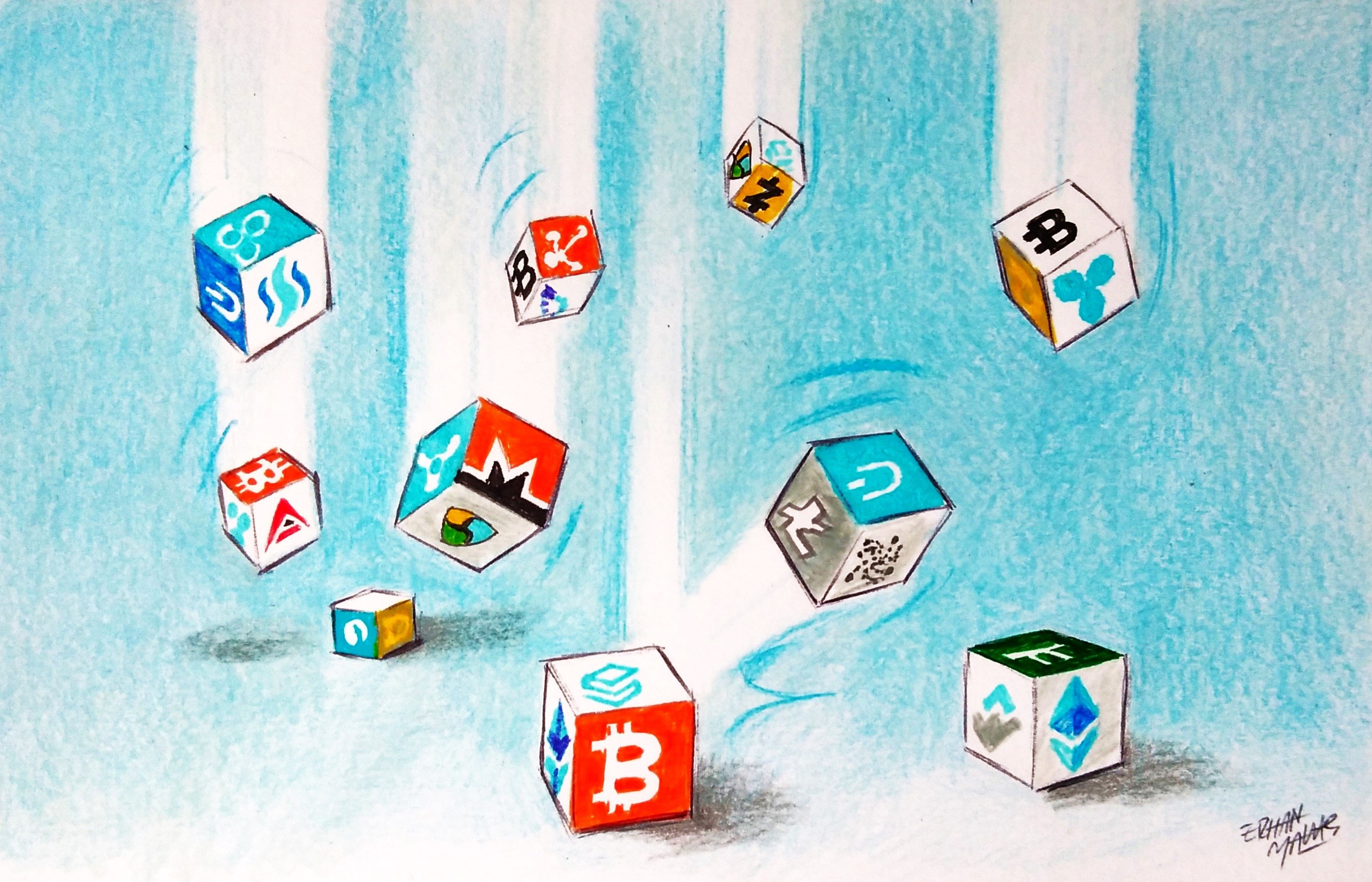
Looking at the cyclical history of cryptocurrency markets, it is evident that every major bull market has been underpinned by a compelling narrative that attracts mass capital and investor interest. The first narrative was Bitcoin's emergence as digital gold; this was followed by the ICO wave in 2017, which enabled anyone to issue their own token.
By 2020, decentralized finance (DeFi), promising to eliminate traditional financial intermediaries and generate returns through yield farming, had taken center stage in the bull cycle. In 2021, the market's focus shifted to Non-Fungible Tokens (NFTs), built on cultural excitement, with profile picture NFTs (PFPs) becoming an expression of digital art, online identity and community belonging. Beeple's $69 million sale and the rise of collections such as Bored Ape Yacht Club demonstrated that NFTs had reached the peak of financial excitement as a phenomenon. Subsequently, the Metaverse, touted as the future of Web3, and more recently Artificial Intelligence, continued to attract investment thanks to their potential for blockchain integration, data analysis and automation.
However, past narratives, particularly DeFi 1.0 and NFTs, remained limited by the existing capital within the ecosystem and failed to attract large-scale inflows from traditional financial markets. This situation has led the market to grapple with a "zero-sum game" perception. Moreover, high transaction fees and scalability issues have hindered mass adoption. Indeed, the lack of narrative, combined with the pressure of global macroeconomic conditions, has led to a noticeable slowdown in retail investor participation.
The number of investors entering the crypto market for the first time has slowed significantly compared to the rapid adoption rate seen during the savings boom of the 2020-2021 pandemic period. From the beginning of 2024 to 2025, the rate of active bank account users transferring funds to crypto accounts has increased by only 2%. I believe that the absence of a new mainstream narrative offering tangible benefits and the dominant role of monetary tightening policies encouraging capital outflows from risky assets have played a key role in this slowdown.
Despite the retail silence, I am observing a maturing investor base in the market. Current investors are inclined to increase the share of digital assets in their portfolios by 5% to 20% and are adopting long-term strategies such as "buy and hold." The market is evolving toward a more strategic crowd seeking projects with solid foundations. Most importantly, a critical macroeconomic turning point accompanying this maturation process is also on the horizon.
The U.S. Federal Reserve (Fed) has decided to end the Quantitative Tightening (QT) process, a key component of monetary tightening, as of Dec. 1, 2025. Although Fed Chair Powell stated that an interest rate cut in December is "not certain," the cessation of active liquidity tightening could signal a structural easing in global liquidity conditions, paving the way for increased risk appetite among institutional and large investors. The end of QT could pave the way for a new, institutionally focused narrative. However, I believe that for crypto assets to become a permanent part of global finance, they must now offer more than just technological promise; they must provide a real bridge to traditional financial markets.
The institutional legitimacy and trillion-dollar scale sought by the cryptocurrency market can be achieved through the tokenization of real-world assets (RWA). Traditional financial asset classes such as real estate, treasury bonds or commodities can be converted into fractional, liquid and transparent digital tokens on the blockchain.
This aspect is attracting the interest of major financial institutions because it offers tangible efficiency gains, such as reducing operational costs and eliminating settlement risks. For example, investment bank Standard Chartered forecasts that the tokenized RWA market will reach a cumulative value of $2 trillion by 2028. This indicates a growth of more than 57 times compared to the current market size of $35 billion. RWA tokenization targets mainstream financial products and clearly demonstrates the potential to bring Trif's trillions of dollars in capital onto the chain.
Indeed, institutions turning to RWA tokenization is an operational necessity. According to McKinsey Global Institute data, by the end of 2024, there will be approximately $1.7 quintillion in assets globally. In contrast, Finadium data shows that the volume of assets actually used as collateral in the financial system is only $29.6 trillion. Even considering that not all of the global asset stock qualifies as collateral, this figure points to a serious lack of mobilization and structural inefficiency in collateral markets. RWA tokenization has the potential to unlock collateral mobility by digitizing these assets, making them easier to circulate. This could structurally transform global trade settlement processes, risk management and interbank liquidity flows.
Stablecoin liquidity and DeFi provide the fundamental prerequisite for this rapid RWA expansion. With the stablecoin market exceeding $300 billion, the necessary liquidity foundation for a "self-sustaining DeFi growth cycle" is now in place. This liquidity foundation also encourages increased institutional participation. Indeed, institutions have begun building secure storage and automated compliance monitoring infrastructure amid an accelerating process driven by regulatory clarity steps such as MiCA. All these developments indicate that RWA tokenization will serve as a structural bridge enabling crypto finance to pass the reliability test.
RWA tokenization can enhance the legitimacy of cryptocurrencies, thereby addressing the sector's most fundamental criticism: that they are "speculative with no intrinsic value." RWA tokenization can transform cryptocurrencies into financial instruments suitable for traditional portfolio management by offering tokens directly linked to tangible, verifiable assets (bonds, real estate). This new narrative, offering a market potential worth trillions of dollars, will increase financial inclusion by boosting institutional efficiency and enabling retail investors to access asset classes with high entry barriers in small fractions.
Ultimately, the new narrative the crypto market needs may lie in RWA tokenization. This narrative is supported by both the lifting of macro liquidity constraints and the trillion-dollar infrastructure established by major financial institutions. The next bull market appears poised to take shape around tangible economic benefits, secure integration and efficient settlement.
RWA tokenization could be the starting point for the transformation of cryptocurrencies from a niche technological experiment into an integral part of global finance. It has the potential to bring both institutional capital and mature retail investors into a long-lasting and robust growth cycle. RWA tokenization could be the subject of the next leap forward, but more importantly, it has the potential to realize the integration of blockchain technology into the global economy.