Dubai did not become Dubai by accident. At a critical moment in history, it offered something the region badly needed. Predictability. Investors knew what they were getting. The rules were clear and capital felt safe. Over time, that advantage turned into airports, skyscrapers, financial districts and eventually a global brand. That advantage is now facing pressure.
The conflict involving Iran is doing exactly what analysts and geopolitical observers have warned about for years. It is making the Gulf feel less predictable. Not dramatically or irreversibly, but enough for companies and investors in places like London, Singapore and Hong Kong to start quietly asking the same question: Where else? Türkiye increasingly looks like an answer.
The argument for Istanbul as a regional hub is not new. It has appeared in policy papers and investment reports for years. What has changed is the environment around it. History offers a useful comparison. Singapore became Asia’s financial and logistics capital in the 1970s and 1980s, not simply because it outperformed everyone else on paper but because instability elsewhere in Southeast Asia suddenly made its stability, geography and connectivity indispensable. Investors rarely choose in a vacuum. They choose based on circumstances. Right now, the circumstances around the Gulf are shifting quickly, and Türkiye is beginning to look far more attractive.
Geopolitics often turns theoretical advantages into real ones, and Türkiye has many of those advantages.
For years, globalization has reduced the importance of location. Supply chains stretched across continents and capital moved instantly across borders. A factory in Vietnam could serve consumers in the United States with relatively little friction. That world still exists, but it is changing. Companies are shortening supply chains, governments are prioritizing strategic autonomy, and proximity to markets and transit routes is becoming important again.
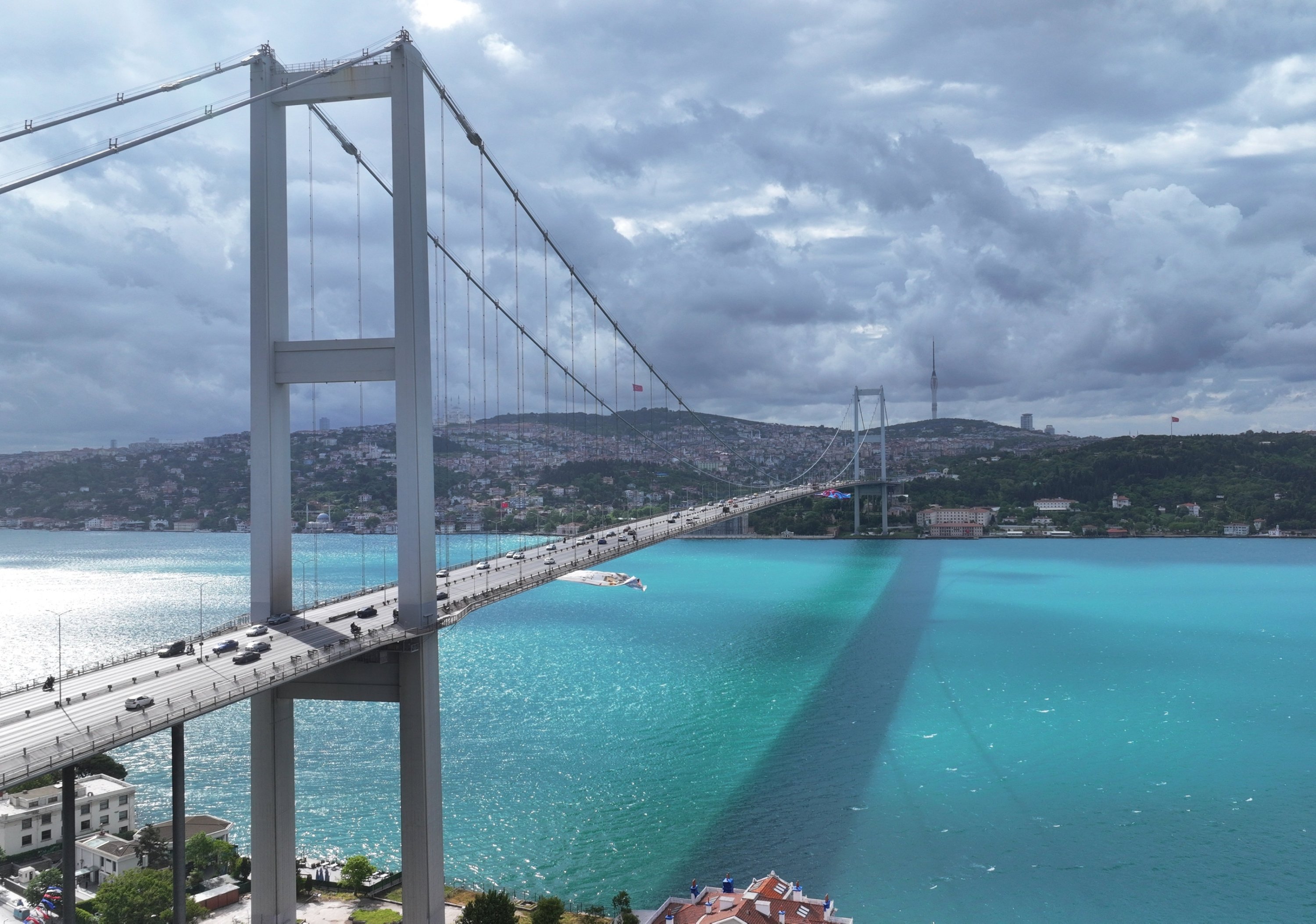
Türkiye sits in the middle of that shift. Istanbul connects Europe and Asia, the Black Sea and the Mediterranean, and energy routes from East to West. From Istanbul, two-thirds of the world’s population can be reached within a four-hour flight. Turkish Airlines flies to more countries than any other airline in the world and has maintained that position for more than a decade. Istanbul Airport handled more than 80 million passengers in 2024, making it one of the busiest airports globally and Europe’s busiest international hub for three straight years. It was also voted the world’s best airport by several magazines. These are not just prestige rankings. They reflect a city that has become central to global movement and connectivity.
Energy is another part of the story. Türkiye’s Sakarya gas field in the Black Sea, which was discovered in 2020, has confirmed reserves of more than 785 billion cubic meters (bcm). It is one of the largest offshore gas discoveries in recent years and the biggest ever found in the Black Sea. A country that once relied heavily on imported gas is now becoming both an energy producer and a transit hub at a time when energy security has become a top concern for governments across Europe and Asia. Expanding infrastructure, new discoveries and Ankara’s growing role in regional transit routes are strengthening Türkiye’s strategic importance at exactly the right moment.
What is often overlooked is how broad Türkiye’s appeal has become beyond energy and logistics. The investment figures make that clear. In 2024, Türkiye attracted over $11.3 billion in foreign direct investment, which was an increase of 5.6% from the previous year. That stands out because global FDI fell by 8% during the same period, while Europe saw a much steeper decline. Germany and Poland both recorded drops of around 60%. Türkiye moved in the opposite direction.
Manufacturing drove much of that growth, accounting for more than a third of all foreign investment and rising over 32% year on year. Türkiye has a genuine industrial base spanning automotive, textiles, defense, electronics and heavy industry rather than an economy dependent almost entirely on services or hydrocarbons. The countries investing also matter. The Netherlands, Germany, the U.S., the UAE and Azerbaijan all rank among the leading investors. When capital from Europe, the Gulf and the U.S. all begin flowing toward the same market at the same time, it usually signals something more than temporary optimism.
Tourism reflects a similar trend. Türkiye welcomed more than 63 million visitors in 2025 and generated a record $65 billion in tourism revenue. Visitor numbers and spending both continued to rise, with growth coming from multiple regions. Russia and Germany remain major markets while arrivals from China surged sharply. Istanbul, Antalya and Bodrum are no longer competing only with nearby destinations. They are competing with major global tourism centers. For a country trying to position itself as a multi-regional hub, that diversity matters as much as the headline figures.
Türkiye’s diplomatic position is also becoming more valuable in a fragmented world. As a NATO member with economic ties stretching across Europe, Asia and Africa, Ankara has spent years maintaining relationships across multiple power centers at once. It helped negotiate grain corridor agreements during the Russia-Ukraine war and continues to engage with actors that often refuse to engage with each other directly. In an increasingly divided global economy, this flexibility is important. Businesses and investors want access to multiple regions without being forced to choose sides in every geopolitical rivalry. Türkiye may be one of the few countries in the region capable of offering this balance.
What makes this moment feel different from earlier waves of optimism surrounding Türkiye is that the foundations are already in place. Infrastructure investment over the last two decades has transformed the country. Istanbul Airport has become one of the busiest in the world, while logistics networks, ports, highways and rail connections across Anatolia have expanded significantly. The groundwork has largely been completed. The missing piece was timing, and the global environment may now finally be moving in Türkiye’s favor.
Dubai reshaped the Gulf’s economic landscape because it had the infrastructure vision and timing to turn regional uncertainty into long-term advantage. Singapore achieved something similar in Asia. The instability now reshaping the Middle East may be opening that kind of opportunity once again. Türkiye has the scale, connectivity and strategic relationships needed to become a serious alternative, and for the first time in years, the timing may finally be right.