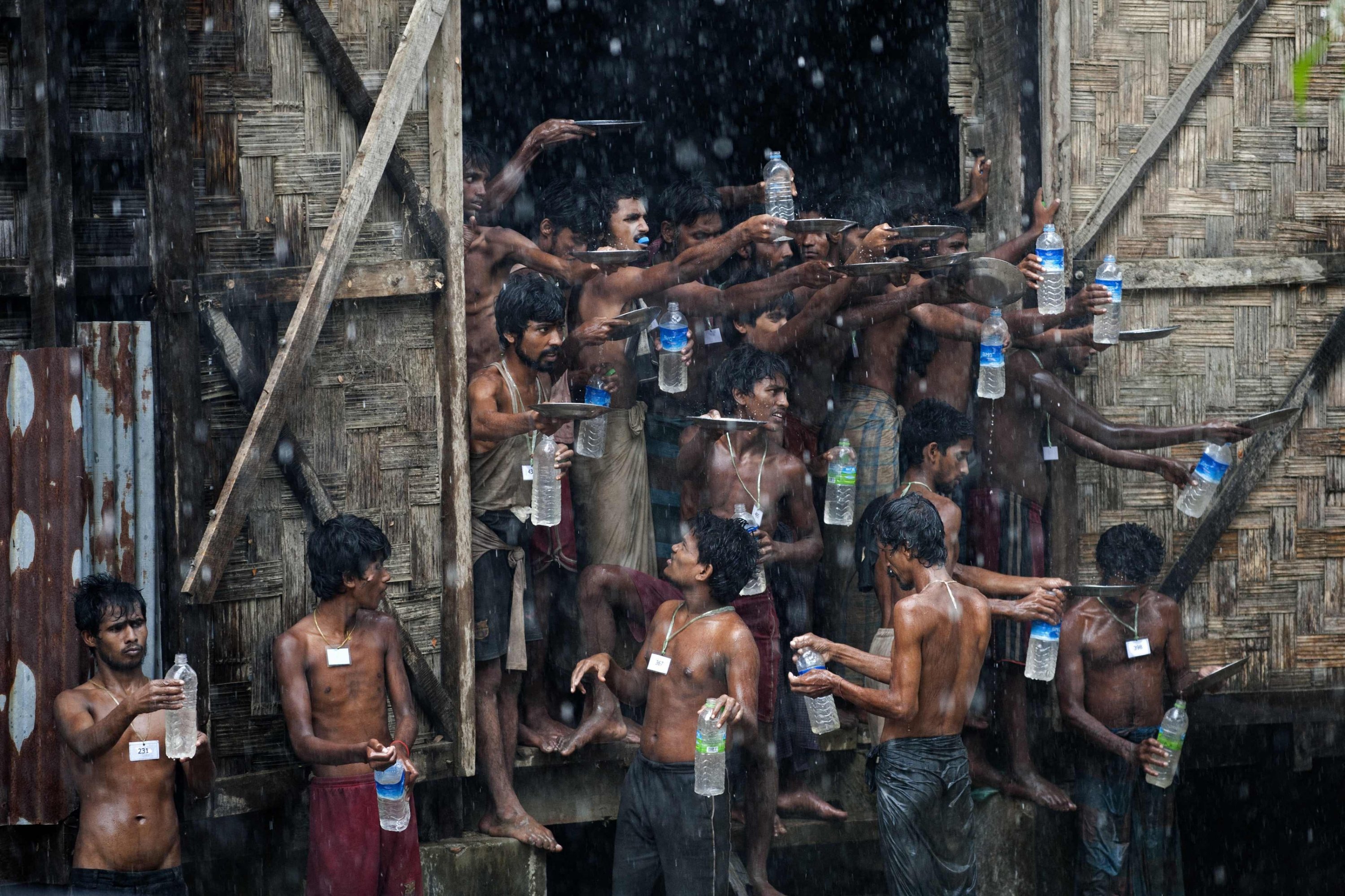
We are living through a profound crisis of the international legal order. Multilateralism, the very foundation upon which the post-war international system was built, is under unprecedented pressure. Fundamental principles of international law, including the prohibition of the use of force, respect for state sovereignty and the protection of human rights, are increasingly being challenged. Widespread violations of international humanitarian law, mass civilian casualties, forced displacement and allegations of international crimes have become part of our daily reality.
Against this background, one question inevitably comes to mind: Whatever happened to the promise of “never again”?
How can we continue to speak of saving succeeding generations from the scourge of war, as proclaimed in the opening words of the United Nations Charter, when the right to life, human dignity and basic security remain under threat for millions of people? How do we reconcile the universal commitments solemnly enshrined in the Charter with the reality of their implementation?
It is precisely against this backdrop that the Nov. 19 judgment of the International Court of Justice (ICJ) in The Gambia v. Myanmar takes on significance that extends far beyond the immediate dispute.
For the first time in its history, the ICJ has found a state responsible for committing genocide.
By nine votes to six, the ICJ decided that Myanmar committed genocide against the Rohingya population in northern Rakhine State during the 2017 clearance operations, in violation of its obligations under the 1948 Convention on the Prevention and Punishment of the Crime of Genocide.
To appreciate its significance, we must revisit the ICJ's earlier jurisprudence on genocide, particularly the cases concerning Bosnia-Herzegovina. In its 2007 judgment in Bosnia-Herzegovina v. Serbia and Montenegro, the court found that genocide had been committed in Srebrenica. However, it concluded that there was insufficient evidence to attribute the commission of genocide to Serbia, to establish that the acts of the Army of Republika Srpska were legally attributable to Serbia, or to find that Serbia had been complicit in genocide. Nevertheless, the court found Serbia in breach of its independent obligation under Article I of the Genocide Convention to prevent genocide in Srebrenica. In other words, Serbia was held internationally responsible for failing to prevent genocide, but not for committing it.
The legal position in Gambia v. Myanmar is fundamentally different. The court directly established that Myanmar itself committed genocide against the Rohingya. Importantly, however, the court did not depart from its established jurisprudence concerning the applicable evidentiary standards.
First, it reaffirmed that allegations of genocide must be established through fully convincing evidence. Second, it maintained the particularly demanding standard for establishing dolus specialis – the specific intent to destroy, in whole or in part, a protected group.
One of the most important distinctions between the 2007 judgment and the present case concerns the evidentiary record available to the court. In the Bosnia-Herzegovina case, the ICJ was able to rely on findings and decisions of the International Criminal Tribunal for the former Yugoslavia (ICTY). In the proceedings against Myanmar, the court did not have comparable judicial decisions available to it. It therefore had to assess an extensive body of evidence independently, including witness testimonies, reports prepared by U.N. investigative mechanisms, documentation produced by non-governmental organisations, satellite imagery and other documentary material. Particular importance was attached to the work of the Independent Investigative Mechanism for Myanmar (IIMM) and the Independent International Fact-Finding Mission on Myanmar (FFM).
As professor Marko Milanovic observes, this led to the disagreement between the majority and the dissenting judges concerning the assessment of the evidence and the inference of genocidal intent, and as he mentioned in his commentary in "Gambia v. Myanmar: The Bottom Line," the disagreement raises fundamental questions about whether the evidentiary record, even when accepted as established, is sufficient to support the conclusion that genocidal intent constitutes the only reasonable inference.
At the same time, the judgment demonstrates that the absence of direct access to evidence does not necessarily prevent international judicial scrutiny. At the same time, it reminds us that the evidentiary standards applicable to the crime of genocide remain exceptionally demanding.
The court's findings extend beyond the determination that genocide was committed. It also found Myanmar in breach of its obligations under the Genocide Convention to prevent genocide, punish those responsible and adopt the necessary national legislation to give effect to the convention. The court further addressed Myanmar's failure to preserve evidence, despite the provisional measures indicated in January 2020.
The judgment is also significant procedurally. Gambia instituted the proceedings in November 2019 with the support of the Organisation of Islamic Cooperation (OIC) and 11 states intervened under Article 63 of the ICJ Statute.
This demonstrates that the obligations under the Genocide Convention cannot be reduced to a matter of bilateral relations between states. They concern a shared interest of all states parties to the convention. The case therefore illustrates the important role that states may play in invoking the international responsibility of another state for breaches of obligations owed collectively to all states parties to the Genocide Convention, each of which has a legal interest in their protection and observance.
The international legal community will undoubtedly examine this judgment in the context of other proceedings concerning alleged violations of the Genocide Convention, including South Africa v. Israel. Of course, the findings in one case cannot simply be transposed to another. Each dispute has its own factual circumstances, evidentiary record and legal questions. Nor should the ongoing proceedings be prejudged. Nevertheless, the court's reasoning on the assessment of evidence, the establishment of genocidal intent and the obligations of States under the Genocide Convention will inevitably become an important point of reference in future proceedings.
Our colleagues working in international law and human rights have already described Nov. 19 as a historic day for international justice. And rightly so, although a judicial finding alone does not mean that justice has been fully achieved.
Ultimately, justice for the Rohingya is not simply justice for a Muslim population that has suffered genocide. It is a question of the universality of international law and the equal value of human life, regardless of nationality, religion and ethnicity.
It is also a reminder of the many victims of mass atrocities throughout human history whose suffering never received a full judicial response. Of crimes that never reached international courts, and of people for whom the promise of "never again" remained nothing more than words.
There was also a deeply personal dimension to this historic moment for me. As I was traveling to Karabakh, I followed the ICJ proceedings live and read Milanovic’s above-mentioned commentary just before delivering my lecture on international law at Karabakh University. There was something profoundly symbolic about discussing the protection of human rights, the prohibition of genocide and the role of international justice in a place that has itself endured decades of conflict and suffering. For nearly 30 years, territories of Azerbaijan remained under Armenian occupation. The Khojaly genocide, the mass killing of Azerbaijani civilians, and the international community’s largely passive response to the suffering of the victims of these grave international crimes remain painful reminders of the selective nature of international attention and accountability.
Today, the ICJ’s judgment represents an important affirmation of the principle that the suffering of victims must never be forgotten or disregarded. Justice must be universal, and the promise of "never again" must extend to every victim of genocide, regardless of who they are or where the crimes were committed. Because never again must mean exactly that. Never again for anyone. Without exceptions.