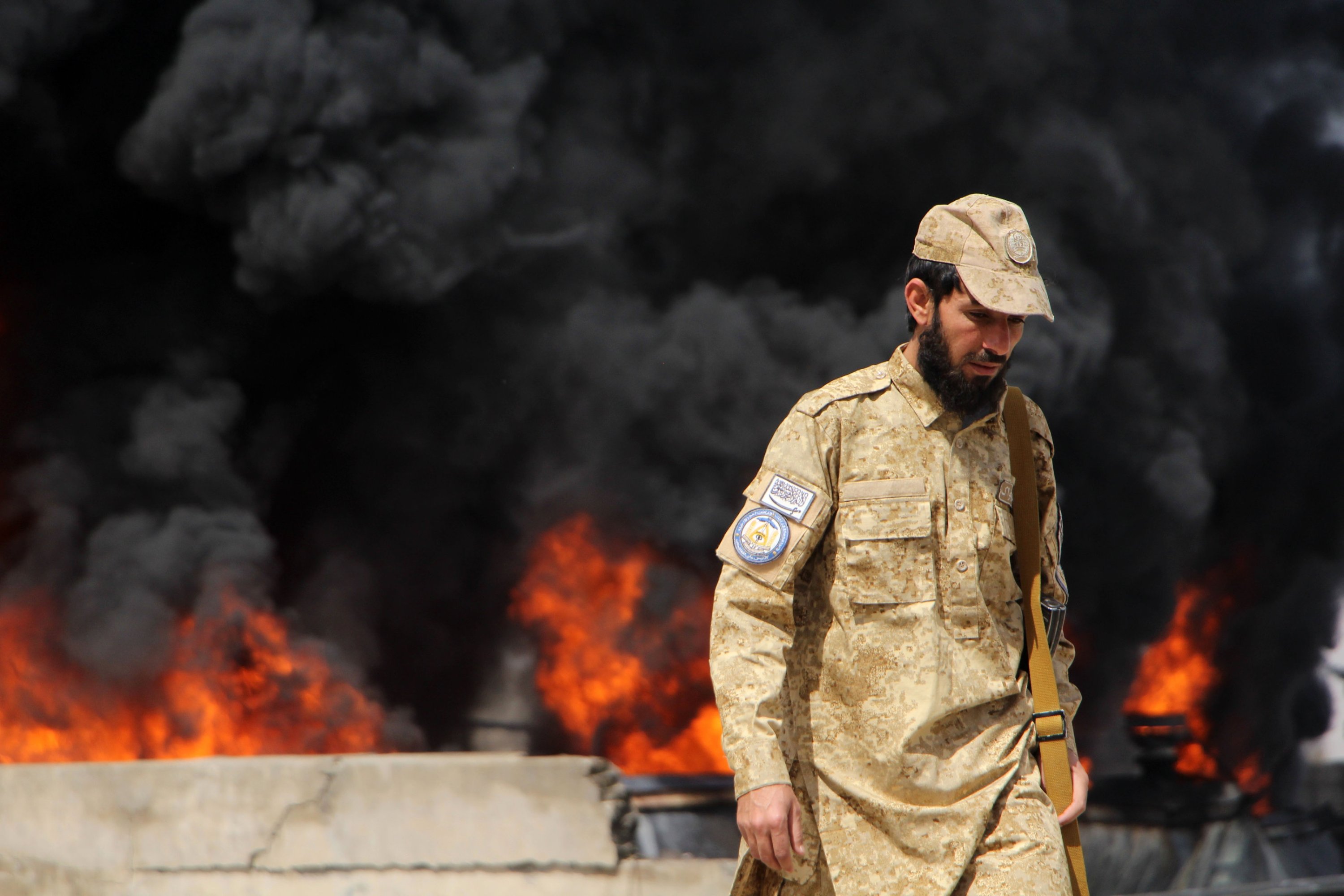
The rapidly escalating military tension between Afghanistan and Pakistan at the end of February significantly affected regional dynamics. Historically fuelled by factors such as the Durand Line dispute, cross-border militant activity and security competition, this tension has, with recent developments, taken on the character of a new geopolitical crisis directly affecting the regional security architecture.
The process that began with Pakistan's airstrikes against militant targets in eastern Afghanistan quickly escalated into mutual military operations and reached the level of conventional conflict, with both sides resorting to rhetoric of “open warfare.”
One of the most notable consequences of the conflict is the impact on Central Asian states, which are not directly involved but are significantly affected geopolitically and economically. Due to their landlocked geographical structure, Kazakhstan, Uzbekistan, Turkmenistan, Kyrgyzstan and Tajikistan require alternative corridors to access global trade networks. Afghanistan has long been seen as a critical transit corridor for these countries to access South Asia.
However, the deepening military tension between Afghanistan and Pakistan is destabilizing the region's security balance while also seriously threatening Central Asia's long-term trade and logistics strategies.
One of the most significant impacts of the Afghanistan-Pakistan conflict on Central Asia is the transformation in the region's perception of security. Following the Taliban's return to power in Afghanistan in 2021, Central Asian states adopted a more pragmatic approach, viewing threats originating from Afghanistan as a manageable risk, even if they had not been completely eliminated. The prevailing assessment in the region's capitals was that the Taliban administration could prevent Afghanistan from becoming an uncontrolled security vacuum by ensuring internal stability. Therefore, despite ideological differences, Central Asian countries had begun to pursue a cautious policy of including Afghanistan in regional economic processes by establishing limited diplomatic contacts with the Kabul administration.
Countries such as Uzbekistan and Turkmenistan, in particular, aimed to integrate Afghanistan into regional connectivity projects by continuing their economic and technical cooperation with the Taliban administration, pursuing a policy based on the assumption that security risks could be reduced through economic integration. This approach was based on an optimistic perspective that instability would decrease and the scope of radical groups would narrow if Afghanistan were included in regional economic networks.
However, the escalating military tension between Afghanistan and Pakistan seriously calls into question the sustainability of this approach. The possibility of Afghanistan returning to the center of regional power competition and armed conflict is prompting Central Asian states to re-examine their security strategies.
The conflict environment has the potential to expand the scope of action for transnational radical organizations in particular. The fact that organizations such as Tehreek-e Taliban Pakistan (TTP), also known as the Pakistani Taliban, and the Afghanistan-based Islamic State Khorasan Province (ISKP) are able to take advantage of the current security vacuum to restructure and expand poses a serious security risk for Central Asian states. The presence of radical networks operating particularly in northern Afghanistan and findings that these structures harbour militants of Central Asian origin further deepen the threat perception of countries in the region.
In this context, the issue of border security has once again become a priority strategic issue for countries such as Tajikistan and Turkmenistan, which share a direct border with Afghanistan. Indeed, Tajikistan's strengthening of its military infrastructure along the Afghan border in recent years, its increase in the number of border troops, and its investments in developing border surveillance capabilities can be seen as concrete evidence of the region's states' tendency to prepare for potential instability scenarios. Similarly, despite its long-standing, relatively neutral security approach, Turkmenistan has also taken steps to increase its military measures along its border with Afghanistan.
However, the deepening of the Afghanistan-Pakistan conflict could also trigger security risks such as irregular migration and cross-border criminal activities. A new wave of instability emerging in Afghanistan could increase irregular migration flows towards Central Asia, particularly via Tajikistan and Uzbekistan. This situation has the potential to create new pressures for the states in the region, both economically and in terms of social security.
At the same time, the increased activity of cross-border criminal networks involved in drug trafficking, human trafficking and illegal arms trade poses a significant risk to regional security. Therefore, instability in Afghanistan has the potential to bring with it multi-layered security problems.
In this context, it is likely that Central Asian states will move toward greater multilateral cooperation in their security policies. Regional security platforms such as the Collective Security Treaty Organization (CSTO) and the Shanghai Cooperation Organization (SCO) are becoming increasingly important for Central Asian states in terms of security coordination.
Russia's military presence in Tajikistan and China's capacity-building projects in the field of border security also play an important role in shaping the regional security architecture.
However, this situation also carries the risk of transforming Central Asia into a security zone where great power competition is felt more intensely. Consequently, the Afghanistan-Pakistan conflict can be regarded as a critical turning point that reshapes Central Asia's security architecture not only in military terms but also in terms of strategic alliances, regional security arrangements and geopolitical orientations.
One of the most tangible and immediately felt effects of the conflict on Central Asia is evident in regional trade and logistics projects. Due to their landlocked geographical structures, Central Asian states face chronic disadvantages in accessing global trade networks. In recent years, they have placed great importance on new trade corridors extending to South Asia in order to overcome this structural problem. In this context, Afghanistan is considered a strategic geo-economic bridge that could connect Central Asia to the Indian Ocean.
The Uzbekistan-Afghanistan-Pakistan railway project, developed primarily under Uzbekistan's leadership, stands out as one of the most significant connectivity initiatives aimed at integrating Central Asia into the global trade system via Pakistan's ports of Karachi and Gwadar. This project is expected to enable Central Asian countries to access international trade networks in a shorter and more cost-effective manner, without remaining dependent on Russian and Chinese routes. However, the conflicts between Afghanistan and Pakistan are seriously undermining the feasibility of these projects and casting uncertainty over the prospects for regional economic integration.
The closure of border crossing points, increased security risks and the suspension of infrastructure projects are causing significant disruptions to the region's trade strategies. Disruptions at critical border crossings such as Torkham and Spin Boldak, in particular, have severely hampered trade flows through Afghanistan to South Asia.
The uncertainty surrounding the Trans-Afghan corridor is also forcing Central Asian states to seek alternative trade routes. Corridors extending to Chabahar Port via Iran or projects such as the China-Kyrgyzstan-Uzbekistan railway are becoming increasingly important in this context. However, Chabahar Port – where commercial vessels are altering their routes due to its status as a high-risk war zone – is not currently a viable option due to the conflict between the U.S., Israel and Iran, and is therefore being overlooked.
Similarly, the Middle Corridor initiative, which extends from the Caspian Sea to the South Caucasus and via Türkiye to Europe, stands out as a strategic alternative for countries in the region. In particular, the Middle Corridor's emergence in recent years as an important route for trade between China and Europe has strengthened the role of Central Asian states along this route. However, most of these alternatives offer more limited advantages in terms of distance, infrastructure capacity and cost compared to routes extending to South Asia via Afghanistan. Therefore, Trans-Afghan trade projects continue to be an important part of Central Asia's long-term connectivity strategy.
On the other hand, trade routes extending from Afghanistan to South Asia are also significant in the context of global geo-economic competition. China's goal of increasing connectivity between Central Asia and South Asia under its Belt and Road Initiative further enhances the strategic importance of the Afghanistan route. Similarly, Pakistan's Gwadar and Karachi ports are considered one of the shortest routes providing access to the sea for Central Asian countries. Reaching the Indian Ocean via these ports has the potential to help Central Asian states achieve a more competitive position in global trade.
Therefore, the instability along the Afghanistan-Pakistan corridor directly affects the future of new trade corridors emerging along the east-west and north-south axes of Eurasia. If Afghanistan fails to become a secure and stable transit area, the Central Asian states' goals of integrating into the global trade system more quickly and cost-effectively may be seriously delayed. From this perspective, the Afghanistan-Pakistan tension can be seen as a strategic breaking point that could affect Central Asia's geo-economic orientation and the future of Eurasian connectivity projects.
If this instability persists for a long time, the economic diversification strategies and global trade network integration goals of Central Asian states will come under serious pressure. This situation could pave the way for new geo-economic fractures that could directly affect the region's development prospects.