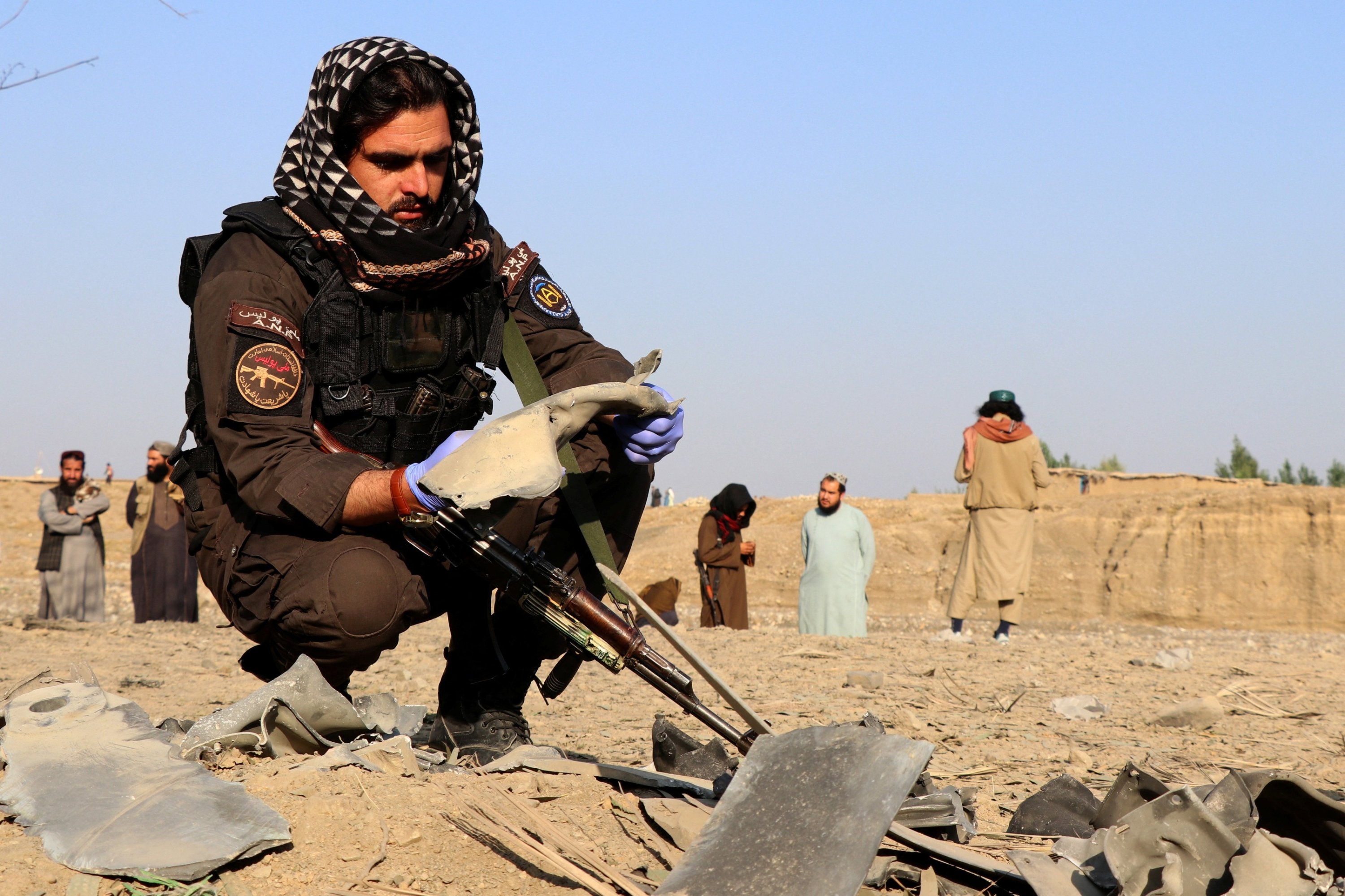
On Oct. 17, fresh fighting erupted between Pakistan and Afghanistan with heavy exchanges of fire across the Upper Kurram-Paktia frontier. Pakistani security sources allege that the fighting began after Afghan Taliban forces opened fire to facilitate terrorists crossing into Pakistan.
These recurring border clashes point to deeper, unresolved differences dividing the two neighbors.
Only a month earlier, a diplomatic initiative had sought to ease these tensions. On Sept. 16, Türkiye’s intelligence chief, Ibrahim Kalın, and a Qatari security delegation met senior Taliban officials in Kabul. Kalın also visited Kandahar before travelling to Islamabad, where he met Field Marshal Asim Munir, intelligence chief Asim Malik and Prime Minister Shahbaz Sharif on Sept. 17.
The very next day, a major terrorist attack struck Khyber Pakhtunkhwa, Pakistan’s province bordering Afghanistan. A suicide bombing and armed assault on a police compound during Friday prayers killed security personnel and civilians gathered at its mosque. Pakistan subsequently struck several sites inside Afghanistan, triggering renewed border clashes and bringing efforts to ease tensions back to square one.
Whatever the wider causes of the rupture between Islamabad and Kabul, Pakistan’s concern over terrorist violence is grounded in a stark rise in attacks. Across Pakistan, terrorist attacks increased from 294 in 2021, when the Taliban returned to power in Afghanistan, to 380 in 2022, 645 in 2023, 908 in 2024 and 1,066 in 2025. By late September 2026, more than 1,000 Pakistani security personnel had been killed in terrorist violence. Pakistan had last suffered losses on that scale in 2025, when 1,229 were killed; before that, the comparable year was 2009, with 1,012.
The connection to Afghanistan cannot be dismissed as coincidence. A United Nations monitoring report identified some 6,000 Tehreek-e-Taliban Pakistan (TTP) fighters in Afghanistan and said the Taliban authorities continued to provide the group with operational space and support. A subsequent U.N. report stated that the TTP had been granted greater liberty and support and that its attacks against Pakistan had consequently increased. Kabul denies harboring groups that attack its neighbor. That disagreement is precisely what negotiations must address. Pakistan needs credible protection against cross-border terrorism, while both countries need a way out of the escalating cycle of attacks and retaliation.
The frontier cuts through Pashtun tribal lands, leaving families and communities on both sides. Pakistan has hosted millions of Afghans for more than four decades. Its accelerated return policy is now uprooting families for whom Pakistan is the only home they have known. Pakistan’s security concerns are real, yet there is a tragic irony in seeing people who grew up under its protection displaced as relations with Afghanistan deteriorate.
Afghan families who relied on treatment in Pakistani hospitals have found it harder to cross the border, while students’ studies have been interrupted in both countries. Trade tells the same story. Afghan fruit growers have struggled to reach Pakistani buyers, Pakistani potato farmers have lost a major market in Afghanistan, and the movement of coal, medicines, cement and machinery has been disrupted.
As Pakistan confronts terrorist violence and communities on both sides bear the costs of strained relations, a further complication is emerging inside Afghanistan. Armed opposition groups have increased their activity in parts of the north and northeast, while clashes in Badakhshan have exposed tensions within the Taliban’s own ranks. Kabul has nevertheless accused Pakistan of sheltering its armed opponents and supporting unrest in Badakhshan. Islamabad denies the allegation.
On the other hand, the Taliban authorities reject Pakistan’s concerns about TTP bases in Afghanistan, arguing that the violence Pakistan faces is its own internal security problem. By the same reasoning, maintaining peace within Afghanistan rests first with those who govern it. This is a responsibility. The Afghan people deserve peace above all; they have lived through war, destruction and displacement since the upheavals of the late 1970s. Another conflict, whether across the border or within Afghanistan, would deepen a suffering that has already lasted far too long.
The hope was that the Taliban, having endured a long war, would turn from resistance to the harder work of governing: repairing institutions, restoring livelihoods and giving exhausted families a measure of ordinary life. Nearly a third of Afghans face acute food insecurity. UNICEF reports that 3.7 million young children suffer acute malnutrition, including around 1 million with its life-threatening severe form. Millions of girls remain barred from secondary school. Though the economy has begun to grow, living standards are still falling, and the poorest families face the danger of starvation.
These needs should take precedence over confrontation about the historic Durand Line. Pakistan’s concerns about attacks from Afghan territory also require a serious response. Whatever the TTP’s stated grievances, violence cannot give it the right to impose its will on Pakistani society. Any political path must begin with an end to attacks. The Taliban should distance themselves unequivocally from TTP violence and work with Pakistan to prevent it.
Peace within Afghanistan demands equal care. Women are shut out of much of public life, and minority communities must have a place in the country’s future. A government that allows exclusion to deepen risks renewing the unrest it hopes to contain. The Taliban could yet fail the people whose welfare must come before tribal loyalties or claims of ideological purity. After decades of death, flight and destruction, Afghans deserve the simplest promise of government, a chance to live without fear.